Devlog 11 — November 2024
The Moment It All Comes Together
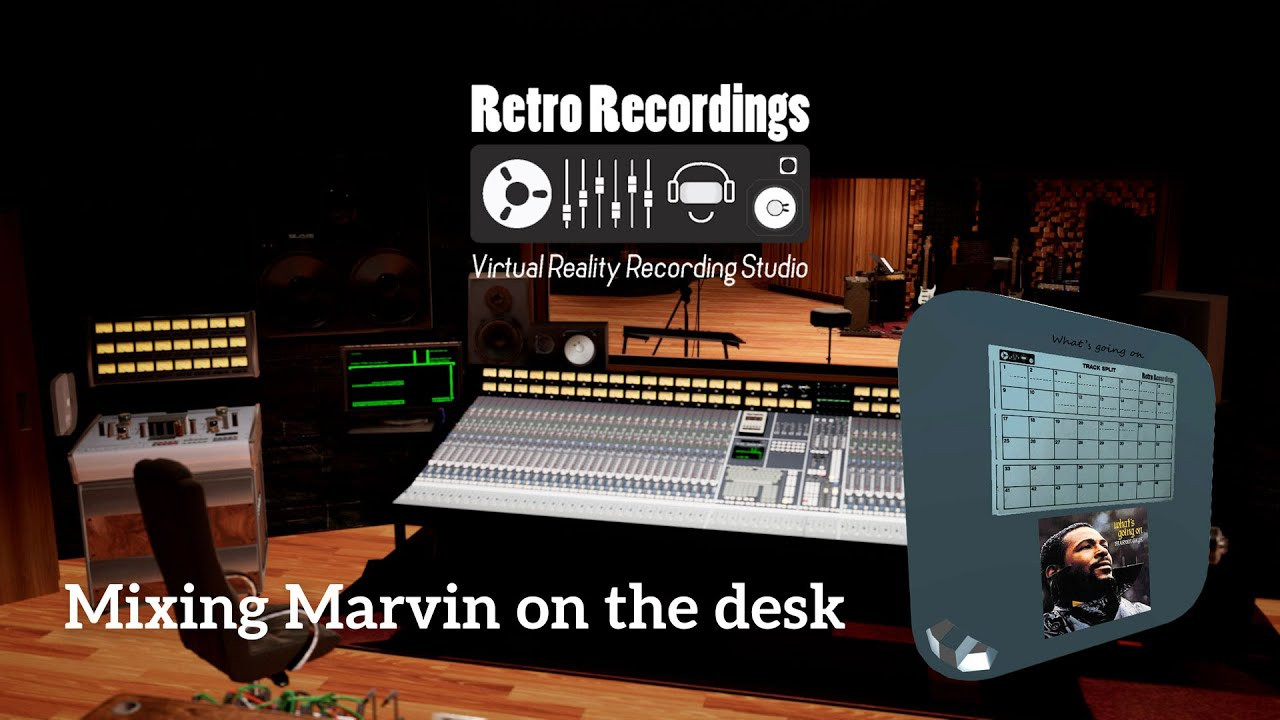
There’s a specific moment in every long-running project where you stop building the thing and start using the thing. For Retro Recordings, that moment was loading Marvin Gaye’s multitrack stems into the virtual SSL and pressing play.
Not a test tone. Not a debug signal. Marvin Gaye. “What’s Going On” era material — strings, horns, that voice — flowing through the console I’ve been building for the better part of a decade. Faders up, levels dancing on the VU meters, and suddenly this wasn’t a development project anymore. It was a mixing session.
Working the Board
The session started simple: balance the stems. Get the drums sitting right, bring the bass up underneath, find the pocket where the rhythm section locks in. Then the vocals. Marvin’s voice through the SSL channel strip — gain staged, a touch of high-shelf EQ to bring out the air, gentle compression to control the dynamics without killing the performance. This is the workflow the studio was designed for.
What surprised me was how natural it felt. Reaching for a fader, adjusting a knob, glancing at the meters — the physical feedback loop that makes mixing on a real console feel different from clicking a mouse. The VR interaction framework I’d wrestled with for months was finally invisible. I wasn’t thinking about grab mechanics or input mapping. I was thinking about the mix.
That’s the test that matters. Not “does the fader move” but “do I forget I’m in VR while I’m working?”
The Mix
The video above is the full session — loading the stems, building the mix from scratch, working through each section of the song. No cuts, no editing, no pretending it went perfectly the first time. This is what the studio looks and sounds like when you’re actually using it.
A few things I noticed during the session: the MetaSounds EQ responds beautifully to subtle moves. You can hear the difference between a half-dB boost and a full dB — which means the processing chain has enough resolution to do real work, not just rough adjustments. The spatial audio in the control room puts you behind the monitors in a way that flat headphone mixing never does. And the VU meter ballistics feel right — not too fast, not too sluggish, reacting the way real analogue meters react.
What This Proves
This session was proof of concept for the entire project. Not the technology — I already knew the tech worked. Proof that the experience works. That someone can sit behind this console, load their music, and have a genuine mixing session that feels like being in a real studio. The warmth, the workflow, the tactile satisfaction of working a board with your hands.
Marvin Gaye seemed like the right artist to prove that with. Music that demands feel, not just technical precision. If the studio can handle soul music — the dynamics, the subtlety, the emotional weight — it can handle anything.
Where We Are Now
The Retro Recording Studio is functional. Not finished — there’s always more to build, more to refine, more rooms to fill with gear. But it works. You can load your music, sit behind a legendary console, and mix. That was always the goal, and after all these years, it’s real.
More mix sessions coming. More gear. More rooms. The studio doors are open.