Devlog 10 — June 2024
Why Upgrade Mid-Project?
Unreal Engine 5.4 dropped, and I did what every solo developer tells themselves not to do — I upgraded in the middle of active development. The reasoning was simple: 5.4 brought improvements to MetaSounds, rendering performance, and VR stability that were directly relevant to the studio. Waiting until “later” with engine upgrades usually means waiting forever, and by then you’re three versions behind with a much bigger migration headache.
So I backed everything up, hit upgrade, and held my breath.
What Went Smoothly
The good news: the project opened. That’s never guaranteed with a major engine version bump, so clearing that first hurdle without a wall of errors felt like a win. The core systems — MetaSounds patches, VReUE4 interaction, the console Blueprint logic — all survived the migration intact.
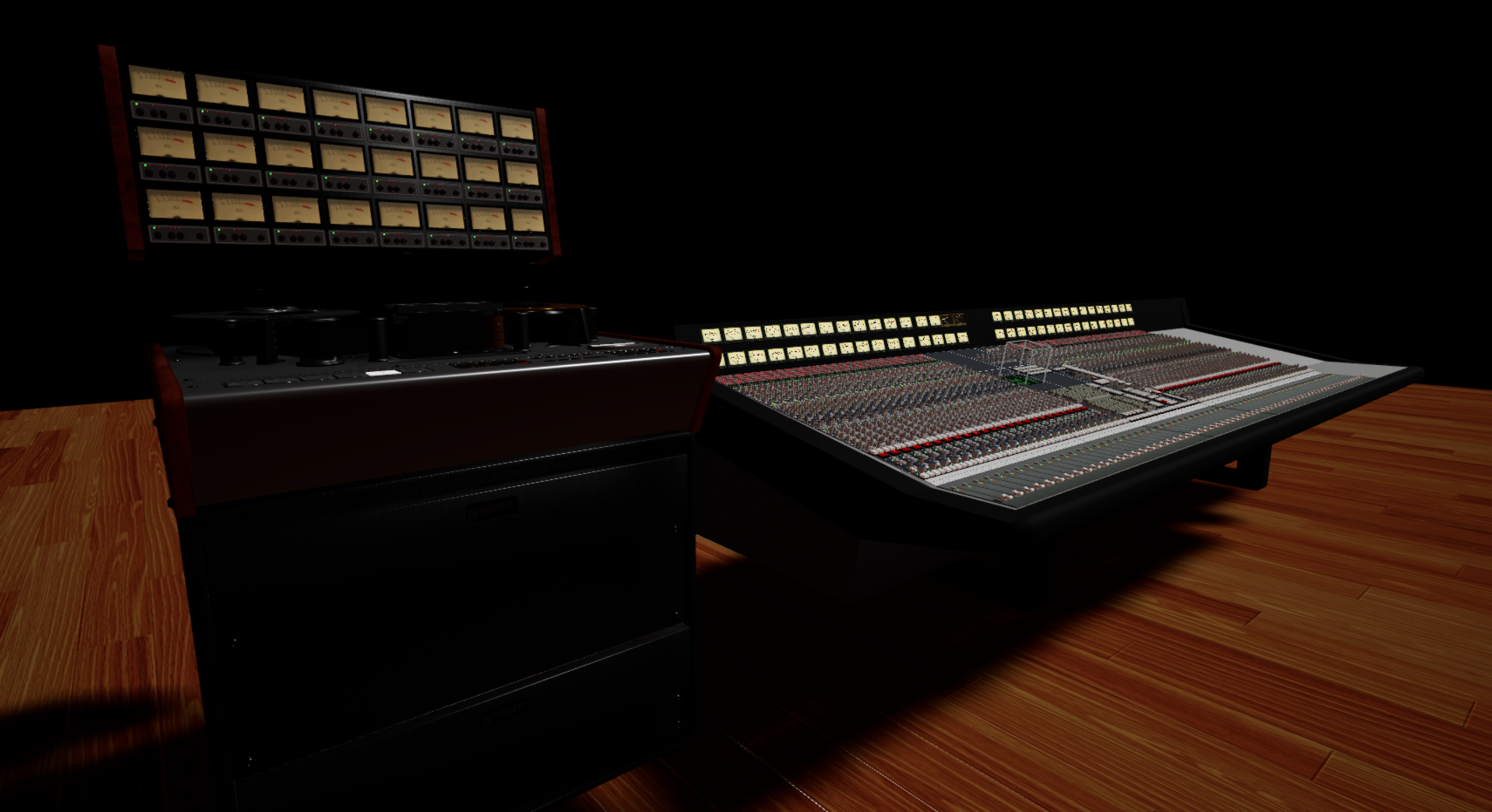
Rendering looked noticeably better out of the box. Lumen received optimisations that made the studio lighting feel warmer and more stable — fewer light leaks in the corners, smoother indirect bounce in the control room. The amber glow from the desk lamps and VU meters looked more natural without me touching a single light setting. Sometimes the best improvements are the ones you don’t have to work for.
Performance held steady. The studio was already running comfortably at 90fps in VR on 5.3, and 5.4 maintained that. If anything, frame times felt slightly more consistent — fewer micro-hitches during scene traversal, which matters when you’re walking between the control room and live room.
What Broke
The upgrade wasn’t free, of course. A handful of Blueprint nodes had deprecation warnings. Nothing catastrophic, but enough to spend an afternoon tracking down and replacing with the 5.4 equivalents. The VR hand tracking had a subtle change in how grip events were processed — took me a while to figure out why faders felt slightly different. Turned out the input action mapping had a new default threshold that needed adjusting.
Material instances on some of the outboard gear needed recompiling. The rack-mounted units lost their brushed metal look until I regenerated the shader cache. A few hours of “why does this look wrong” before realising it was a known 5.4 shader migration issue. Standard engine upgrade tax.
The Test Session
Once everything was patched up, I ran a proper test session — loading stems into the console, working the faders, checking EQ response, walking around the studio to verify spatial audio and interaction across all rooms. This is the video from that session:
Everything held up. The console responded correctly, audio processing ran clean, and the studio looked better than it did before the upgrade. The lighting improvements alone justified the day of migration work. Walking into the control room and seeing the console lit by that warm amber overhead — it’s the small things that make a virtual space feel like a real room.
Was It Worth It?
Yes. A day of migration work for better rendering, stabler VR, and staying current with the engine. The alternative — falling behind on engine versions — always costs more in the long run. Every update you skip makes the next one harder. Better to take the small hit now and keep the project on the latest stable branch.
The studio is running on Unreal 5.4. Next up: finishing the dynamics processing and getting the tape machine workflow operational. The console is functional, the engine is current, and the studio keeps getting closer to what it needs to be.