The microphone is up. The talkback is off. Someone pushes a fader and the red light comes on.
Most music films treat the studio as a backdrop — a place characters pass through between the real drama. The ten films below are different. The control room is the drama. Sessions run overnight. Takes fall apart. Engineers catch things the artist didn’t know they were playing. These are the films that understood what actually happens behind the glass.
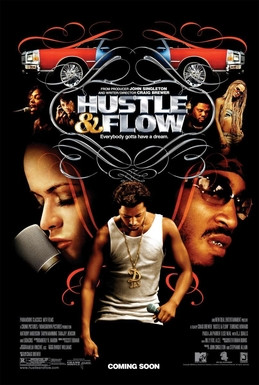
1. Hustle & Flow
Almost the entire film happens in a converted bedroom in Memphis. Djay — pimp, small-time dealer, aspiring rapper — rents a sampler from a pawn shop and starts recording a demo with a borrowed engineer and a condenser mic gaffer-taped to a music stand.
Director Craig Brewer made the most studio-centric mainstream film ever put to screen. You watch every step: the acoustic treatment improvised from moving blankets, the arguments over whether a take has the right feel, the moment a hook finally locks in. It’s Hard Out Here for a Pimp won the Academy Award for Best Original Song and the recording session that builds toward that track is as tense as any thriller.
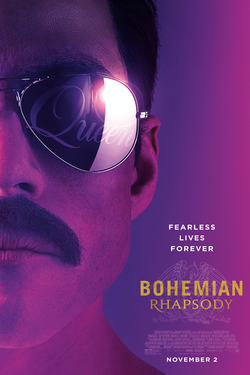
2. Bohemian Rhapsody
The Rockfield Studio sequence is the reason this film made it onto this list. Queen arrive in rural Wales in 1975 with an album’s worth of material and Freddie Mercury’s impossible idea: a six-minute operatic rock single built from 180 overdubbed vocal tracks.
The film shows the multi-tracking process in enough detail that audio people in the audience lean forward. Roger Taylor screaming into a vocal mic until he cracks. The tape machine running at half-speed so voices can be doubled up an octave. Producer Roy Thomas Baker — a meticulous technician — watching it all accumulate. The rest of the film has issues. This section does not.
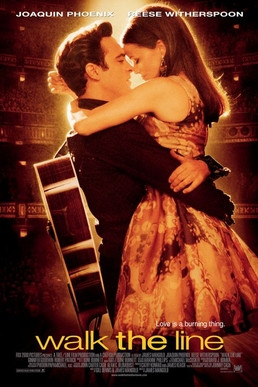
3. Walk the Line
Sam Phillips gave Johnny Cash thirty seconds to convince him at Sun Records in Memphis. In the film’s most famous scene, Cash stops mid-song when Phillips cuts in over the talkback: “If you was hit by a truck and you was lying out in that gutter dying, and you had time to sing one song — would that be the song you’d sing?”
The Sun Records sequences capture a specific production philosophy: minimal processing, room sound, the slap-back echo that Phillips developed not as an effect but as a practical fix for a poorly-treated room. The film shows recording as a conversation between two people trying to find something honest.
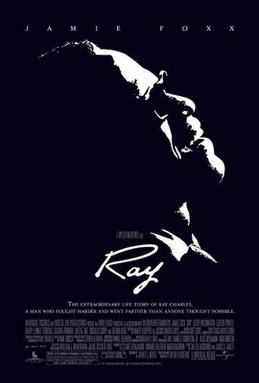
4. Ray
Ray Charles recorded for Atlantic Records in New York from the mid-1950s, and the film traces that period in real detail. The sessions show him moving between bebop, gospel, blues and early R&B, with label executives perpetually uncertain whether any of it was commercially viable.
Jamie Foxx’s performance is famous but the film’s studio scenes do equal work. A&R tension between artist autonomy and commercial pressure runs through every session. Charles spent most of his recording life fighting for control of his own material — and the studio becomes the room where that fight plays out take by take.
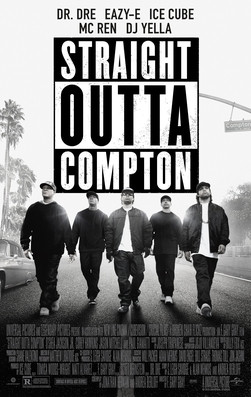
5. Straight Outta Compton
N.W.A. recorded the Straight Outta Compton album in six weeks in 1987, largely at Torrance, California. The film earns its runtime showing the actual process: Dr. Dre building tracks on an MPC, the speed and instinct of Ice Cube’s writing, the feeling in the room when something lands.
Later sequences at Death Row Records — larger budget, more equipment, more tension — show how the same people recorded differently when the stakes changed. The studio scenes are among the few places in the film where the mythology drops and you see the craft.
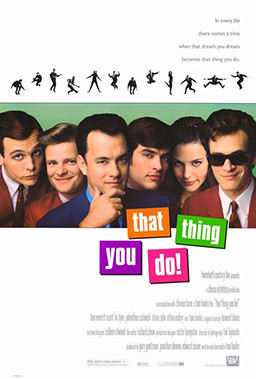
6. That Thing You Do!
Tom Hanks wrote and directed this film about a fictional Erie, Pennsylvania band who accidentally record a hit in 1964. The recording session at the local studio — one afternoon, no time for second-guessing — is the film’s emotional centre.
The engineer they hire clearly knows more than the band about how to get a sound. The producer from the label arrives and moves things quickly. The song transforms between the first runthrough and the final take. Lightweight, but technically honest in ways that bigger-budget films aren’t.
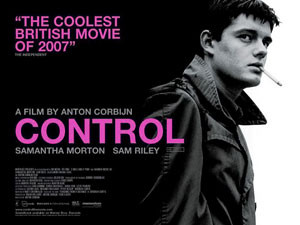
7. Control
Anton Corbijn shot Joy Division’s story in black and white in the actual towns where Ian Curtis lived — Macclesfield, Manchester, Stockport. The Strawberry Studios sessions show what it looked like to record post-punk in the UK in 1977 with a minimal budget and a producer, Martin Hannett, who was building his own sound from the room up.
Hannett’s methods — recording the drums in a stairwell, treating silence as an instrument — are visible in the sound of what comes out. The film understands that a production aesthetic is a decision made in a specific room with specific constraints, not an abstraction.
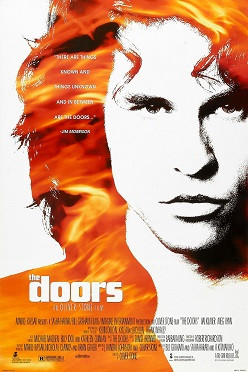
8. The Doors
Oliver Stone’s film is too much of many things, but the Sunset Sound sequences work. The band’s recording process is shown as democratic chaos — four strong personalities and a producer (Paul Rothchild) trying to capture something live that could barely hold its shape in a live room.
Jim Morrison’s sessions in the vocal booth — some of the most famous vocal performances in rock history recorded in a relatively small room in Hollywood — become confrontational scenes between an artist unwilling to compromise and an engineer trying to get a usable take.
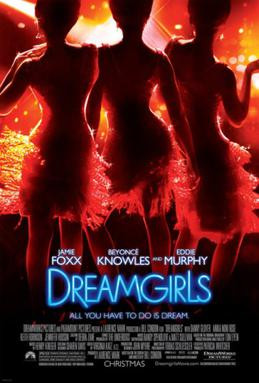
9. Dreamgirls
The Motown-era fictional story follows a Detroit girl group from their first session at a small local studio to over-produced major label pop. That arc — from raw to polished to sanitised — is shown through the studio scenes themselves.
Early sessions are cramped, the sound is live, musicians play in the same room. Later sequences at larger facilities show the separation that came with success: orchestral overdubs, isolation booths, the producer making decisions the artist doesn’t understand. The studio becomes a measure of how far the music has drifted from where it started.
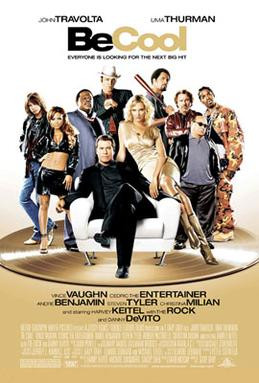
10. Be Cool
The sequel to Get Shorty moves Chili Palmer from the film industry into the music business and the satire is sharp enough to include the recording process. Studio time as a power flex. Session musicians waiting while executives argue. The A&R man who cannot hear but insists on making calls.
It is funnier than it is accurate, but the skewering of label studio culture — the entourage, the wasted time, the fundamental question of who the session is actually for — lands because it is grounded in how the business actually worked in the early 2000s.
Honourable Mentions
Michael (2025) — Antoine Fuqua’s Jackson biopic covers the Westlake Audio sessions where Thriller and Bad were made. Jackson’s obsessive relationship with Studio B is one of the defining chapters in modern recording history.
Rocketman (2019) — The Trident Studios sequences show Elton John and Bernie Taupin’s early partnership with enough period detail to satisfy anyone who knows the room.
Eddie and the Cruisers (1983) — Built entirely around a mystery: what happened to the master tapes of an album that was never released? The premise — that a recording session is an event that exists and then disappears — is quietly philosophical.
Begin Again (2013) — A music producer signs a singer-songwriter and records her album on location across New York City. Less about studio culture, more about what gets lost when the studio becomes a factory.
The common thread across all ten: a session is a negotiation. Between what the artist hears in their head and what a room, a microphone, and another pair of ears can actually capture. The best of these films understand that the recording studio is not a neutral space — it shapes what gets made inside it.