Heritage Archive · Microphones

The Microphones That Shaped
Recorded Sound

Legendary microphones across 9 manufacturers — Neumann, Telefunken, AKG, RCA, Coles, Shure, Sony, Sennheiser, and more.

🇩🇪 Neumann

Germany — est. 1928

The Benchmark of Studio Microphones.

neumann.com ↗

Georg Neumann founded his company in Berlin in 1928. Within two years he had delivered the CMV3 — the first commercially successful condenser microphone. For the next nine decades, Neumann defined what professional studio sound meant to the world.

The U 47, U 67, M 49, and U 87 are not merely products; they are the instruments on which the defining recordings of the twentieth century were made. From Frank Sinatra's Columbia recordings to the Beatles at Abbey Road, from Miles Davis to Michael Jackson, the sound of recorded music is inextricably linked to the Neumann capsule.

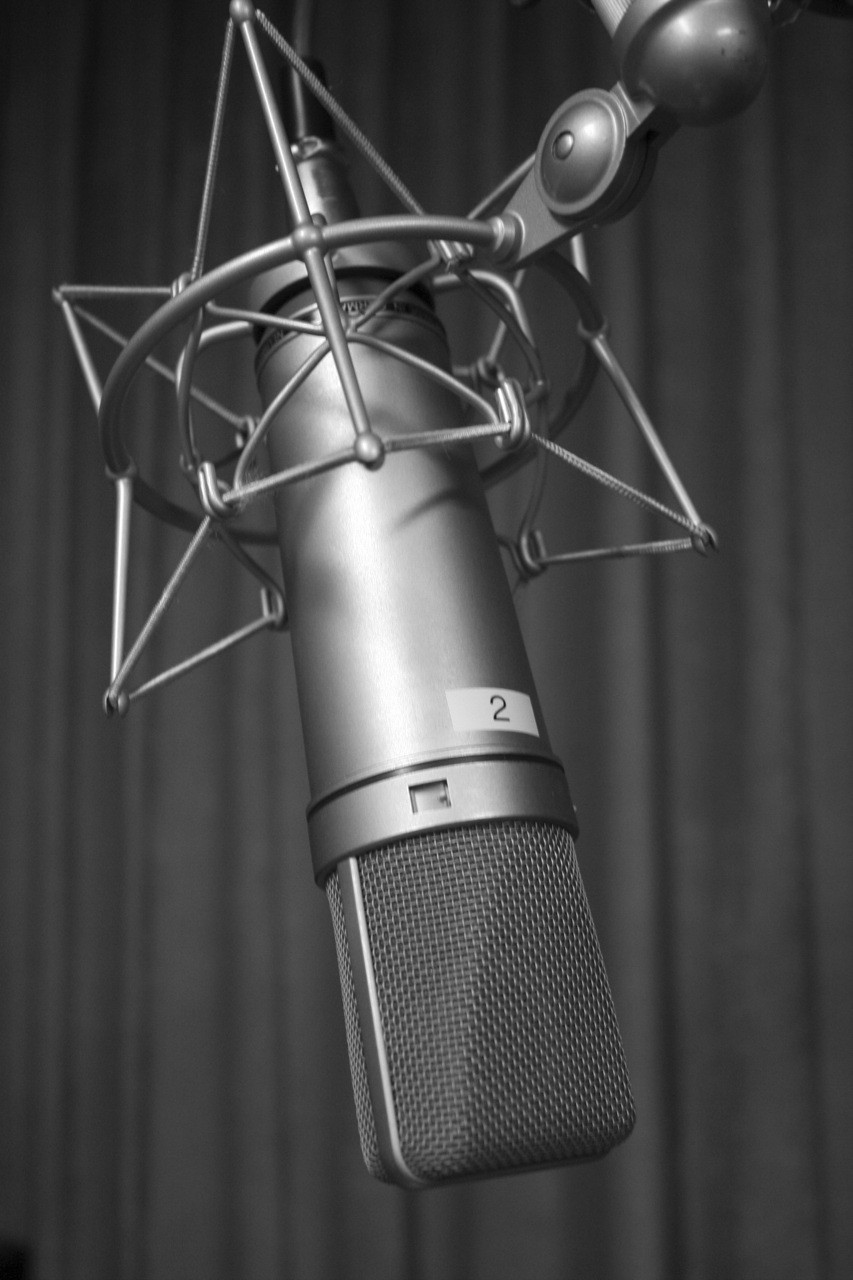
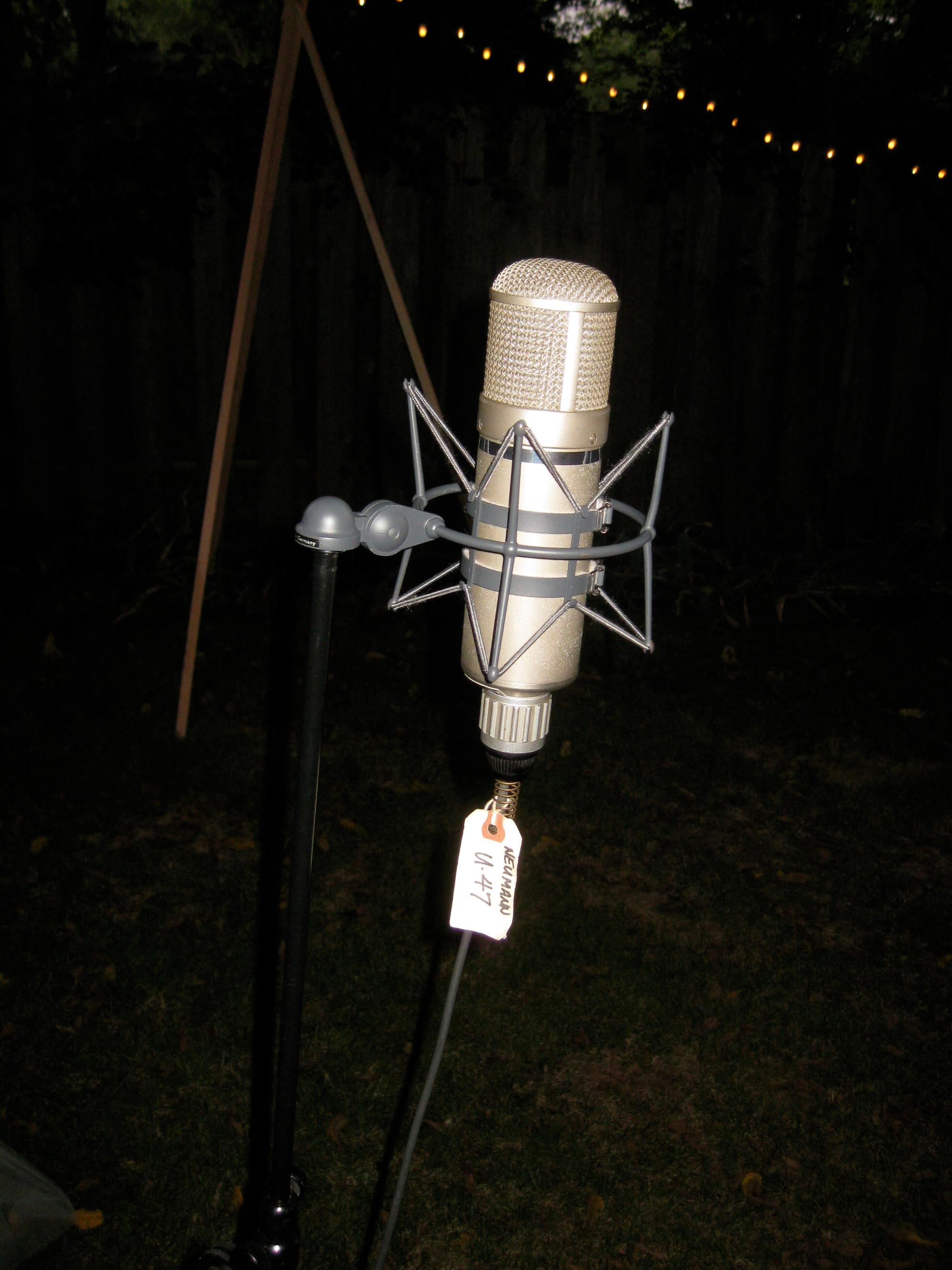
Neumann U 47

1947 – 1965  ·  Large-diaphragm tube condenser

Golden Age Cardioid Omnidirectional

The first truly transformative studio microphone — and by most engineers' reckoning, still the finest ever made. The U 47 was built around the Telefunken VF14 vacuum tube, a component so central to its sound that when Telefunken discontinued the VF14 in the mid-1960s, Neumann had no choice but to end production. Frank Sinatra recorded entire Capitol albums on the U 47. The Beatles used it throughout their Abbey Road years. The warmth of its M7 nylon-membrane capsule combined with the musicality of the VF14 circuit produces a midrange presence that no digital recreation has convincingly replicated.

Telefunken VF14 vacuum tube Neumann M7 nylon capsule Switchable cardioid / omni Custom Haufe transformer Requires dedicated PSU

Notable users

Frank Sinatra, The Beatles, Elvis Presley, Miles Davis, Ella Fitzgerald

Technical specs

Frequency response 40Hz – 16kHz
Sensitivity –36 dBV/Pa
Self-noise ~13 dB-A
Max SPL 124 dB
Output impedance 200 Ω
Polar pattern Cardioid / Omni

Market value

$8,000 – $25,000

Rarity

Rare

◆ Iconic recording Frank Sinatra — In the Wee Small Hours (1955)

Neumann M 49

1951 – 1971  ·  Large-diaphragm tube condenser

Golden Age Cardioid Omnidirectional Figure-8

The first microphone in history with remotely variable polar patterns. A dedicated power supply allowed the engineer to switch between cardioid, omni, and figure-8 without touching the mic — a capability so ahead of its time that it defined orchestral recording practice for two decades. The M 49 shared the M7 capsule of the U 47, giving it the same fundamental warmth, but its multi-pattern flexibility made it the instrument of choice for Deutsche Grammophon, Decca, and EMI classical recording teams. The combination of M7 capsule and remotely switchable patterns has never truly been bettered for orchestral work.

Remotely variable polar pattern M7 capsule (shared with U 47) VF14 tube variant Custom multi-pin connector Broadcast & orchestral optimised

Notable users

Deutsche Grammophon, Decca recording teams, Herbert von Karajan, EMI classical engineers

Technical specs

Frequency response 40Hz – 16kHz
Sensitivity –35 dBV/Pa
Self-noise ~12 dB-A
Max SPL 120 dB
Output impedance 200 Ω
Polar pattern Cardioid / Omni / Figure-8

Market value

$6,000 – $18,000

Rarity

Rare

◆ Iconic recording Herbert von Karajan — Berlin Philharmonic, DG (1955–1965)

Neumann U 67

1960 – 1971  ·  Large-diaphragm tube condenser

Golden Age Cardioid Omnidirectional Figure-8

Developed to replace the M 49 with a more versatile multi-pattern design, the U 67 introduced the K67 capsule — a design whose fundamental geometry Neumann continues to use in the U 87 to this day. The EF86 pentode tube gave the U 67 a slightly different character from the U 47: a touch more extended in the high frequencies, a shade less coloured in the low midrange, but with the same fundamental quality of making every source sound better than it sounds through any other microphone. Engineers at Olympic, Trident, and Island Records paired U 67s with U 47s throughout the golden era of British rock recording.

EF86 pentode tube K67 capsule (ancestor of U 87) Three polar patterns Switchable 10 dB pad Requires N67 power supply

Notable users

The Rolling Stones, Led Zeppelin, Eric Clapton, Olympic Studios engineers, Trident Studios engineers

Technical specs

Frequency response 40Hz – 16kHz
Sensitivity –38 dBV/Pa
Self-noise ~12 dB-A
Max SPL 125 dB
Output impedance 200 Ω
Polar pattern Cardioid / Omni / Figure-8

Market value

$5,000 – $15,000

Rarity

Moderate

◆ Iconic recording The Rolling Stones — Let It Bleed (1969)

Neumann U 87

1967 – present  ·  Large-diaphragm FET condenser

Transitional Cardioid Omnidirectional Figure-8

The single most widely installed studio microphone in history. Introduced in 1967 as a solid-state counterpart to the tube U 67, the U 87 went on to become the default vocal microphone in commercial recording worldwide. The Ai revision of 1986 reduced self-noise and increased output level; virtually all studio U 87s are Ai variants today. Its neutral midrange, controlled presence peak around 9kHz, and consistent performance across decades made it the reference point against which every other large-diaphragm condenser is measured — whether manufacturers admit it or not.

FET solid-state circuit K67 variant capsule Three polar patterns Switchable –10 dB pad Switchable 80Hz high-pass filter 48V phantom power

Notable users

Michael Jackson, Whitney Houston, U2, David Bowie, Madonna, Virtually every major recording artist since 1967

Technical specs

Frequency response 20Hz – 20kHz
Sensitivity –36 dBV/Pa (Ai)
Self-noise 12 dB-A (Ai)
Max SPL 127 dB (Ai)
Output impedance 200 Ω
Polar pattern Cardioid / Omni / Figure-8

Market value

$2,500 – $3,500 (new) · $800 – $1,500 (vintage)

Rarity

Common

◆ Iconic recording Michael Jackson — Thriller (1982)

🇩🇪 Telefunken

Germany — est. 1903

Ultra Rare. Unrepeatable.

telefunken-elektroakustik.com ↗

The original Telefunken company was a major German electronics manufacturer that distributed and licensed microphones built by AKG in the 1950s and 1960s. The ELA M 251 — built by AKG to Telefunken's specification and bearing Telefunken's name — is considered by many engineers to be the most perfect microphone ever manufactured.

Fewer than 500 original ELA M 251s were ever made in the 1960 to 1962 production run. Today, the Telefunken brand has been revived as an American company (Telefunken Elektroakustik) that produces modern reissues. But the originals are in a category of their own — instruments rather than tools, commanding prices that reflect their scarcity and legendary status.

Telefunken ELA M 251

1960 – 1962  ·  Large-diaphragm tube condenser

Golden Age Cardioid Omnidirectional Figure-8

Fewer than 500 were ever made in the original production run, and every one of them is still being used somewhere. The ELA M 251 was built by AKG to Telefunken's specification and sold under the Telefunken name in Germany, while AKG sold the same circuit as the C 12A in Austria. The CK12 brass ring capsule combined with the Telefunken ECC81 tube produces a sound that engineers describe in terms that barely sound like microphone specifications: three-dimensional, transparent, musical, alive. Tony Bennett, Barbra Streisand, and Diana Krall are among the vocalists who have specifically requested the 251 on sessions.

AKG CK12 brass ring capsule Telefunken ECC81 tube Three step-switched polar patterns Custom transformer Requires dedicated power supply

Notable users

Tony Bennett, Barbra Streisand, Diana Krall, Celine Dion, Studio sessions worldwide

Technical specs

Frequency response 20Hz – 20kHz
Sensitivity –32 dBV/Pa
Self-noise ~14 dB-A
Max SPL 124 dB
Output impedance 200 Ω
Polar pattern Cardioid / Omni / Figure-8

Market value

$15,000 – $40,000

Rarity

Ultra Rare

◆ Iconic recording Tony Bennett — I Left My Heart in San Francisco (1962)

🇦🇹 AKG

Austria — est. 1947

Austrian Precision. Studio Everywhere.

akg.com ↗

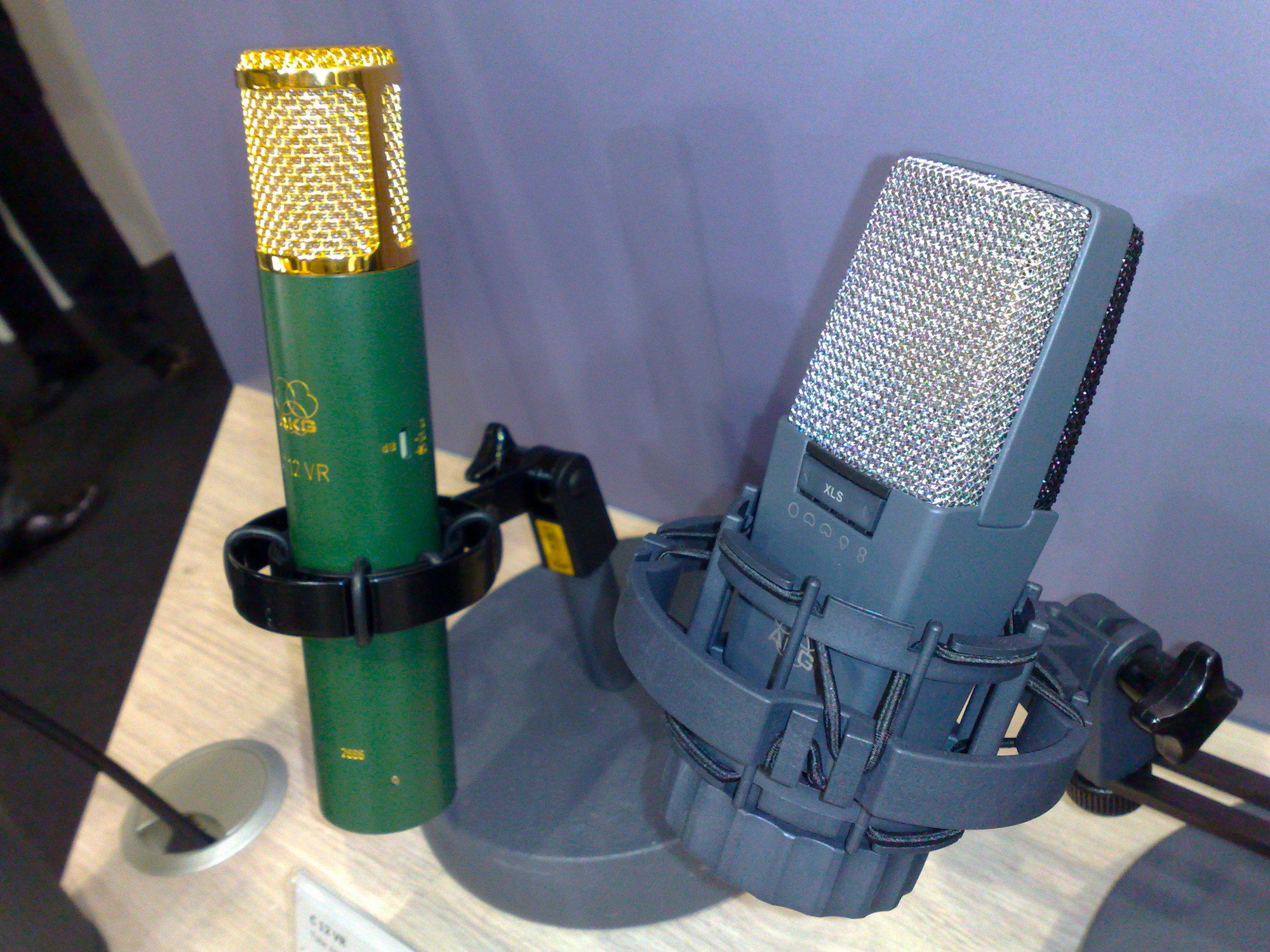
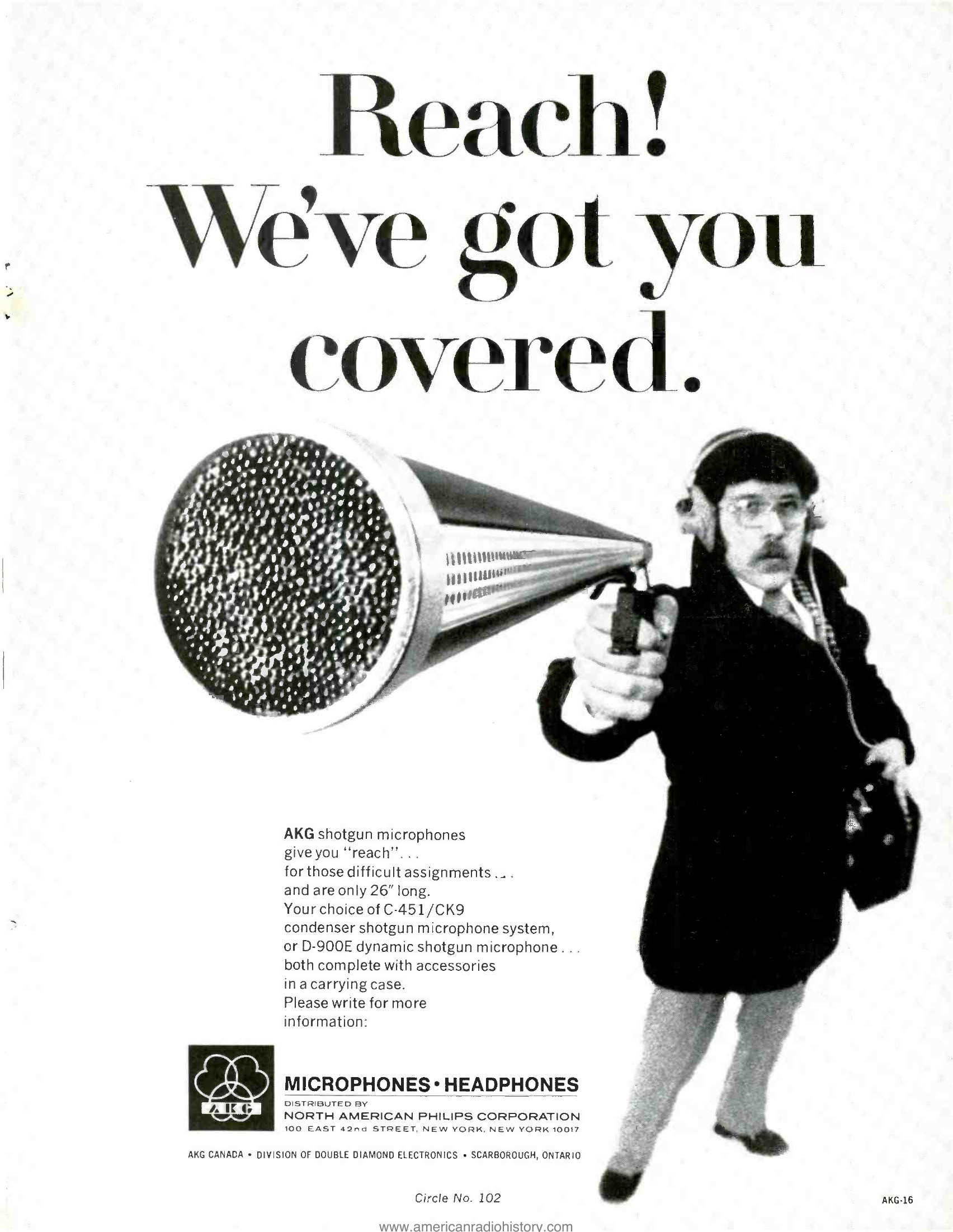
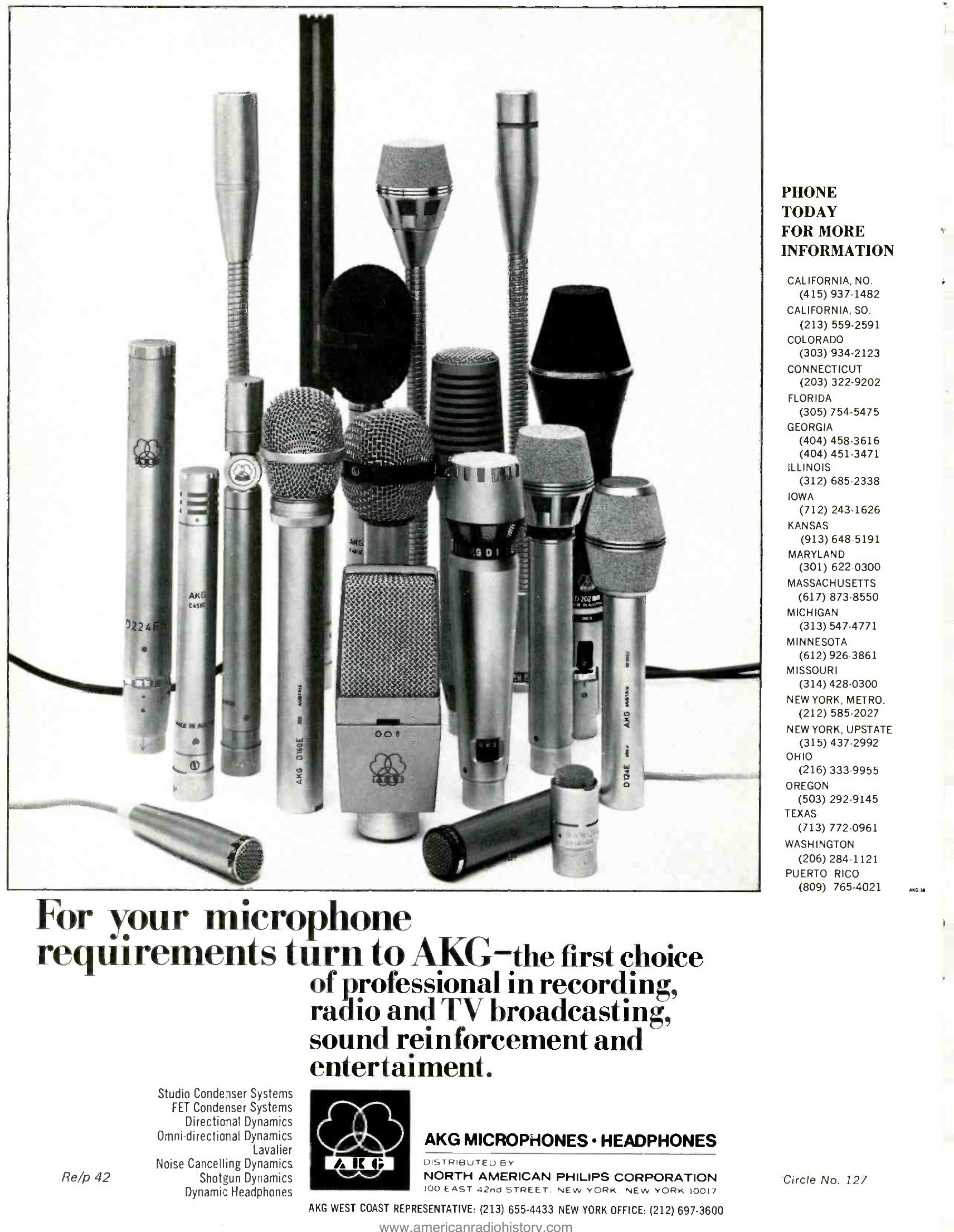
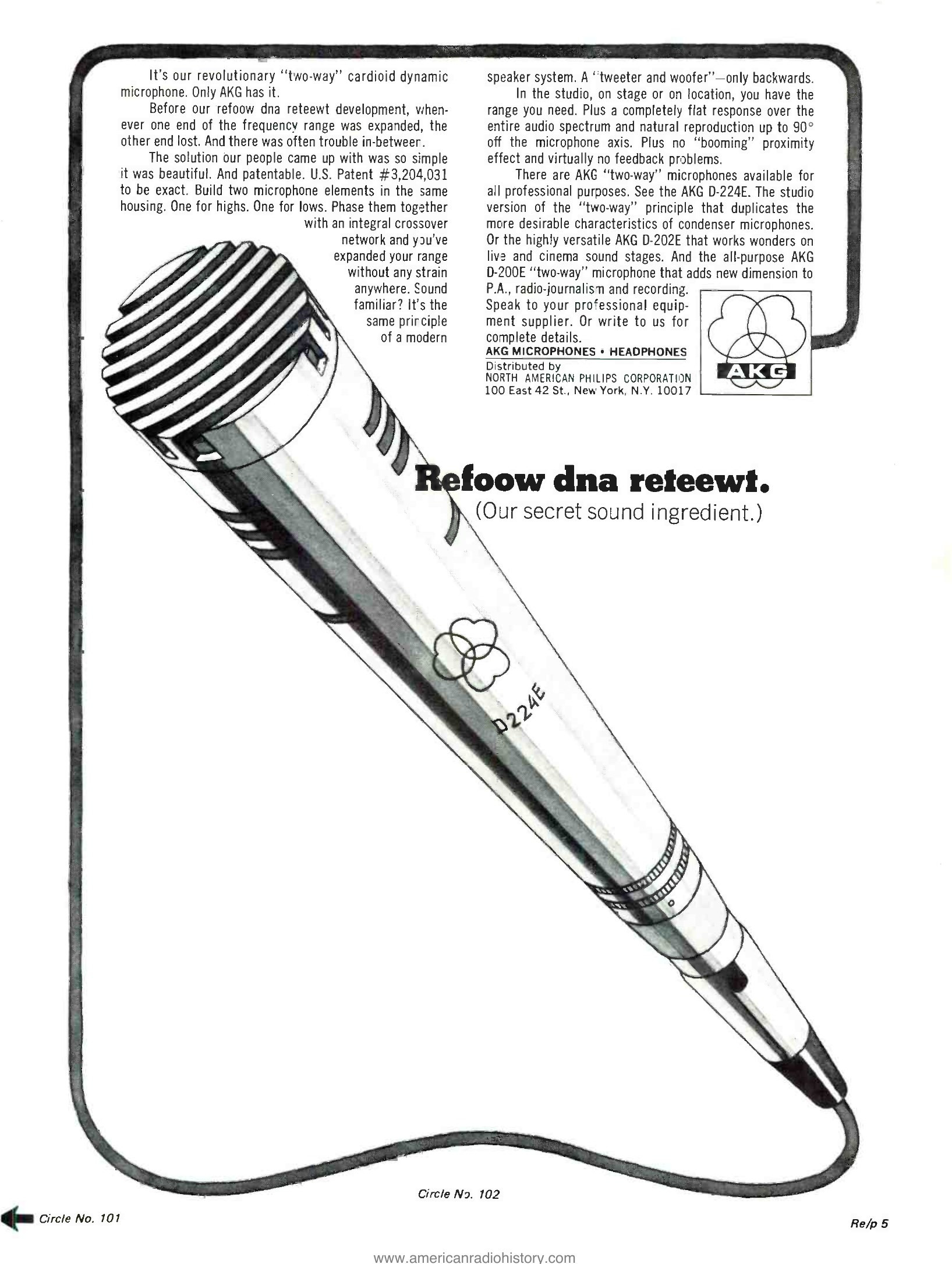
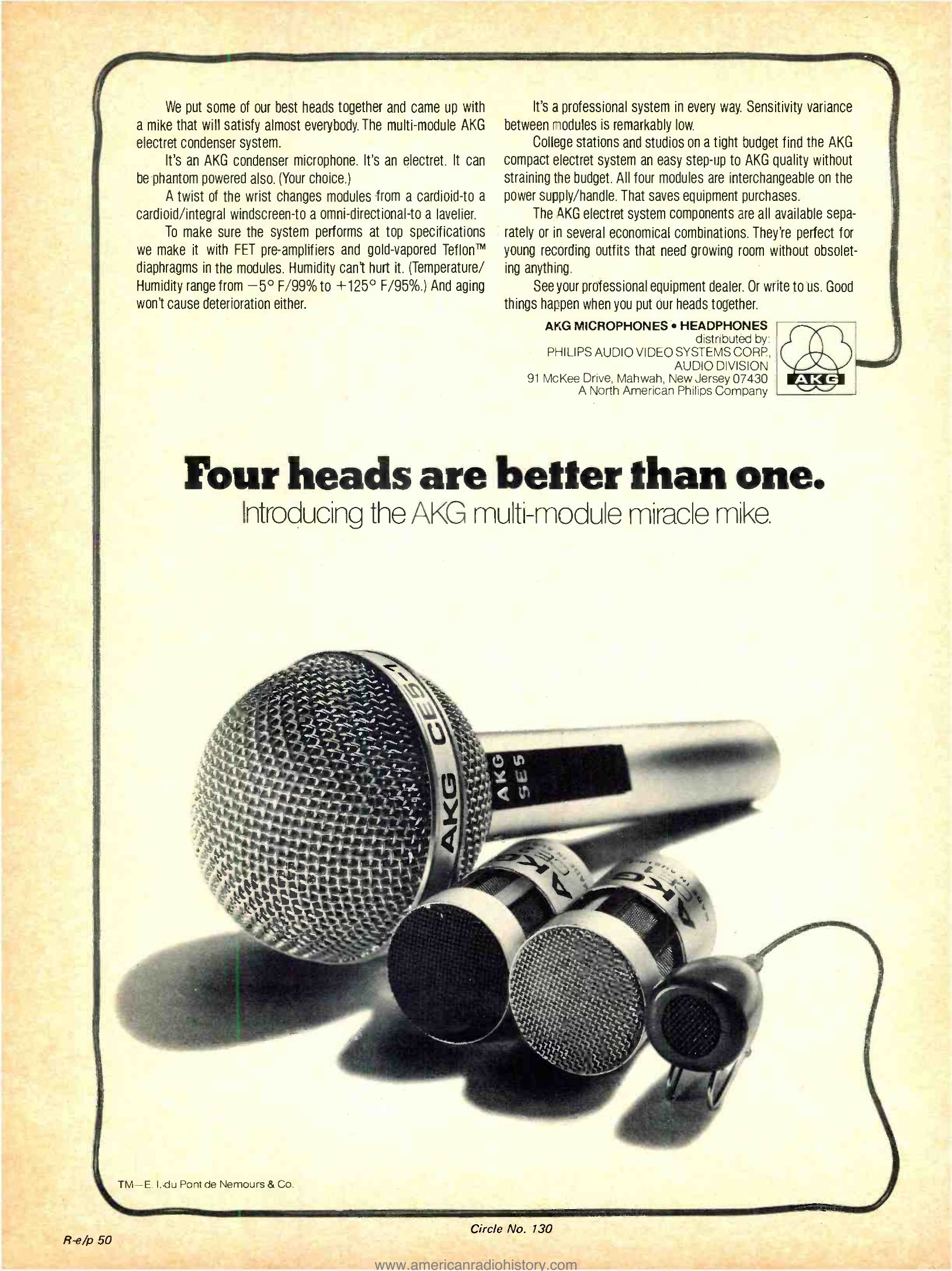
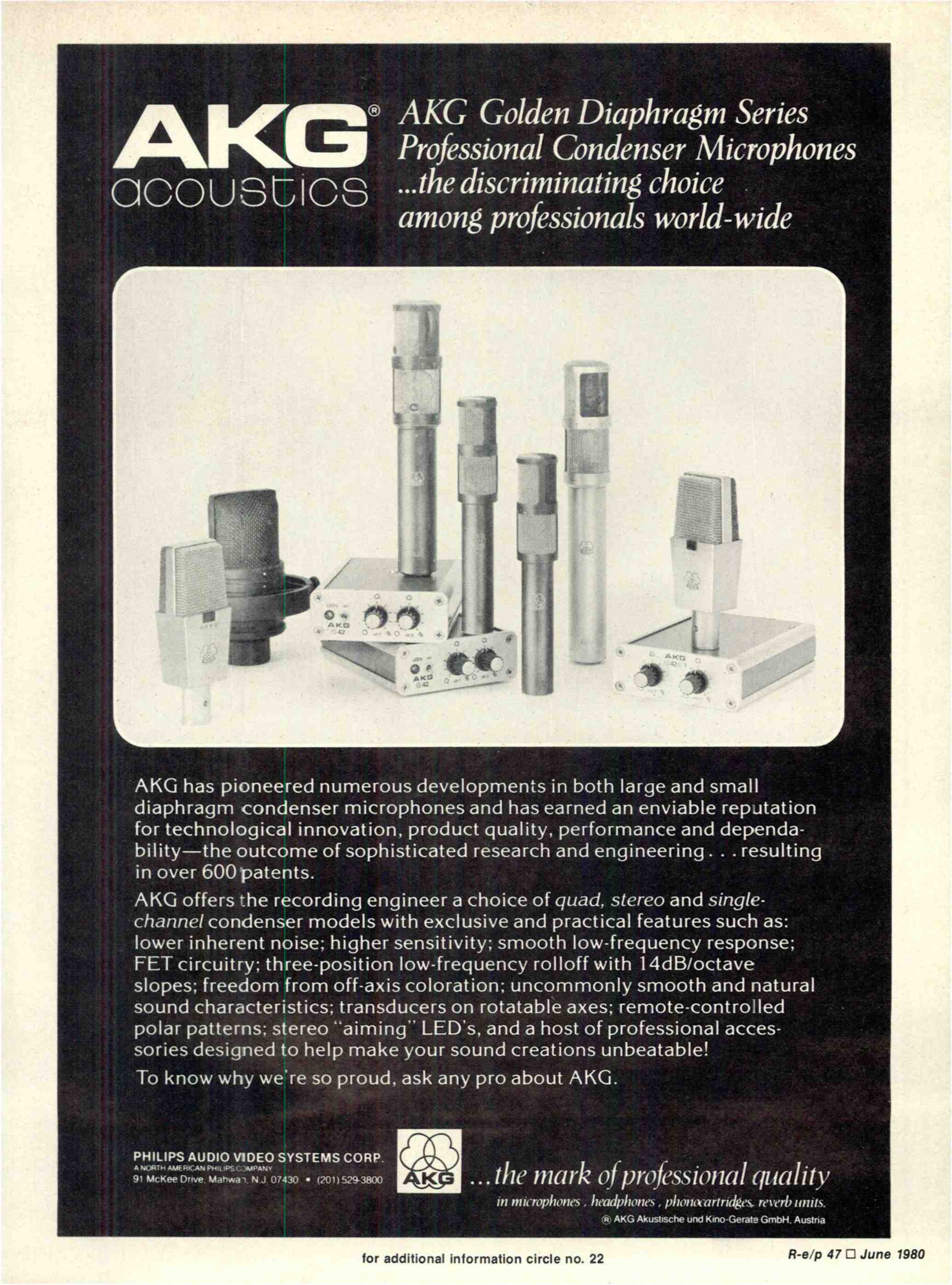
AKG Acoustics was founded in Vienna in 1947 by Rudolf Görike and Ernst Pless. Within a decade it had produced the C 12 — the microphone that introduced switchable polar patterns to the professional studio, and whose CK12 capsule design became the circuit at the heart of the Telefunken ELA M 251.

The C 414, introduced in 1971 and still in production today, became the most versatile and widely used large-diaphragm condenser in professional recording. Where Neumann defined the premium vocal standard, AKG carved out the working engineer's toolkit — instruments you could throw at anything and trust completely.

AKG C 12

1953 – 1963  ·  Large-diaphragm tube condenser

Golden Age Cardioid Omnidirectional Figure-8 + six intermediate positions

The C 12 was the microphone that introduced switchable polar patterns to the studio world. Nine positions — from omni through cardioid to figure-8 — were selectable via a remote control box, allowing engineers to adapt to any acoustic situation without moving the microphone. The CK12 brass ring capsule, with its flat-top transient response and smooth high-frequency extension, defined a tonal signature that AKG refined for decades. Working examples from the original production run are among the most sought-after vintage microphones on the planet.

CK12 brass ring capsule Telefunken ECC81 tube Nine switchable polar positions Remote pattern control box Custom transformer

Notable users

European broadcast studios, Classical recording labels, Austrian Radio (ORF)

Technical specs

Frequency response 30Hz – 20kHz
Sensitivity –32 dBV/Pa
Self-noise ~14 dB-A
Max SPL 124 dB
Output impedance 200 Ω
Polar pattern 9 positions (omni to fig-8)

Market value

$10,000 – $30,000

Rarity

Rare

◆ Iconic recording Multiple European classical recordings, 1950s–1960s

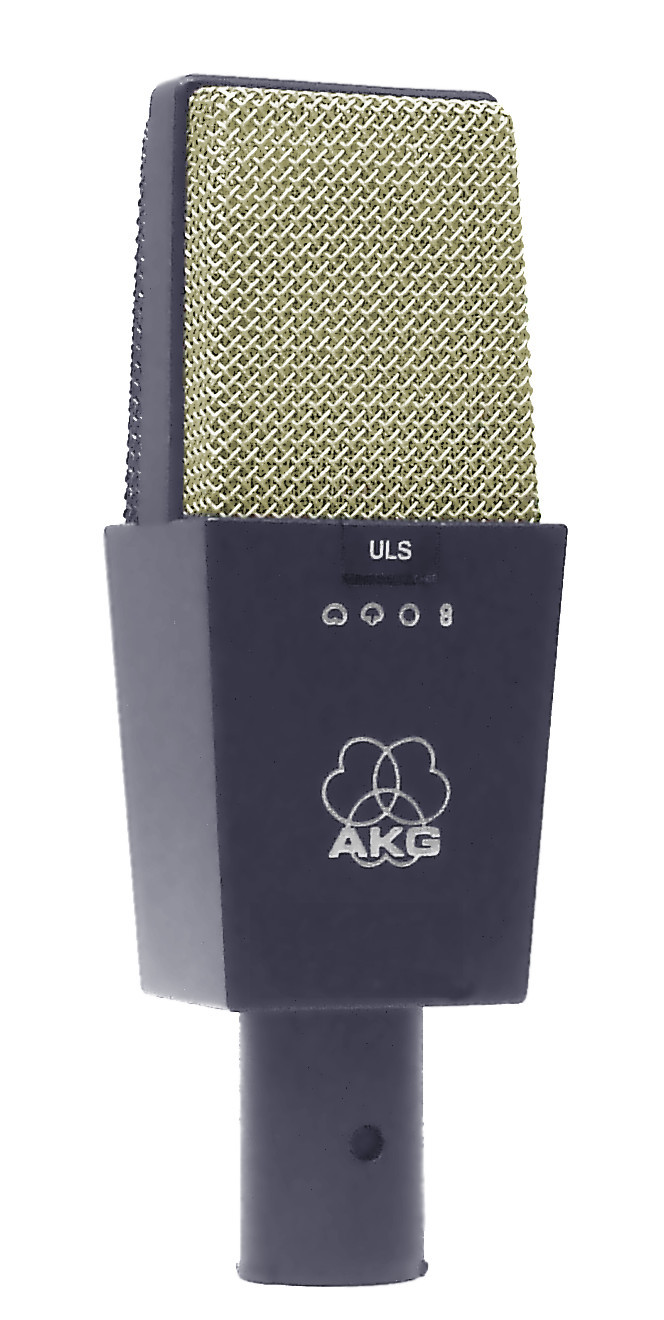
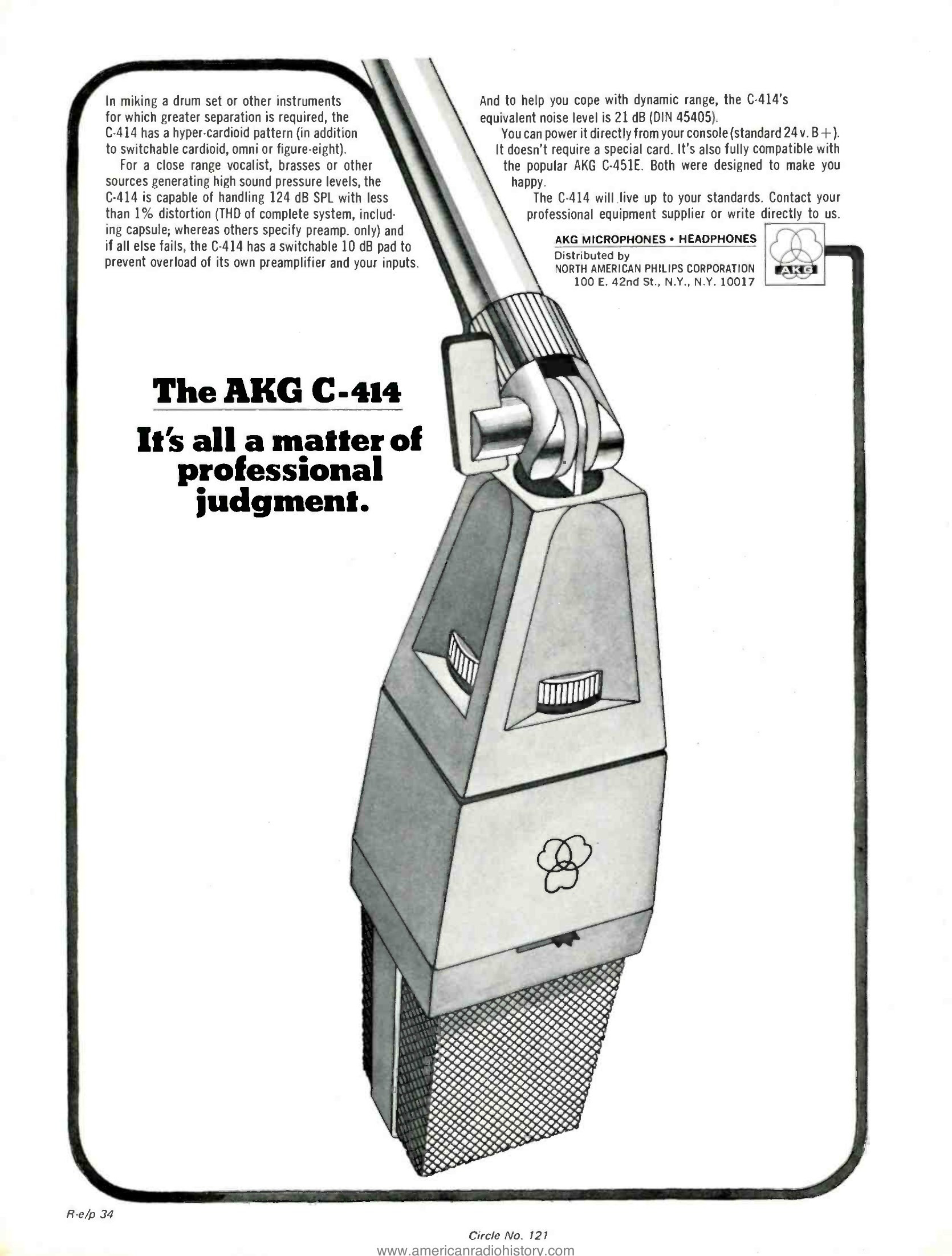
AKG C 414

1971 – present  ·  Large-diaphragm FET condenser

Transitional Cardioid Omnidirectional Figure-8 Wide cardioid Hypercardioid

The C 414 has been in continuous production for over five decades, in variants that trace the entire arc of professional audio technology — from the B-ULS to the TL II to the XLS and XL II. Its combination of multi-pattern flexibility, high maximum SPL, low self-noise, and a flat frequency response that works on virtually any source made it the default workhorse of professional studios worldwide. Engineers reach for the C 414 on drum overheads, acoustic guitars, piano, brass, and anything that needs reliable, neutral capture. It is the definition of a professional tool.

Multiple polar patterns (5 in current models) Three switchable pads (0, –6, –12, –18 dB) Three high-pass filter settings 48V phantom power High max SPL (up to 158 dB with pad)

Notable users

Engineers worldwide, Drum overheads on countless hit records, Broadcast and post-production standard

Technical specs

Frequency response 20Hz – 20kHz
Sensitivity –36 dBV/Pa (XL II)
Self-noise 6 dB-A (XL II)
Max SPL 140 dB (XL II, 0 dB pad)
Output impedance 200 Ω
Polar pattern 5 positions

Market value

$700 – $1,100 (new)

Rarity

Common

◆ Iconic recording Standard overhead mic on thousands of major-label recordings

🇺🇸 RCA

United States — est. 1919

The Voice of American Broadcasting.

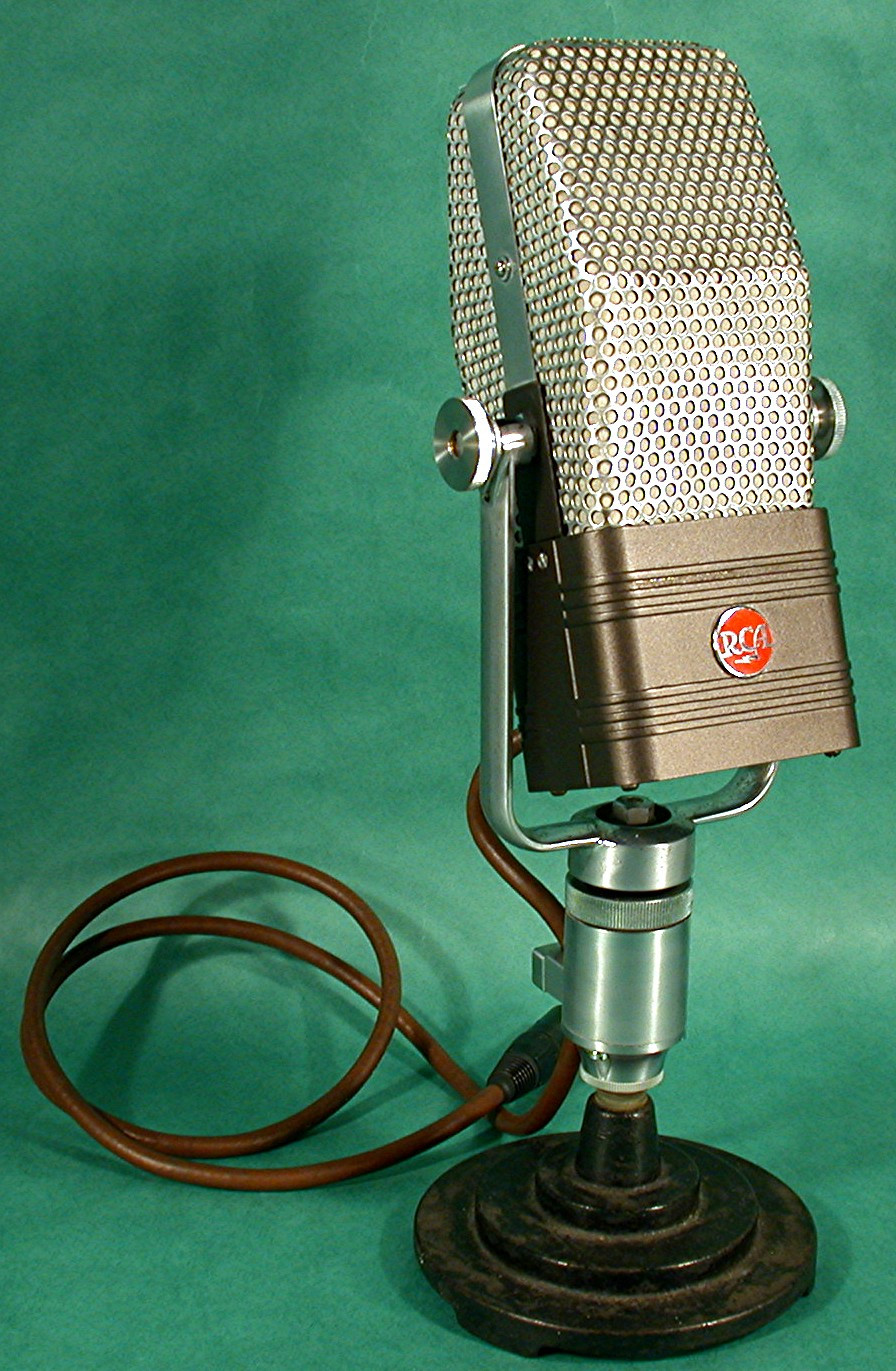
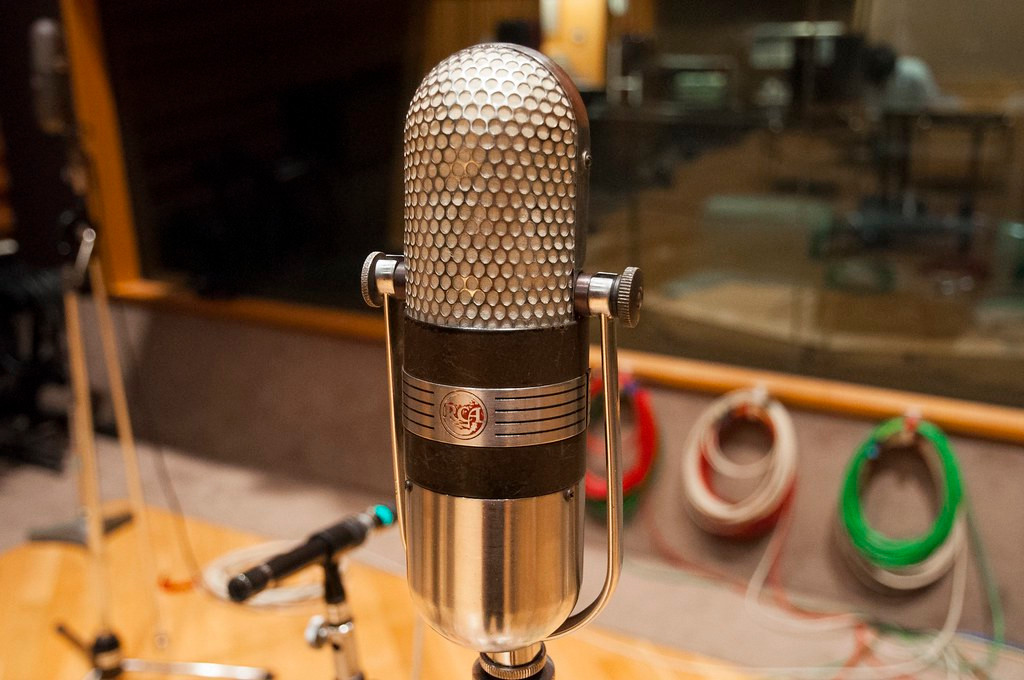
RCA's ribbon microphones defined the sound of American broadcast radio and the golden age of Hollywood recording. The 44-BX, introduced in 1931, became the standard of the American recording industry for two decades — its figure-8 ribbon element capturing a warmth and natural proximity effect that condenser microphones of the era could not match.

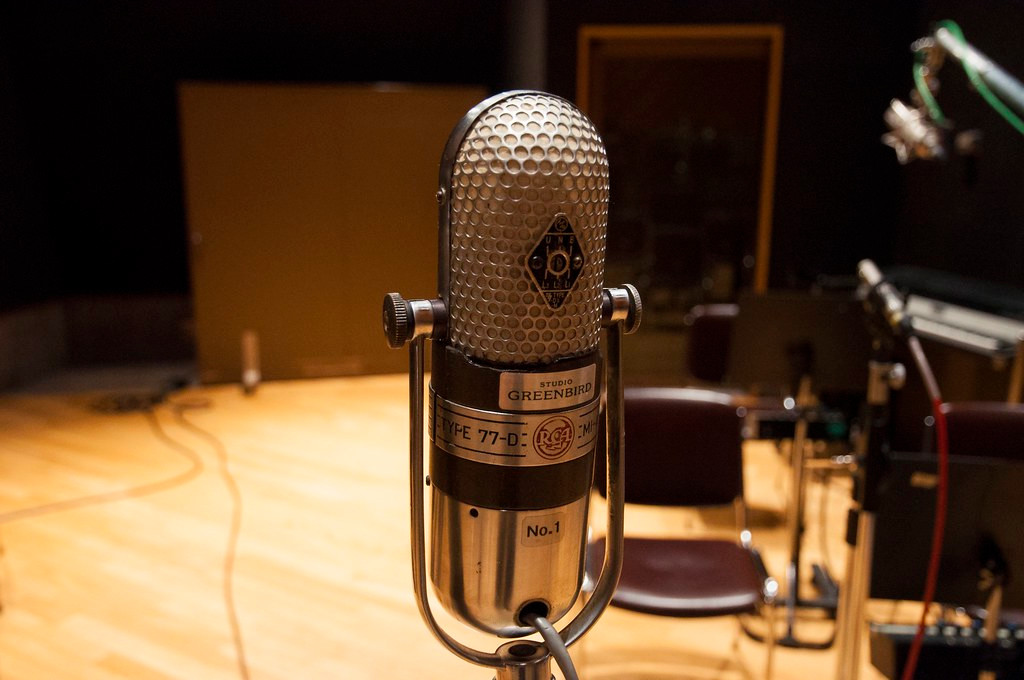
The distinctive visual design of RCA ribbons — particularly the 44-BX with its art-deco grille and the 77-DX with its rounded housing — made them icons of mid-century American culture. They appear in thousands of photographs of Frank Sinatra, Nat King Cole, and virtually every major American performer of the 1940s and 1950s.

RCA 44-BX

1931 – 1955  ·  Large-diaphragm ribbon (bidirectional)

Golden Age Figure-8

The microphone that defined the sound of American broadcast radio and the golden age of Hollywood recording. The 44-BX's aluminium ribbon element, corrugated for mechanical compliance, captures sound with a naturalness and warmth that modern condenser microphones have spent decades trying to replicate. The figure-8 pattern means it captures equal amounts of sound from front and back, rejecting sound from the sides — a property that engineers exploit for room sound, brass, and the classic "two vocalists at one mic" recording technique. Every major American recording facility owned 44-BXs; many still use them today.

Aluminum ribbon element Fixed figure-8 pattern Art-deco external grille Transformer output Phantom power will destroy the ribbon

Notable users

Bing Crosby, Frank Sinatra, Nat King Cole, Glenn Miller, Every major American radio broadcaster (1930s–1950s)

Technical specs

Frequency response 50Hz – 15kHz
Sensitivity –54 dBV/Pa
Self-noise ~18 dB-A
Output impedance 150 Ω
Polar pattern Figure-8 (bidirectional)
Element Corrugated aluminum ribbon

Market value

$2,000 – $6,000

Rarity

Moderate

◆ Iconic recording Bing Crosby — White Christmas (1942)

RCA 77-DX

1954 – 1967  ·  Variable-pattern ribbon

Golden Age Figure-8 Unidirectional Variable intermediate

The 77-DX became one of the most visually recognised microphones in history — not because of its sound (which is excellent), but because it was so frequently photographed on television. The rounded, distinctive housing of the 77-DX appears behind virtually every major American entertainer of the 1950s and 1960s. The variable pattern control allowed engineers to blend the ribbon's figure-8 response toward cardioid for broadcast applications where side rejection was important. Elvis Presley, Perry Como, and Johnny Carson were all photographed repeatedly singing into 77-DXs.

Variable polar pattern control Aluminium ribbon element Lever-style pattern selector Custom impedance transformer

Notable users

Elvis Presley, Perry Como, Dean Martin, American broadcast presenters

Technical specs

Frequency response 50Hz – 15kHz
Sensitivity –52 dBV/Pa
Self-noise ~20 dB-A
Output impedance 150 Ω
Polar pattern Variable (fig-8 to cardioid)
Element Corrugated aluminum ribbon

Market value

$1,500 – $4,000

Rarity

Moderate

◆ Iconic recording Standard television broadcast mic, 1950s–1960s American TV

🇬🇧 Coles Electroacoustics

United Kingdom — est. 1954

The BBC Standard. The Bonham Sound.

coles-microphones.com ↗

Coles Electroacoustics was established in 1954 as the microphone manufacturing arm of the BBC's research department. The 4038 ribbon microphone, developed in collaboration with the BBC, became the standard microphone for BBC broadcast recording and remains in continuous production today — an extraordinary record for any technical instrument.

The 4038's figure-8 ribbon pattern and characteristic gentle high-frequency roll-off, combined with its exceptional transient response, made it the instrument of choice for drum overheads in rock and jazz recording from the 1960s onwards. John Bonham's famous drum sound on Led Zeppelin recordings was captured with Coles 4038s overhead — a fact so frequently cited that the mic became synonymous with the Bonham sound.

Coles Electroacoustics 4038

1954 – present  ·  Ribbon (bidirectional)

Golden Age Figure-8

Developed for BBC broadcast in 1954 and still in production today, the 4038 is one of the longest-running continuously manufactured professional microphones in history. The gentle high-frequency roll-off of its ribbon element, combined with the naturally smooth transient response of the bidirectional pattern, produces a drum overhead sound of remarkable depth and musicality. Engineers Andy Johns and Eddie Kramer used 4038s as the primary overhead microphones on John Bonham's drum kit throughout the Led Zeppelin catalog. The smooth, deep thud of the Bonham kick and the airy shimmer of his overheads are inseparable from the 4038's sonic character.

Corrugated aluminum ribbon Figure-8 pattern Smooth high-frequency roll-off No phantom power (harmful to ribbon) BBC broadcast approved Made in England

Notable users

John Bonham (Led Zeppelin), Andy Johns, Eddie Kramer, BBC broadcast engineers, Jazz and orchestral engineers

Technical specs

Frequency response 30Hz – 15kHz
Sensitivity –66 dBV/Pa
Self-noise ~20 dB-A
Output impedance 300 Ω
Polar pattern Figure-8 (bidirectional)
Element Corrugated aluminum ribbon

Market value

$700 – $950 (new)

Rarity

Common

◆ Iconic recording Led Zeppelin — When the Levee Breaks (1971)

🇺🇸 Shure

United States — est. 1925

Built for Live. Trusted for Record.

shure.com ↗

Shure was founded in Chicago in 1925 by Sidney Shure. By the 1960s the company had established itself as the global leader in dynamic microphones — rugged, reliable instruments built for live performance and broadcasting. The SM57 and SM7B became two of the most trusted professional microphones ever made.

The SM7B's moment of cultural alchemy came in 1982 when engineer Bruce Swedien chose it for Michael Jackson's lead vocal on Thriller — a recording that became the best-selling album in history. The idea of using a broadcast dynamic mic for studio vocal work was unconventional; the result was definitive.

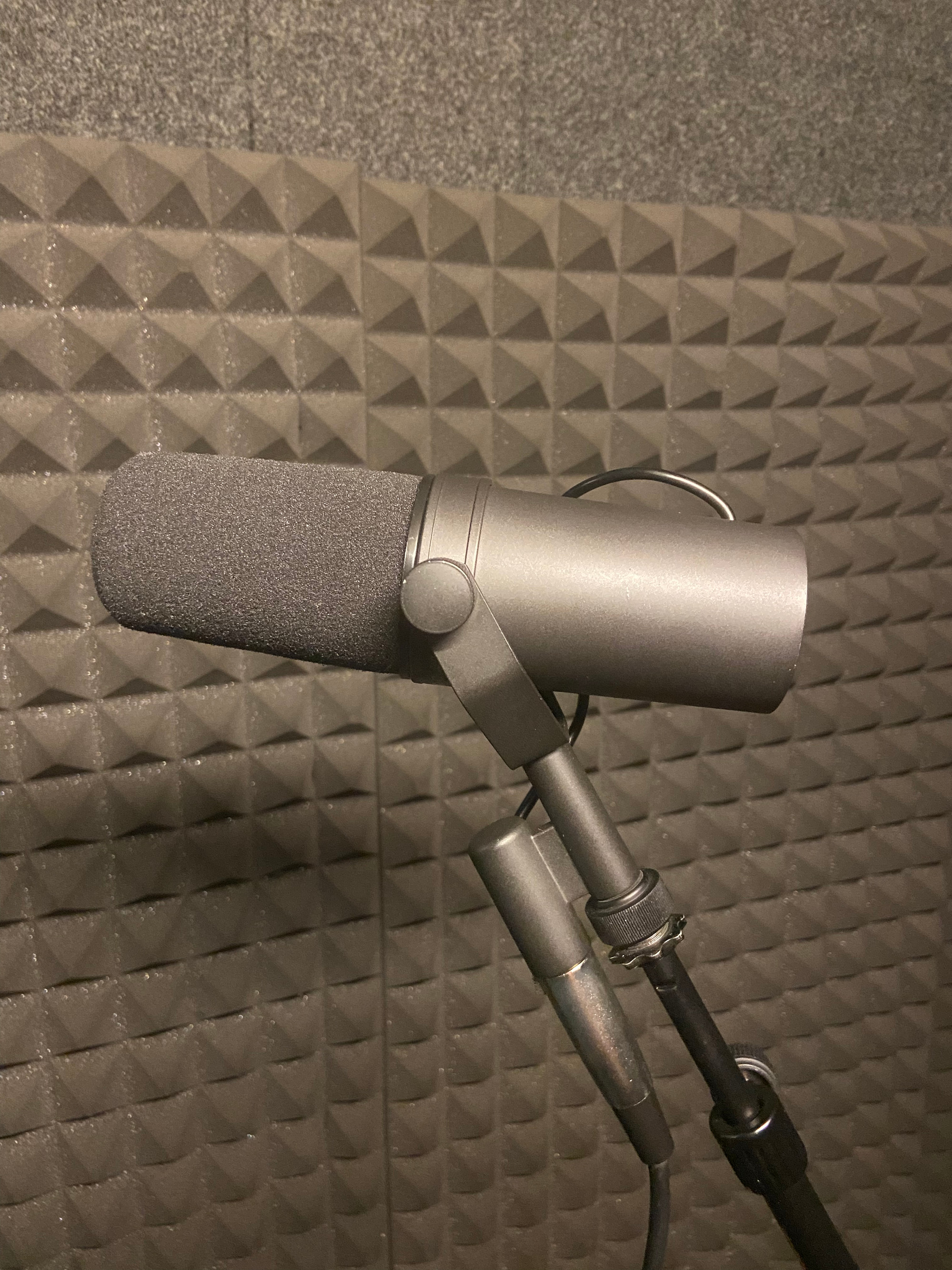
Shure SM7B

1973 – present  ·  Large-diaphragm dynamic

Transitional Cardioid

Originally designed as a broadcast microphone for radio and TV production, the SM7B became one of the most significant vocal microphones in recording history when engineer Bruce Swedien selected it for Michael Jackson's lead vocal on the Thriller album. The combination of the SM7B's smooth cardioid response, excellent off-axis rejection, and absence of the proximity effect exaggeration that plagues condenser microphones made it perfect for Jackson's close-mic technique. Following Thriller, the SM7B became a fixture in broadcast, podcast, and studio applications worldwide — and its cultural cachet continues to grow.

Cardioid dynamic element Internal pop filter Switchable high-pass filter Switchable presence boost Yoke mount with detachable swivel adapter No phantom power required

Notable users

Michael Jackson, Bruce Swedien, Howard Stern, Joe Rogan, Metallica, Anthony Kiedis

Technical specs

Frequency response 50Hz – 20kHz
Sensitivity –59 dBV/Pa
Self-noise ~20 dB-A
Max SPL >180 dB
Output impedance 150 Ω
Polar pattern Cardioid

Market value

$350 – $400 (new)

Rarity

Common

◆ Iconic recording Michael Jackson — Thriller (1982)

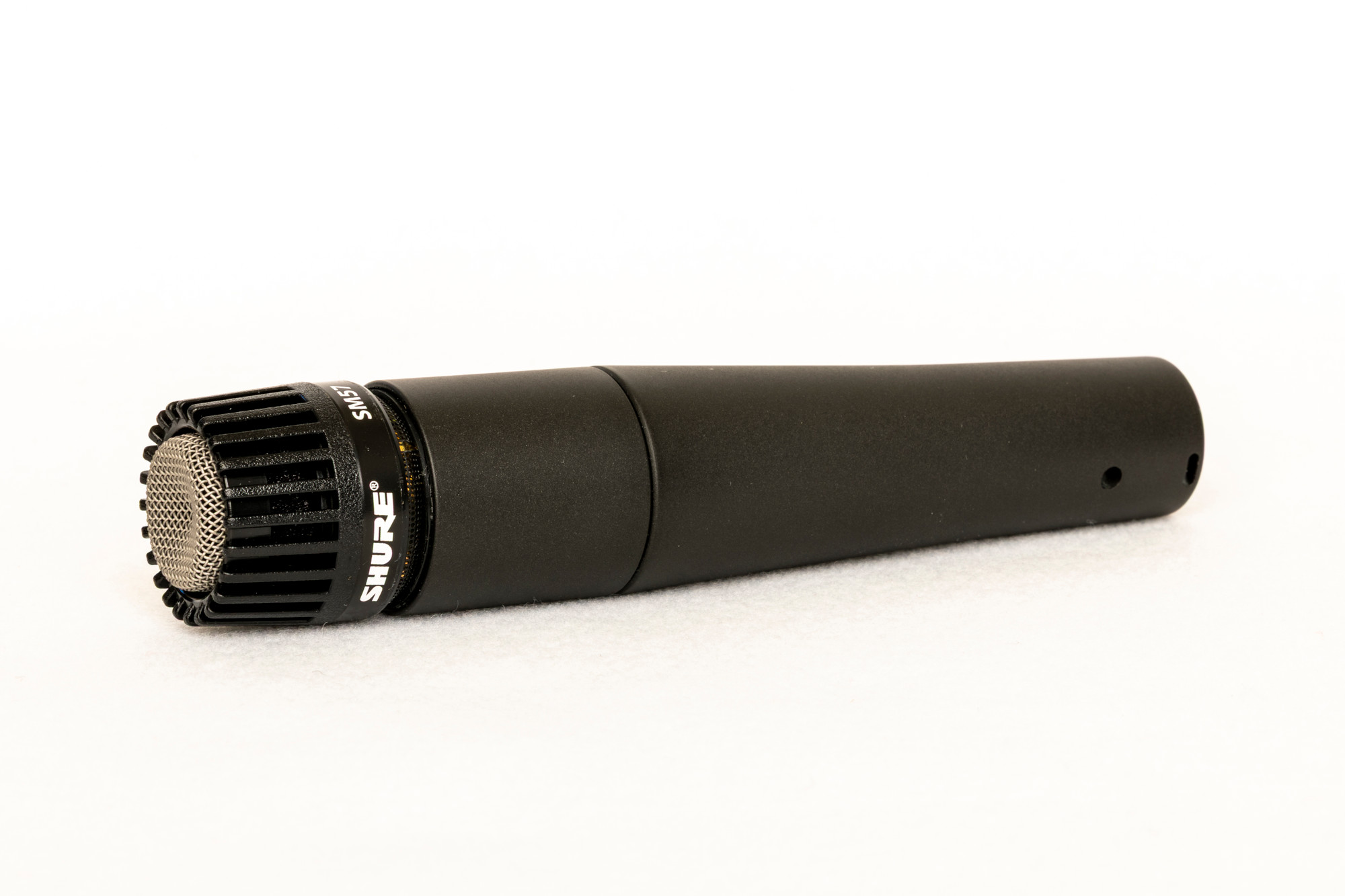
Shure SM57

1965 – present  ·  Dynamic instrument

Transitional Cardioid

The SM57 has been in continuous production since 1965 and is the most widely used instrument microphone in professional recording. Its flat frequency response from 40Hz to 15kHz, tight cardioid pattern, and ability to handle sound pressure levels exceeding 190 dB make it the default choice for guitar amplifiers, snare drums, brass, and any instrument application where reliability and accuracy matter. The United States Army, the US Secret Service, and virtually every professional live sound company in the world use SM57s. It is also, famously, the microphone that sits in front of the snare drum on more hit records than any other single instrument microphone.

Cardioid dynamic element Extremely high max SPL No phantom power Flat instrument response Near-indestructible construction

Notable users

Engineers worldwide, US Presidential podium mic, Standard guitar amp mic in every professional studio

Technical specs

Frequency response 40Hz – 15kHz
Sensitivity –56 dBV/Pa
Self-noise ~16 dB-A
Max SPL >150 dB
Output impedance 150 Ω
Polar pattern Cardioid

Market value

$99 (new)

Rarity

Common

◆ Iconic recording Snare drum on thousands of major-label rock recordings

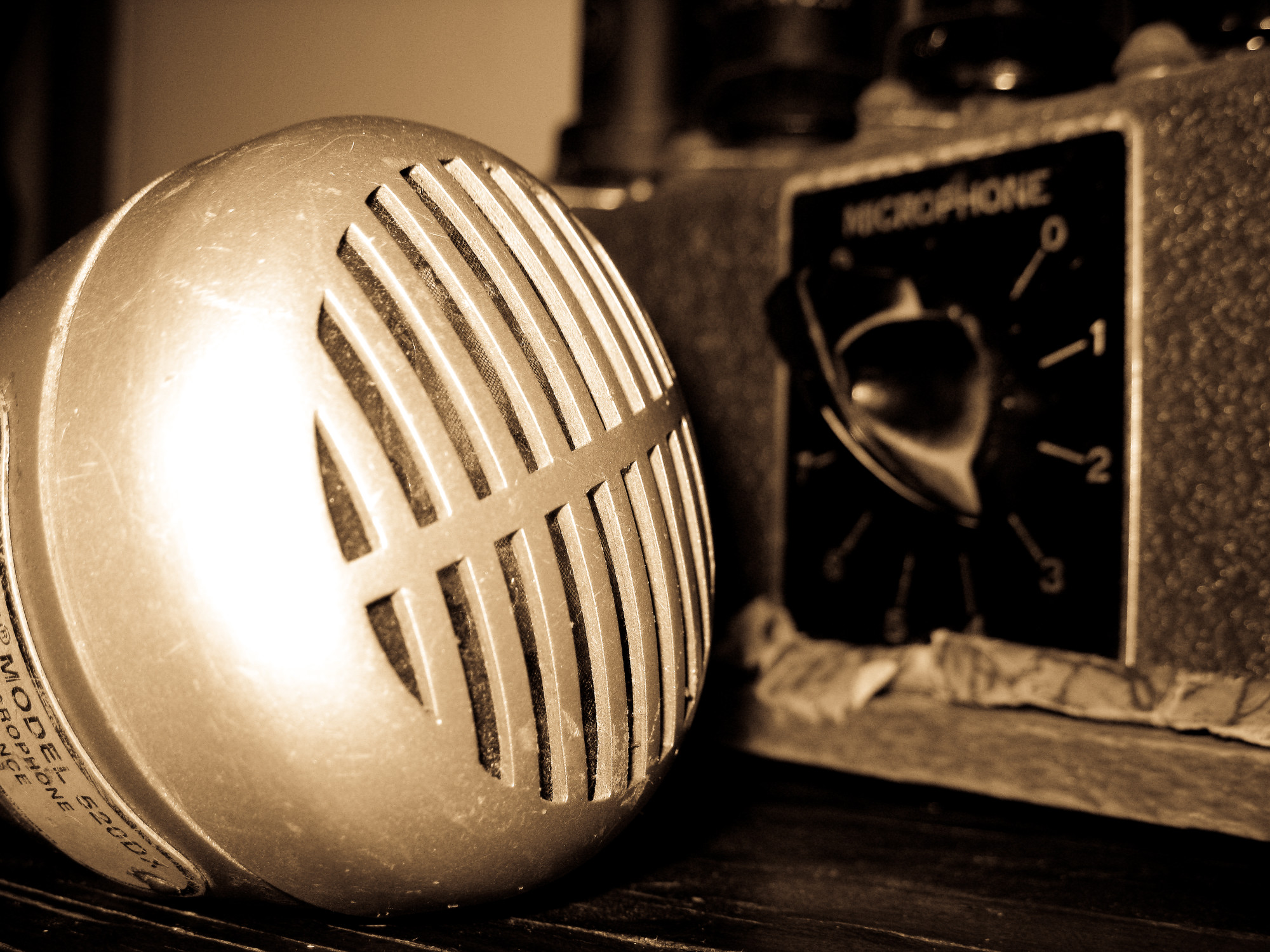
Shure 520DX "Green Bullet"

1949 – present  ·  Dynamic (crystal/ceramic element)

Golden Age Omnidirectional

The Green Bullet is the defining harmonica microphone — a small, egg-shaped dynamic that blues players cup in their hands along with the harmonica to create the overdriven, compressed sound that is as fundamental to Chicago blues as the electric guitar. Introduced in 1949 as the Shure 520 and continuously produced since, the Green Bullet's omnidirectional element responds differently to cupping than a directional microphone would: the tight seal of the hands around the mic and harmonica creates a resonant chamber, and the combination of the element's naturally rolled-off high frequency response and the coloration of that chamber produces the classic blues harp tone. Little Walter, Sonny Boy Williamson, and Big Walter Horton all played through Green Bullets or similar crystal-element mics. When run through a small amplifier turned up loud — a Fender Champ, a Silvertone, a Gibson Kalamazoo — the Green Bullet produces a harmonic distortion and mid-range honk that defined the sound of post-war American blues recording.

Moving-coil dynamic element Omnidirectional pattern Designed for cupped hand technique High-impedance output Volume control on body

Notable users

Little Walter, Sonny Boy Williamson, Big Walter Horton, Charlie Musselwhite, Junior Wells, Kim Wilson

Technical specs

Frequency response 100Hz – 5kHz
Sensitivity –55 dBV/Pa
Output impedance High impedance
Polar pattern Omnidirectional
Element Moving-coil dynamic

Market value

$79 – $99 (new)

Rarity

Common

◆ Iconic recording Little Walter — Juke (1952)

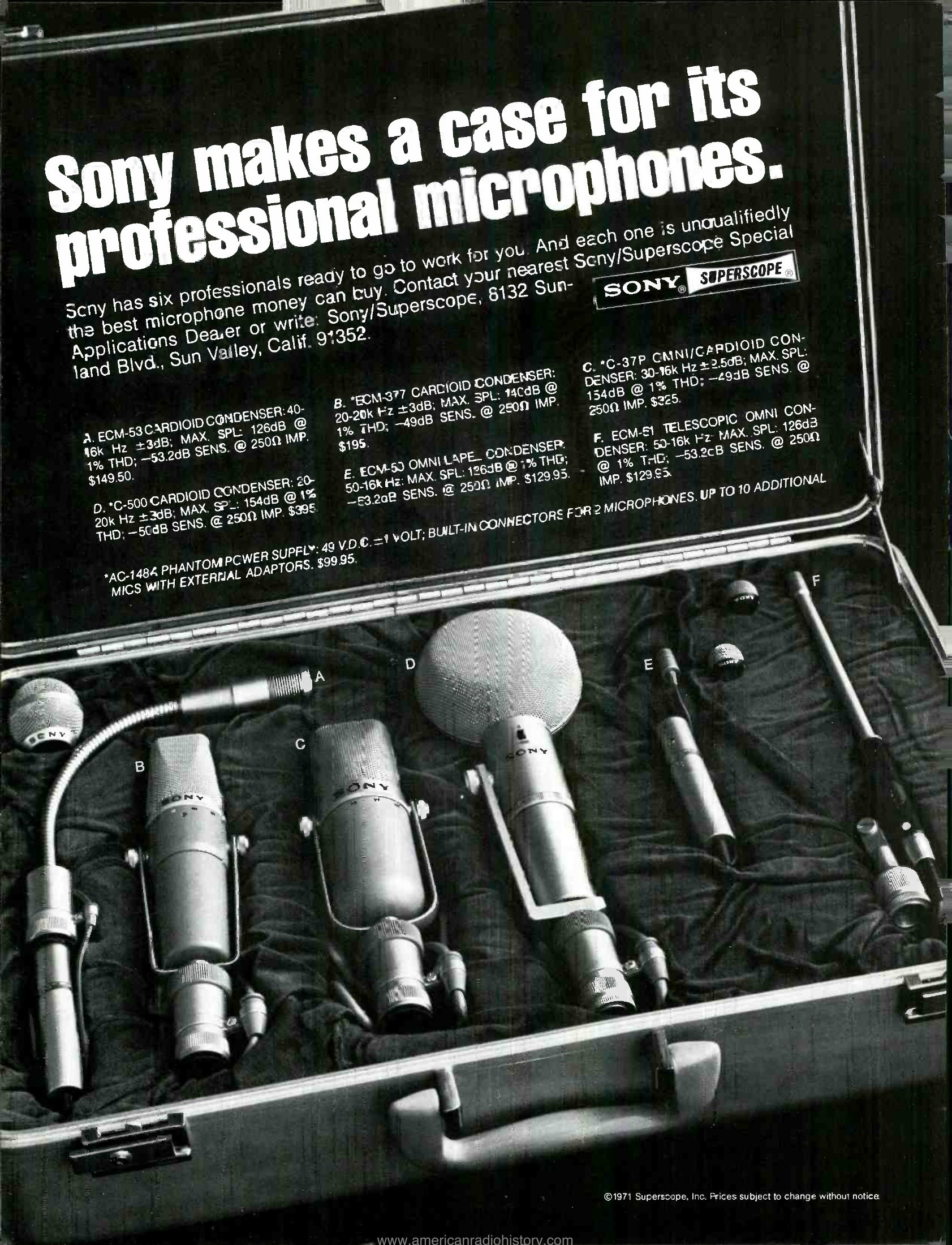
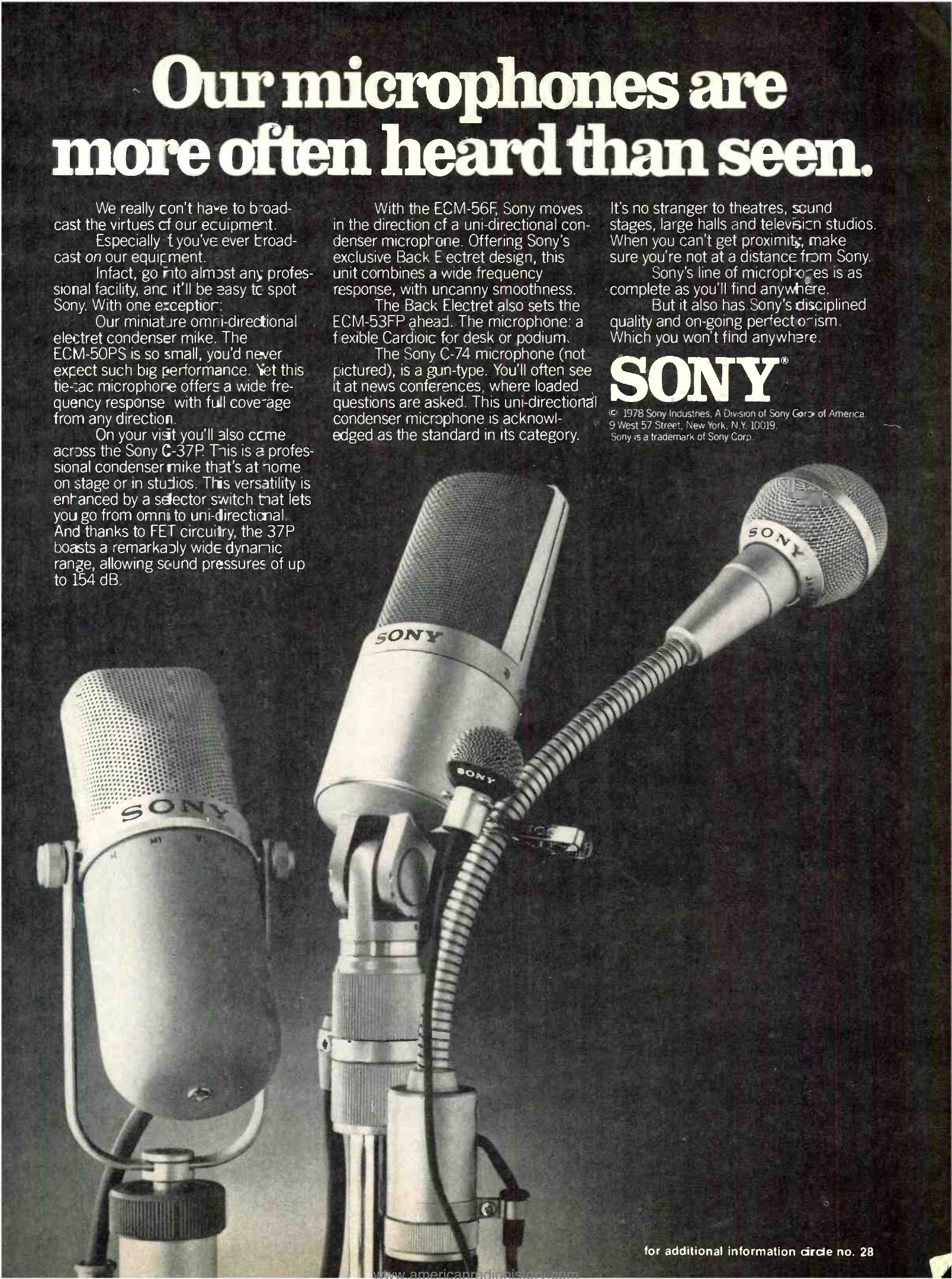
🇯🇵 Sony

Japan — est. 1946

Japanese Precision. The Sound of Modern Vocals.

pro.sony.com ↗

Sony entered professional audio in the 1950s and over the following decades produced a series of condenser microphones that established Japan as a serious force in studio equipment. Where the European tradition — Neumann, AKG, Telefunken — favoured transformer-coupled tube circuits, Sony's engineers brought a different sensibility: high technical precision, low self-noise, and a forward, detailed sound that suited broadcast and later the demands of modern pop and hip-hop production.

The C-800G, introduced in 1992, became one of the defining vocal microphones of the hip-hop and R&B era. Its distinctive cylindrical cooling fin houses a tube circuit in a temperature-controlled chamber — an engineering approach unique in the industry. Dr. Dre, Kanye West, Pharrell Williams, Jay-Z, and Kendrick Lamar all recorded with C-800Gs. The mic's combination of tube warmth and Japanese precision gave it a character that engineers describe as simultaneously smooth and detailed — cutting through dense production without harshness.

Sony C-800G

1992 – present  ·  Large-diaphragm tube/FET hybrid condenser

Modern Cardioid Omnidirectional

The C-800G is the dominant vocal microphone of modern hip-hop and R&B production — a position it has held since Dr. Dre standardised its use at Can Am Recorders and Aftermath in the early 1990s. Its engineering is remarkable: a Peltier cooling device maintains the tube circuit at a constant temperature regardless of ambient conditions, reducing thermal noise to levels that solid-state designs struggle to match. The result is a microphone with the warmth of a tube circuit and the low-noise floor of a FET design. Pharrell Williams has used a C-800G as his primary vocal mic for decades. Kendrick Lamar's To Pimp a Butterfly and DAMN. were both tracked on C-800Gs at Conway and other LA studios. The mic's visual signature — the cylindrical cooling fin wrapping the body — is as recognisable to a generation of producers as the U 47 is to a generation of engineers.

Peltier cooling system for tube Dual large-diaphragm capsule Switchable cardioid / omni Very low self-noise for tube design Requires dedicated power supply unit

Notable users

Dr. Dre, Kanye West, Pharrell Williams, Jay-Z, Kendrick Lamar, Mariah Carey, Cardi B, Future

Technical specs

Frequency response 20Hz – 20kHz
Sensitivity –36 dBV/Pa
Self-noise 7 dB-A
Max SPL 140 dB
Output impedance 100 Ω
Polar pattern Cardioid / Omni

Market value

$3,500 – $4,500 (new)

Rarity

Common

◆ Iconic recording Kendrick Lamar — To Pimp a Butterfly (2015)

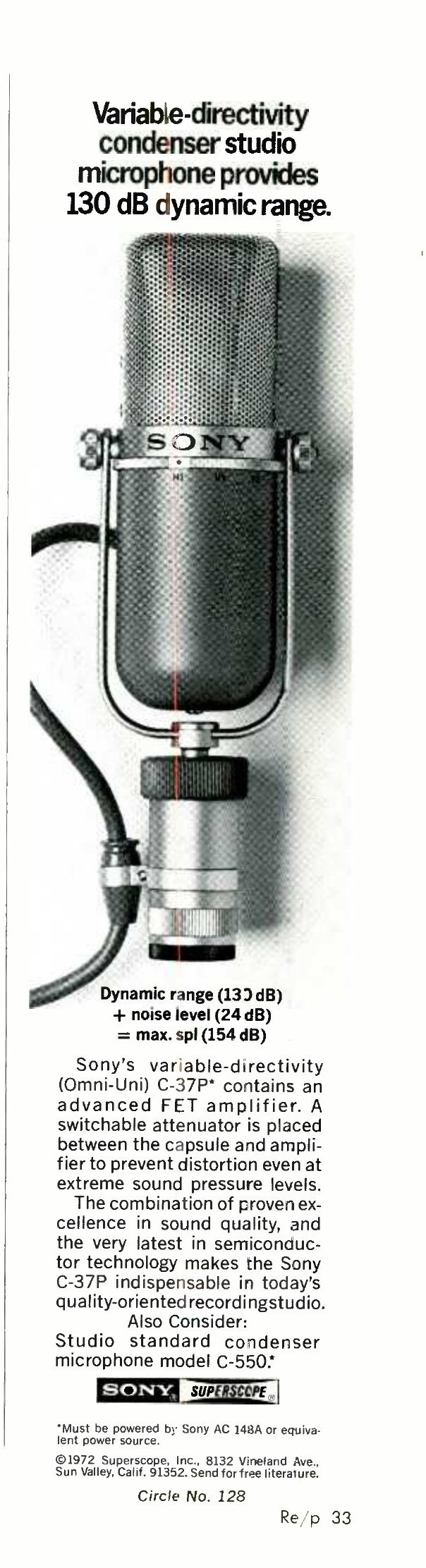
Sony C-37A

1959 – 1972  ·  Large-diaphragm tube condenser

Golden Age Cardioid Omnidirectional

The C-37A was Sony's first internationally recognised studio microphone — a large-diaphragm tube condenser that combined Japanese manufacturing precision with a tonal character that owed more to European designs than to the dry broadcast aesthetic of American mics. Issued in 1959, it found favour in Japanese broadcast and recording studios and slowly accumulated a following in Western facilities as engineers discovered its particular combination of a smooth top end and a dense, warm low midrange. Toru Takemitsu and other Japanese composers specified it for classical sessions. In later decades it became a collector's microphone, prized for its distinctive character on acoustic instruments and for the warmth of its tube output stage.

Sony C-37 large-diaphragm capsule ECC83 tube circuit Switchable cardioid / omni Custom Sony transformer Requires dedicated power supply

Notable users

NHK broadcast engineers, Japanese classical recording labels, Studio engineers across Asia

Technical specs

Frequency response 40Hz – 18kHz
Sensitivity –37 dBV/Pa
Self-noise ~15 dB-A
Max SPL 120 dB
Output impedance 200 Ω
Polar pattern Cardioid / Omni

Market value

$1,500 – $4,000

Rarity

Moderate

◆ Iconic recording Japanese classical and broadcast recordings, 1960s–1970s

🇩🇪 Sennheiser

Germany — est. 1945

German Engineering. Every Instrument, Every Room.

sennheiser.com ↗

Fritz Sennheiser founded his company in Wedemark, Germany in 1945, months after the end of the Second World War. Within a decade Sennheiser had pivoted into professional audio, and the microphones that followed established the company as one of the most important manufacturers in broadcast and studio recording.

Where Neumann defined the premium condenser standard, Sennheiser carved out different territory: dynamic microphones of exceptional quality and a range of instrument microphones that became the defaults for specific applications. The MD 421 is the standard microphone for tom-toms worldwide — not because engineers chose it over alternatives, but because it solved the tom-miking problem so completely that the question stopped being asked. The MKH series RF condensers became the standard for film, broadcast, and nature recording worldwide.

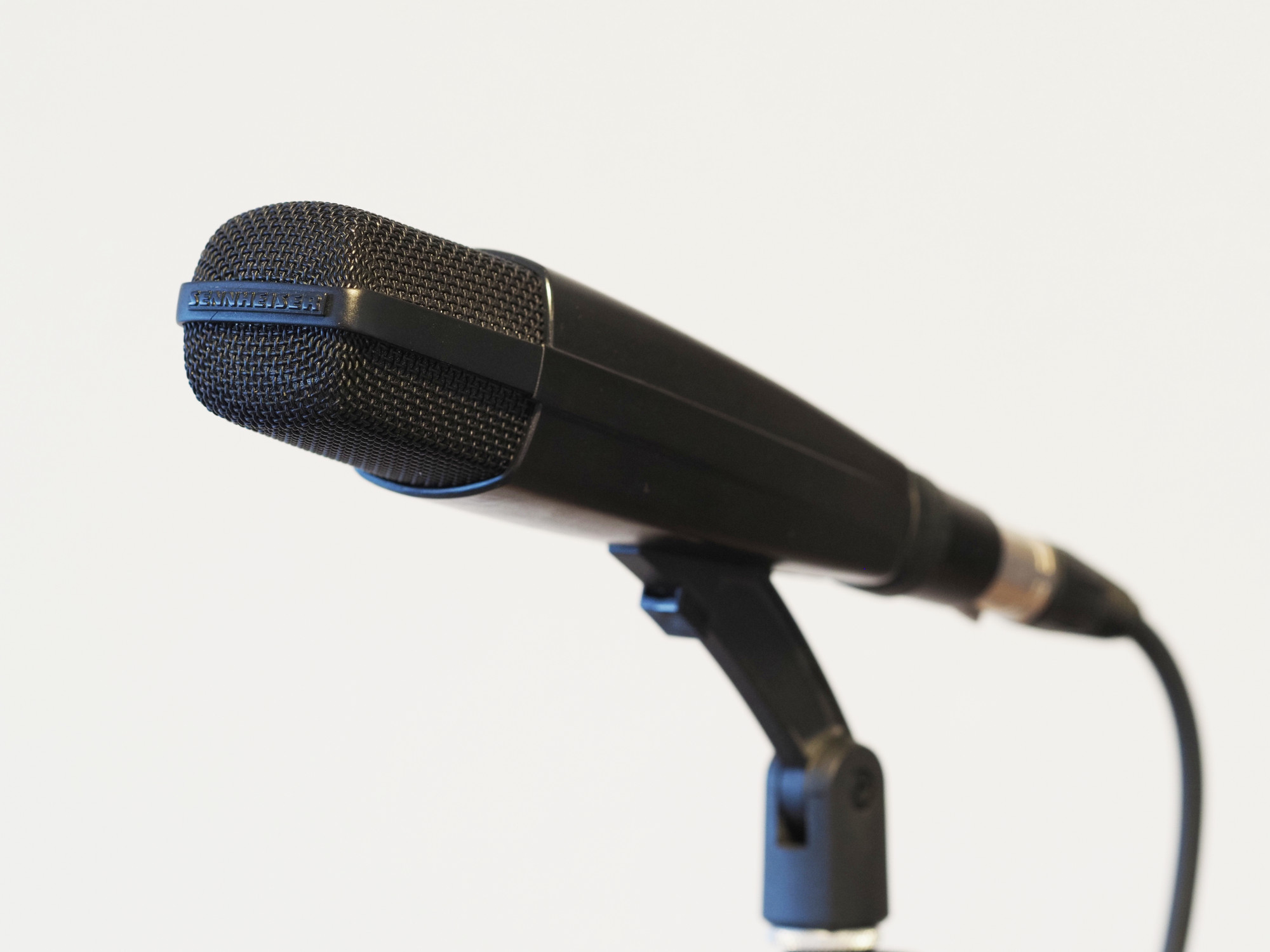
Sennheiser MD 421

1960 – present  ·  Large-diaphragm dynamic

Golden Age Cardioid

The MD 421 has been in continuous production for over six decades — matched only by the AKG C 414 in longevity among professional studio microphones. Its combination of a five-position bass roll-off switch, wide-range frequency response unusual for a dynamic, and exceptional handling of high SPL made it the instrument microphone for applications where other mics struggled: toms, kick drum, guitar amps, brass, and woodwinds. The 421 is on the drum kit of virtually every major rock recording from the 1970s to the present. John Bonham's toms on the Led Zeppelin recordings were miked with 421s. The MD 421 II updated the mechanical design while preserving the capsule and circuit — meaning new 421s sound like old ones, which is why engineers keep specifying them.

5-position M/S bass roll-off switch High SPL handling Wide frequency range for dynamic Cardioid dynamic element Suitable for instrument and broadcast use

Notable users

John Bonham (toms), Engineers worldwide, Standard tom mic on major rock recordings

Technical specs

Frequency response 30Hz – 17kHz
Sensitivity –54 dBV/Pa
Self-noise ~16 dB-A
Max SPL >160 dB
Output impedance 200 Ω
Polar pattern Cardioid

Market value

$350 – $400 (new)

Rarity

Common

◆ Iconic recording Led Zeppelin — When the Levee Breaks (1971, toms)

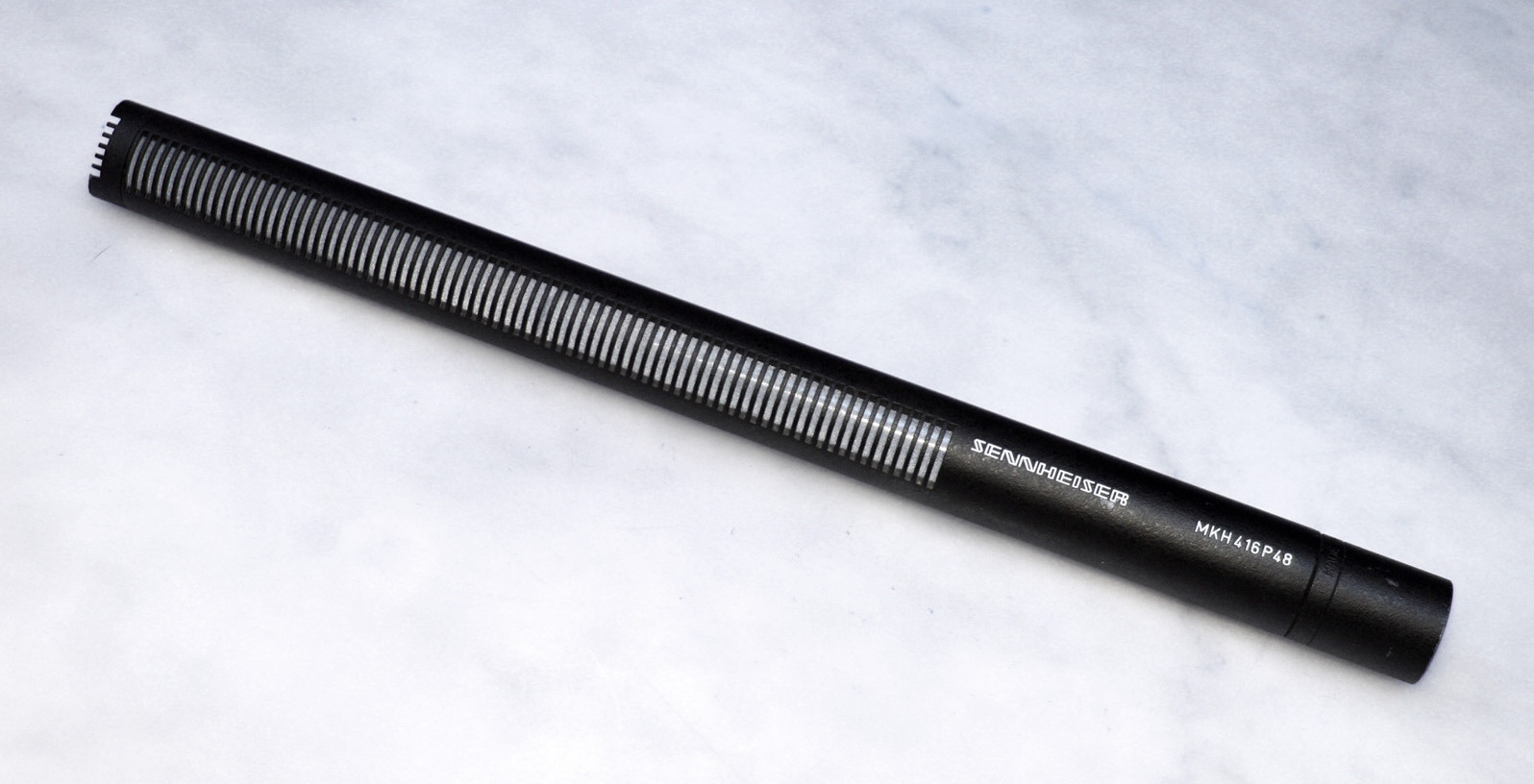
Sennheiser MKH 416

1971 – present  ·  Short shotgun RF condenser

Transitional Super-cardioid / lobar

The MKH 416 is the most widely used dialogue microphone in professional film and television production worldwide. Its super-cardioid shotgun pickup pattern, RF condenser circuit, and exceptional rejection of off-axis sound made it the boom operator's standard — and it has remained so for five decades. The RF design principle gives the MKH series immunity to humidity that conventional condensers cannot match, making it reliable for outdoor and location recording in any weather. Every major Hollywood film shot on location in the last forty years has had at least one MKH 416 above the actors. In music, it appears frequently on acoustic instruments when engineers need tight isolation in a live room.

RF condenser circuit Super-cardioid lobar pattern Humidity resistant 48V phantom power Very low self-noise Interference tube design

Notable users

Film and TV boom operators worldwide, Location sound recordists, Nature documentary engineers, Studio acoustic instrument engineers

Technical specs

Frequency response 40Hz – 20kHz
Sensitivity –30 dBV/Pa
Self-noise 13 dB-A
Max SPL 130 dB
Output impedance 25 Ω
Polar pattern Super-cardioid / lobar

Market value

$1,000 – $1,200 (new)

Rarity

Common

◆ Iconic recording Dialogue on thousands of major Hollywood productions