Retro Recordings XR — Heritage — Legends — In Memoriam

The engineers who
built the sound.

Records have producers and performers on the sleeve. The engineers behind the glass — the people who chose the microphones, set the levels, ran the tape, rode the faders, and printed the master — rarely get their names on anything.

This archive honours fifteen engineers and producers whose ears, hands, and decisions shaped recorded music. Each is no longer with us. Each defined a sound that outlasted them.

Beatles · Atlantic · Blue Note · Sun · Capitol · Black Ark · Holloway Road · Curson Avenue · Westlake · Electrical Audio. Fifteen places, fifteen sounds, fifteen people.

portrait pending

George Martin

Sir George Henry Martin CBE

3 January 1926  —  8 March 2016  ·  aged 90

Producer · Arranger · Composer

“The producer who made experimentation possible.”

Studios EMI Abbey Road · AIR Studios London · AIR Montserrat
Royal Navy Fleet Air Arm during WWII; Guildhall School of Music; EMI Parlophone from 1950. Before the Beatles, Martin produced a decade of comedy + novelty records — Peter Sellers, Spike Milligan, Bernard Cribbins. That tape-experimentation background is why he embraced the Beatles' studio ambitions: Martin had already done backwards tape, varispeed, and overdub trickery on novelty records. Signed The Beatles 1962 after Decca rejected them. Co-founded AIR (Associated Independent Recording) as a producers' partnership in 1965; the AIR Studios London facility opened at Oxford Circus in October 1970. AIR Montserrat followed in 1979. Knighted 1996. 6 Grammys; 30 UK #1 singles, 23 US #1 hits.
Technical signature
ADT (Artificial Double Tracking)
Co-developed with EMI engineer Ken Townsend in 1966 for Revolver sessions. The actual circuit was Townsend's; Martin championed its use.
Tape varispeed
Strawberry Fields Forever — two takes spliced at different tempos + keys, speed-adjusted to meet in the middle.
Classical integration
Strings + brass + orchestras as structural elements (Eleanor Rigby octet, A Day in the Life crescendo), not just sweetening.
Signature recordings
  • The Beatles entire catalogue (1962–70 except Let It Be)
  • Eleanor Rigby (1966)
  • A Day in the Life (1967)
  • Strawberry Fields Forever (1967)
portrait pending

Bill Putnam Sr.

Milton Tasker "Bill" Putnam

20 February 1920  —  13 April 1989  ·  aged 69

Studio architect · Gear designer · Engineer

“The father of modern recording — both the studios and the gear.”

Studios Universal Recording (Chicago) · United Recording (Hollywood) · United Western Recorders
Founded Universal Recording in Evanston Illinois in 1946; quickly became Chicago's largest independent studio. Recorded for Vee-Jay, Mercury, Chess, One-derful — the entire Chicago independent-label scene. The 1947 hit "Peg O' My Heart" by the Harmonicats was the first commercial pop record with artificial reverberation (Putnam used a bathroom as echo chamber). In 1957, with Frank Sinatra + Bing Crosby as investors, sold Universal and moved to Hollywood: founded United Recording at 6050 Sunset Boulevard. Founded Universal Audio (the equipment maker), designing the UA 175/176 tube limiters that became the UREI 1176 in 1968. Acquired Teletronix in 1967, bringing the LA-2A into the UA/UREI family.
Technical signature
Vocal booth invention
First dedicated isolation booth for vocals — separated from main tracking room. Universal Recording Chicago.
Studio-as-engineered-space
Vocal booth, drum booth, isolated amp closets — Putnam built each as deliberate acoustic environments.
Tape echo (commercial debut)
First use of artificial tape echo on a commercial pop record ("Peg O' My Heart", 1947).
Half-speed disc mastering
First commercial release using half-speed cutting (1956). Standard mastering technique since.
Signature recordings
  • Peg O' My Heart (1947)
  • Sinatra Capitol-era sessions (60s)
  • UA 175/176 → UREI 1176 limiter lineage
portrait pending

King Tubby

Osbourne Ruddock

28 January 1941  —  6 February 1989  ·  aged 48

Sound engineer · Mixing pioneer

“Inventor of the concept of remix.”

Studios Tubby's Hometown Hi-Fi (Waterhouse, Kingston)
Grew up around High Holborn Street in Central Kingston; moved to Waterhouse district in 1955. Early career as electrician + radio repairer; built his own amplifiers and sound systems. Late 60s: ran his own sound system "Tubby's Hometown Hi-Fi". Built recording studio + cutting room at his home in Waterhouse. Bought a second-hand MCI broadcast mixer from Dynamic Studios, modified it. From 1972 onwards, started "versioning" reggae tracks — instrumental remixes with vocal stripped, drums + bass foregrounded, dramatic effects applied. Producers Augustus Pablo, Bunny Lee, Lee "Scratch" Perry brought multitrack tapes; Tubby remixed them live to dub plate. Mentored Scientist (Hopeton Brown) and Prince Jammy at his studio. Shot and killed outside his home February 1989 in what is believed to have been a street robbery.
Technical signature
Mixing board as performance instrument
The MCI mixer's high-pass filter became Tubby's primary creative tool — swept during playback while channels dropped in and out.
Tape echo + spring reverb as expression
Long delays, runaway feedback, abrupt cuts — effects as the performance, not subtle ambience.
The dub aesthetic
Stripped vocals + foregrounded bass + drums = the foundational template for dance, electronic, hip-hop remix culture.
Signature recordings
  • King Tubby Meets Rockers Uptown (1976, with Augustus Pablo)
  • The Roots of Dub (1975)
  • Dub from the Roots (1974)
  • Hundreds of "versions" for Bunny Lee + Lee Perry + Yabby You productions
portrait pending

Geoff Emerick

5 December 1945  —  2 October 2018  ·  aged 72

Engineer

“The 20-year-old who close-miked Ringo.”

Studios EMI Studios Abbey Road · Apple Studios
Brought up in Crouch End, North London; hired by EMI Studios at age 15 (1962) as assistant engineer. Worked second engineer on Beatles sessions from Love Me Do onwards. At age 20, in April 1966, George Martin promoted him to chief engineer — first project: Tomorrow Never Knows. Worked Revolver (1966), Sgt. Pepper's (1967), and Abbey Road (1969). Walked out during the contentious White Album sessions. Won 4 Grammy Awards. Co-authored memoir Here, There and Everywhere (2006). Died from heart attack in Los Angeles 2018.
Technical signature
Close-miked Ringo's drums
EMI required 18-inch minimum distance from drums; Emerick placed Neumann U67 + AKG D19c far closer, sometimes touching the snare head. Produced the propulsive Beatles drum sound on Rain onwards. EMI management reprimanded him.
Speaker in front of bass drum
Placed a loudspeaker driven by the bass drum signal in front of the kick drum mic to capture more low-end. Lennon + McCartney loved it; EMI hated it.
Leslie speaker on vocals
Tomorrow Never Knows — Lennon's otherworldly vocal recorded through a rotating Leslie speaker normally used to amplify a Hammond organ. Emerick's idea, executed against EMI rules.
Tape-loop assembly
Managed the eight simultaneous tape loops on Tomorrow Never Knows, each on a separate tape machine in different EMI rooms, all feeding back to Studio 2's desk.
Signature recordings
  • Tomorrow Never Knows (1966)
  • Rain (1966)
  • Eleanor Rigby (1966)
  • Sgt. Pepper's Lonely Hearts Club Band (1967)
  • Abbey Road (1969)
  • Elvis Costello sessions
  • Cheap Trick Heaven Tonight
portrait pending

Les Paul

Lester William Polsfuss

9 June 1915  —  13 August 2009  ·  aged 94

Guitarist · Inventor · Recording pioneer

“Drove Ampex to deliver the first 8-track.”

Studios Curson Avenue garage (Hollywood, late 40s) · Mahwah NJ home studio (early 50s onwards)
Born Waukesha, Wisconsin. Built his first recording machine as a teenager from automobile parts and a dentist drill. Solid-body guitar prototype "The Log" (1941) — 4×4-inch block of wood with an Epiphone guitar neck. Approached Gibson in 1941; refused until Fender released the Esquire (1950). Gibson Les Paul launched 1952 (chief designer Ted McCarty, based on Paul's drawings). Inducted into National Inventors Hall of Fame 2005.
Technical signature
Disc-to-disc layering (1948)
His original invention — layered performances by bouncing between disc-cutting lathes in his Curson Avenue garage. Records like "Lover" (1948) made entirely disc-to-disc, accumulating noise + loss with each generation.
Modified Ampex 300 (1949)
Bing Crosby gifted him an Ampex 300 mono tape recorder; Paul positioned an extra playback head before the erase head, enabling sound-on-sound overdubbing directly to tape. Limitation: one mistake = restart from scratch.
Lobbied for multitrack tape
$10K prepayment + a decade of lobbying drove Ampex to deliver the first 8-track in 1957. NOT the inventor of multitrack tape itself — Ampex engineers built it, Ross Snyder designed Sel-Sync. Paul drove demand, did not invent the technology. See page-recording-studios.php Les Paul entry.
Signature recordings
  • Lover (When You're Near Me) (1948)
  • How High the Moon (1951)
  • Vaya Con Dios (1953)
  • Mockin' Bird Hill (1951)
  • Chasing Sound documentary (2007)
portrait pending

Tom Dowd

Thomas John Dowd

20 October 1925  —  27 October 2002  ·  aged 77

Engineer · Producer

“The Manhattan Project physicist who pioneered linear faders.”

Studios Atlantic Studios NYC (1947–67) · Criteria Sound Studios Miami (1967–2002)
Stuyvesant High School at 16, City College of New York; drafted at 18 → Columbia University physics laboratory → Manhattan Project. After WWII his field was beyond classified clearance, so he switched to audio. Atlantic Records late 40s; first hit Eileen Barton "If I Knew You Were Comin' I'd've Baked a Cake" (1950). 1958: convinced Jerry Wexler to buy the second Ampex 8-track ever (the first went to Les Paul). Moved to Miami 1967, Criteria Sound primary venue. Died of emphysema 2002. Posthumously inducted Rock and Roll Hall of Fame 2012.
Technical signature
Linear channel faders
Dowd pioneered the linear slider on mixing desks, working with engineers to develop the layout. Every modern mixing console inherits this UI from him — earlier consoles used rotary knobs for channel level.
Stereo + 8-track adoption
Drove Atlantic's transition to stereo + multitrack years ahead of competitor labels.
Mixing-as-arrangement
Treated mix automation as compositional. His Allman Brothers + Skynyrd mixes have arrangement decisions baked into the fader rides.
Signature recordings
  • Ray Charles What'd I Say (1959)
  • Aretha Franklin I Never Loved a Man (1967)
  • John Coltrane Giant Steps (1960)
  • Cream Disraeli Gears (1967)
  • Derek and the Dominos Layla (1970)
  • Allman Brothers At Fillmore East (1971)
  • Lynyrd Skynyrd Pronounced... (1973)
portrait pending

Rudy Van Gelder

Rudolph Van Gelder

2 November 1924  —  25 August 2016  ·  aged 91

Engineer

“The Blue Note sound, single-handed.”

Studios Hackensack living room (1953–59) · Englewood Cliffs NJ (1959–2016)
Born Jersey City NJ. Trained + practising optometrist for ~7 years while running parallel recording career at night. Converted his parents' Hackensack living room into a studio (1953); recorded virtually every Blue Note session 1953–1959 there. In 1959 quit optometry and built the Englewood Cliffs studio — purpose-designed by architect David Henderson, FLW-influenced. Still operational. Worked simultaneously for Blue Note, Prestige, Savoy, Riverside, Pacific Jazz, Impulse!, CTI. Over 1,000 sessions. NEA Jazz Master (2009); Grammy Trustees Award (2012).
Technical signature
The "Blue Note sound"
Warm, clear, present, jazz-specific. Custom mic placement rules he never published, custom-built equipment, rigorous tape-machine maintenance, everything at 15ips on Ampex 350s.
Secretive black-box workflow
Refused visitors to take notes or photographs during sessions. Refused to discuss specific signal-chain choices. The "RVG sound" remained a competitive moat throughout his career.
One-man operation
No second engineer, no assistant. Set up rooms himself, recorded himself, mastered himself. Later remastered his own historic catalogue (RVG Remasters series, late 90s onwards).
Signature recordings
  • John Coltrane Blue Train (1957) + A Love Supreme (1964)
  • Miles Davis Walkin' (1954) + the Prestige quartet sessions (1956)
  • Sonny Rollins Saxophone Colossus (1956)
  • Herbie Hancock Maiden Voyage (1965)
  • Horace Silver Song for My Father (1965)
  • Wayne Shorter Speak No Evil (1964)
portrait pending

Al Schmitt

Albert Harry Schmitt

17 April 1930  —  26 April 2021  ·  aged 91

Engineer · Producer

“23 Grammys across six consecutive decades.”

Studios RCA Hollywood (50s–60s) · United Recording Hollywood · Capitol Studios Hollywood · EastWest Studios
Born Brooklyn NYC. Mentored by his uncle, engineer Harry Smith — started in studios in his early teens. Apex Recording Studios NYC, then RCA Hollywood mid-50s through 60s (Sam Cooke, Elvis, Eddie Fisher). Freelance from 70s onwards. Capitol Studios Hollywood for the last ~30 years of career — almost daily presence in Studio A. The only engineer to have won Grammys in six consecutive decades (first 1962 Henry Mancini Hatari, last in 2010s). 20 standard Grammys + 2 Latin Grammys + 1 Trustees Lifetime = 23 total — the most ever for an engineer. Hollywood Walk of Fame star.
Technical signature
Minimalist mic placement
Reputation for using the fewest, best-placed mics. No EQ on the way to tape, no compression except very light, no surplus processing. Opposite of "fix it in the mix".
Acoustic-instrument specialist
Brass, strings, vocals, piano captured transparently. The Sinatra Duets albums are textbook examples — vocals + intimate orchestra captured with extreme clarity.
Live-orchestra method
Insisted on recording orchestras live in the room, not overdubbed. Capitol Studio A's giant live room was his preferred space.
Signature recordings
  • Henry Mancini Hatari! (1962) + Pink Panther
  • Steely Dan Aja, Gaucho
  • Frank Sinatra Duets I + II (1993, 1994)
  • Diana Krall multiple albums
  • Ray Charles Genius Loves Company (2004, posthumous Grammy)
  • George Benson Breezin' (1976)
  • Toto, Natalie Cole, Bob Dylan, Paul McCartney
portrait pending

Bruce Swedien

19 April 1934  —  16 November 2020  ·  aged 86

Engineer · Mixer · Producer

“The Acusonic Recording Process behind Thriller.”

Studios Mercury Records Chicago/NYC · Westlake Audio Hollywood · Record One Sherman Oaks · Larrabee West Hollywood
Born Minneapolis, Minnesota; parents both classically-trained musicians. Started his own studio at age 19. Mercury Records Chicago mid/late 50s. Met Quincy Jones in 1959 at Mercury Chicago, where Swedien was on staff (Jones became Mercury VP in 1964) — collaboration would last over 50 years. Early work with Dinah Washington, Sarah Vaughan, Count Basie, Jackie Wilson. 1978: Quincy + Michael Jackson hired Swedien for Off the Wall (1979) → Thriller (1982) → Bad (1987) → Dangerous (1991) → HIStory (1995). Also worked Paul McCartney, Barbra Streisand. 5 Grammy Awards for Best Engineered Album.
Technical signature
Acusonic Recording Process
Swedien's proprietary technique credited in Thriller's liner notes. Two elements: (1) double-microphone pairing on vocals and lead instruments — two mics simultaneously, different distances + polar patterns, blended in mix for dimensional depth; (2) SMPTE-locked multi-track recorders synchronized via timecode, expanding effective track count beyond a single 24-track. Allowed Thriller-scale productions before digital made it trivial.
Vocal-distance experimentation
Had Jackson stand at different distances from the mic for different parts during Thriller sessions. Each distance has its own character — closer = breathier, intimate; further = roomier, performance-y. Jackson's various vocal characters partly come from this.
Documented mix-bus chain
SSL G Bus Comp glue, 1176 vocal compression, Lexicon 480L reverbs — Swedien's preferences are well-documented and influenced two generations of mix engineers.
Signature recordings
  • Michael Jackson Off the Wall (1979)
  • Michael Jackson Thriller (1982) — best-selling album of all time
  • Michael Jackson Bad (1987)
  • Quincy Jones Back on the Block (1989, Grammy Album of the Year)
  • Q's Jook Joint (1995)
  • Michael Jackson Dangerous (1991), HIStory (1995)
portrait pending

Rupert Neve

Arthur Rupert Neve

31 July 1926  —  12 February 2021  ·  aged 94

Gear designer · Founder

“1073, 1081, 8078 — the British sound.”

Studios Neve Electronics (UK, 1961) · Focusrite (with wife Evelyn) · Rupert Neve Designs (Wimberley TX, 2005)
Born Newton Abbot, Devon, England. Childhood in Argentina — repaired and built radios as a boy. Royal Signals at age 17 (WWII, 1943). Post-war: Rediffusion, Ferguson Radio, transformer manufacturer. Founded CQ Audio (hi-fi amps + speakers), then Neve Electronics in 1961. The Beatles + George Martin among early customers. 1970: designed the 1073 module for the Wessex Studios A88 console. Sold Neve Electronics 1975. Founded Focusrite with wife Evelyn (~70-year marriage). Moved to Wimberley, Texas 1994; US citizen 2002; founded Rupert Neve Designs there in 2005. Lifetime Achievement Technical Grammy 1997; AES Fellowship 2006.
Technical signature
Class A discrete topology
Instead of integrated-circuit op-amps becoming standard in the late 60s/70s, Neve insisted on discrete-transistor Class A circuits. Costlier + larger, but with a sonic character — slight saturation + low-end weight — that integrated chips could not replicate.
Transformer-balanced everything
Input + output transformers on every channel. Marinair input transformers (collaboration with Marinair Radar Company late 60s) + LO1166 gapped output transformer (designed by Rupert in 1964 for a Phillips Records console, spec still proprietary 60+ years later).
Pencil-on-paper original designs
Rupert never digitised his original schematics. Every modern AMS Neve unit still follows his 1970 pencil drawings. He personally signed off each year until his death.
Signature recordings
  • Neve 80-Series consoles (8048 / 8068 / 8078)
  • 1073 / 1081 / 1084 channel strips
  • 2254 → 33609 compressor lineage (with David Rees)
  • Focusrite RED range
  • Rupert Neve Designs Portico + 5088 console (modern era)
portrait pending

Phil Spector

Harvey Phillip Spector

26 December 1939  —  16 January 2021  ·  aged 81

Producer · Auteur

“Wall of Sound — first producer-auteur.”

Studios Gold Star Studios Hollywood · Philles Records (his own label, 1962)
Father committed suicide when Phil was 9; mother moved family from the Bronx to LA at age 13. Title of "To Know Him Is to Love Him" (1958) taken from his father's gravestone — Phil co-founded the Teddy Bears at 18 and the song hit #1. Founded Philles Records 1962 with Lester Sill. 1962–65 was the Wall of Sound peak at Gold Star. 1969–71 George Harrison era — All Things Must Pass, Imagine, Let It Be. 2003: Lana Clarkson death at his castle home in Alhambra CA; 2009 convicted second-degree murder, sentenced 19-years-to-life. Died in prison January 2021 from COVID-19 complications.
Technical signature
Studio as compositional tool
Pre-figured the studio-as-instrument concept by treating Gold Star's rooms + echo chambers + ensemble as the composition itself, not just a recording venue.
~25-person rotating session ensemble
LA "Wrecking Crew" overlap — multiple drummers, multiple pianists, multiple bassists, all playing the same parts simultaneously to thicken the sound.
Mono mixing on principle
Insisted on mono mixes long after stereo became standard. The Wall of Sound was a wall, not a panorama. Layered information collapsed into one dense channel.
"First producer-auteur"
Before Spector, producers facilitated; he was the author of the records. Pre-figures George Martin / Brian Wilson / Trevor Horn auteur tradition.
Signature recordings
  • The Crystals Da Doo Ron Ron (1963), Then He Kissed Me (1963)
  • The Ronettes Be My Baby (1963)
  • The Righteous Brothers You've Lost That Lovin' Feelin' (1964)
  • Ike & Tina Turner River Deep – Mountain High (1966)
  • A Christmas Gift for You (1963)
  • George Harrison All Things Must Pass (1970)
  • John Lennon Imagine (1971)
  • The Beatles Let It Be (1970)
portrait pending

Quincy Jones

Quincy Delight Jones Jr.

14 March 1933  —  3 November 2024  ·  aged 91

Producer · Arranger · Composer · Bandleader

“Sinatra, Thriller, We Are the World — seven decades.”

Studios Mercury Records Chicago/NYC · Westlake Audio Hollywood · Capitol Studios Hollywood · Larrabee Sound
Born Chicago; family moved to Bremerton, Washington in 1943 (Seattle area, during WWII) when his father took a wartime job at Puget Sound Naval Shipyard. Trumpet player; joined Lionel Hampton's big band in 1953 at age 20. 1950s jazz arranger + conductor — Count Basie, Dizzy Gillespie, Sarah Vaughan, Ella Fitzgerald. Mercury Records VP (where he met Bruce Swedien 1959). Early 60s pop: Lesley Gore — It's My Party (1963). Sinatra + Basie collaborations: It Might as Well Be Swing (1964), Sinatra at the Sands (1966). 40+ film scores from 1967. The Michael Jackson trilogy 1979–87. We Are the World (1985). 28 Grammys, 1 Primetime Emmy, 1 Tony, 7 Oscar nominations. First Black producer to operate at Hollywood's top tier.
Technical signature
Arranger-as-producer
Primary craft was orchestral arrangement; treated production as extended arrangement. The Jackson albums sound the way they do because Quincy arranged for the studio as if it were an orchestra section.
Genre-fluid range
Bebop → jazz orchestra → big band → film score → pop → R&B → hip-hop adjacent. Few producers spanned this range.
Studio-as-collaborator
Empowered engineers (Swedien) to push technique; never engineered himself but knew enough to direct.
Signature recordings
  • Frank Sinatra + Count Basie It Might as Well Be Swing (1964)
  • Sinatra at the Sands (1966)
  • In the Heat of the Night film score (1967)
  • Walking in Space (1969)
  • The Dude (1981)
  • Michael Jackson Off the Wall (1979), Thriller (1982), Bad (1987)
  • We Are the World (1985)
  • Back on the Block (1989)
portrait pending

Steve Albini

22 July 1962  —  7 May 2024  ·  aged 61

Engineer · Musician

“The engineer who refused royalties.”

Studios Electrical Audio Chicago (1995–2024)
Born Pasadena CA. Family moved frequently; settled in Missoula, Montana — discovered the Ramones as a teenager. Studied journalism at Northwestern University; landed in Chicago's punk-rock scene and never left. Bands: Big Black (1981–87), Rapeman (1987–89), Shellac (1992–2024) — Shellac's final album To All Trains released 10 days after his death. Engineering: 1500+ albums from late 80s onwards. 1995: bought Electrical Audio, the Chicago studio he owned + operated until death. Died of heart attack at home May 2024.
Technical signature
Refused royalties on principle
Took hourly rate only (later daily flat-rate). His 1993 essay "The Problem with Music" laid out the philosophy: labels exploit musicians, producers who take royalties are part of that exploitation, engineers should be paid for time like any tradesperson. Essay widely cited in artist-rights discussions to this day.
Strict analog adherent
Refused to record digitally until very late in career. In Utero was tape. Rid of Me was tape. Electrical Audio was set up for analog.
Engineering aesthetic
Room mics, no compression, no EQ on tracking, no overdubs unless musically necessary. Bands play together in a room; he captures the room. Counter-philosophy to Spector's Wall of Sound + multitracked layering tradition.
Refused the title "producer"
Preferred "recording engineer". Did not direct musical decisions — captured what the band brought.
Signature recordings
  • Pixies Surfer Rosa (1988)
  • Nirvana In Utero (1993)
  • PJ Harvey Rid of Me (1993)
  • Cloud Nothings Attack on Memory (2012)
  • Cheap Trick Rockford (2006)
  • Joanna Newsom Ys (2006)
  • Mogwai, McLusky, Slint, Manic Street Preachers
portrait pending

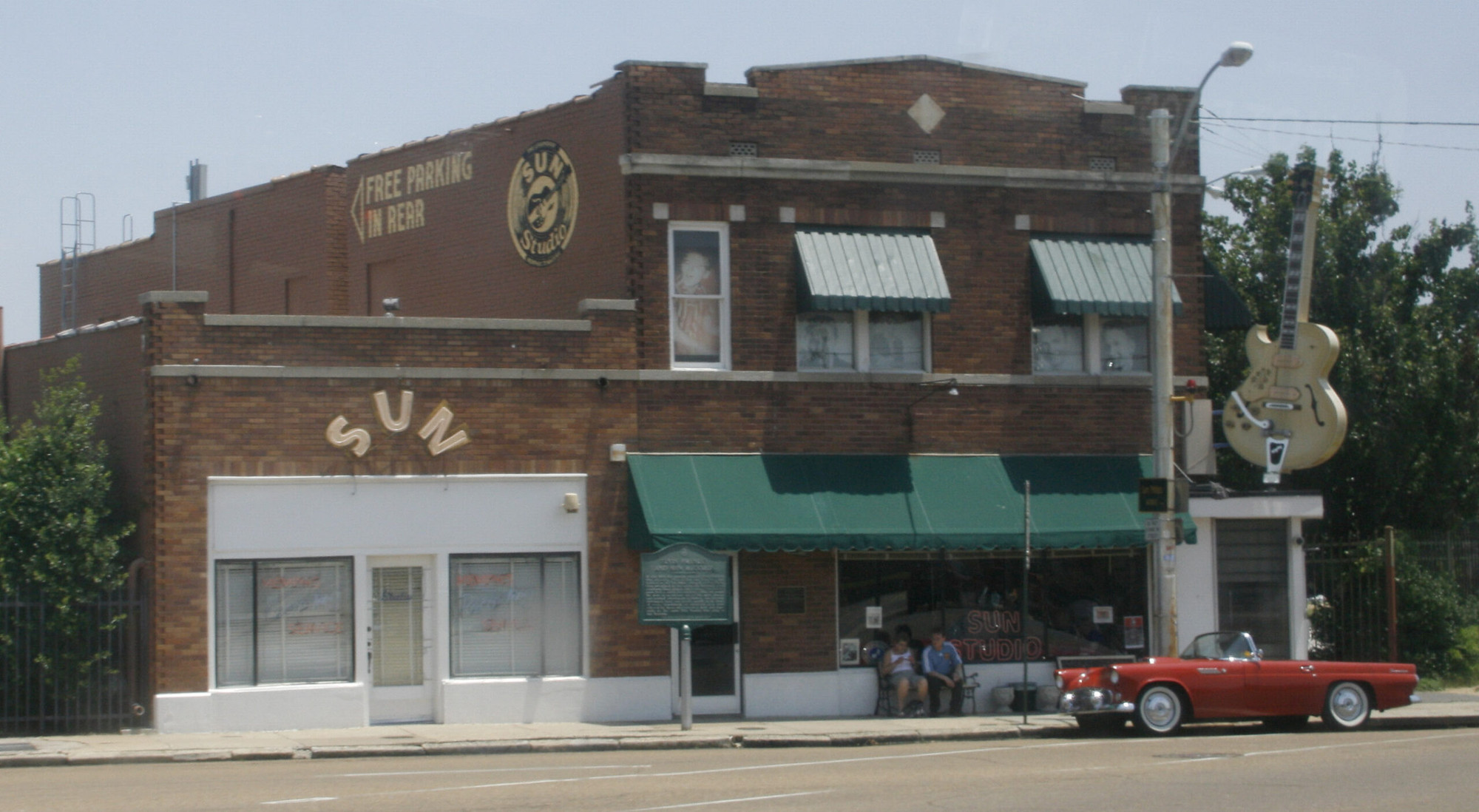
Sam Phillips

Samuel Cornelius Phillips

5 January 1923  —  30 July 2003  ·  aged 80

Producer · Engineer · Studio owner

“Discovered Howlin' Wolf, Elvis, Cash, Lewis.”

Studios Memphis Recording Service / Sun Studio (706 Union Avenue Memphis)
Born near Florence, Alabama, youngest of 8 children on a 200-acre cotton farm. Radio career at WLAY Florence AL (Muscle Shoals area), then WMSL Decatur AL, then WREC Memphis (1945–1949). 3 January 1950 opened Memphis Recording Service at 706 Union Avenue with slogan "We record anything — anywhere — anytime". Launched Sun Records as a label in 1952. 1953: Elvis walked in to record a present for his mother; Phillips signed him 1954. 1956 Million Dollar Quartet — Elvis, Cash, Perkins, Lewis jamming together. Sold Sun 1969; early Holiday Inn investor became wealthy independently. Racial-equality advocate throughout career. First class inducted into Rock and Roll Hall of Fame (1986).
Technical signature
Slapback echo
His signature tape-delay technique on Elvis's vocals and many Sun records. Created by recording to one tape machine + playing it back into a second machine slightly delayed.
Single-mic vocals + minimal isolation
Sun's recordings have a "live" room sound because the room was small + simple and Phillips leaned into it instead of fighting it.
Cultural risk-taking
Deliberately bridged Black blues and white country in segregated 50s Tennessee. Rocket 88 (Ike Turner/Jackie Brenston, 1951) and Elvis's That's All Right (1954) both depended on this. A stated principle, not a side effect.
Signature recordings
  • Howlin' Wolf Moanin' at Midnight (1951) — his "greatest discovery"
  • B.B. King early recordings
  • Ike Turner + Jackie Brenston Rocket 88 (1951) — frequently cited as first rock & roll record
  • Elvis Presley That's All Right (1954)
  • Johnny Cash I Walk the Line (1956)
  • Carl Perkins Blue Suede Shoes (1956)
  • Jerry Lee Lewis Great Balls of Fire (1957)
portrait pending

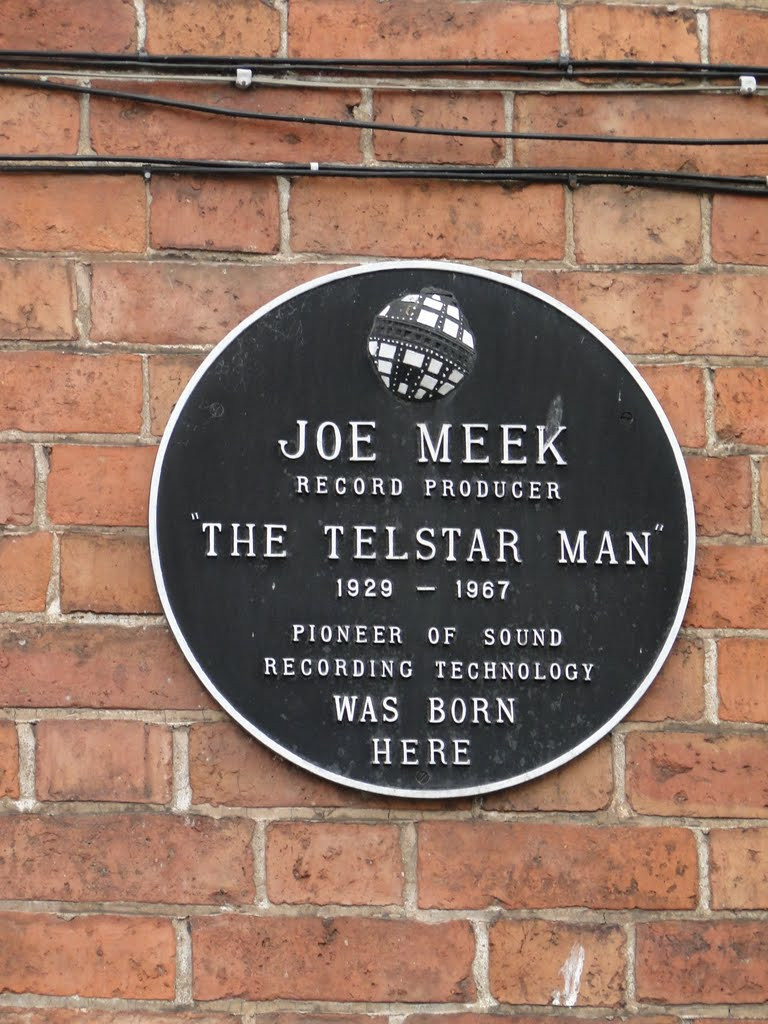
Joe Meek

Robert George "Joe" Meek

5 April 1929  —  3 February 1967  ·  aged 37

Producer · Engineer · Songwriter

“304 Holloway Road — the home-studio pioneer.”

Studios 304 Holloway Road, London (1960–67)
Born Newent, Gloucestershire (Forest of Dean). Electronics-obsessed child. National service as RAF radar technician. IBC Studios + Lansdowne Studios as a young engineer; quickly built a reputation for unusual sounds. 1960: went independent, moved into 304 Holloway Road — a three-floor flat above a leather goods shop, converted to a labyrinth recording space. Control room in the upstairs bedroom; vocal booth on the landing; drums on the staircase; bass amp in the bathroom. Founded RGM Sound. 1962: Telstar by The Tornados became the first record by a British rock group to reach #1 on the US Billboard Hot 100. Ivor Novello Award. Royalty dispute with a French composer over Telstar froze his earnings. 3 February 1967: shot landlady Violet Shenton then himself. Royalty dispute resolved in his favour 3 weeks after his death.
Technical signature
Studio-as-instrument (literalised)
Every room of 304 Holloway Road was a sonic resource. Vocals in the bathroom for reverb. Drum overheads on the staircase. Bass amp in the basement. Pre-figured the "studio-as-instrument" concept by 5+ years before George Martin made it mainstream.
Compression chambers + spring reverb
Built his own reverb units. Used a bicycle pump in a tin can for compression on some tracks (anecdotally).
Tape varispeed
Heavy use of tape-speed manipulation for pitched-up vocals + alien atmospheres.
Sampling avant-la-lettre
Pre-recorded sound effects integrated into pop music — the satellite-bleeps in Telstar are tape-sourced effects, not synth.
Signature recordings
  • The Tornados Telstar (1962) — first British rock #1 in US
  • John Leyton Johnny Remember Me (1961)
  • Heinz Just Like Eddie (1963)
  • The Honeycombs Have I the Right? (1964) — heavy drum sound by stamping on the staircase
  • I Hear a New World (1960) — one of the first concept albums, predates Pet Sounds + Sgt. Pepper's