Harrison
In-Line Architecture. Infinite Precision.
Harrison Consoles ↗Dave Harrison started as a saxophonist and recording engineer in Cincinnati, Ohio, eventually becoming Manager at King Records — the iconic studio of James Brown, Hank Ballard, and John Lee Hooker. Moving to Nashville, he founded Studio Supply, a studio-outfitting company that also resold MCI multitrack recorders. Approaching MCI founder Jeep Harned with ideas for a revolutionary "in-line" console design, the collaboration produced the MCI JH-400 in the early 1970s — the first commercially produced in-line console ever built. When MCI showed no interest in his further innovations, Harrison founded his own company.
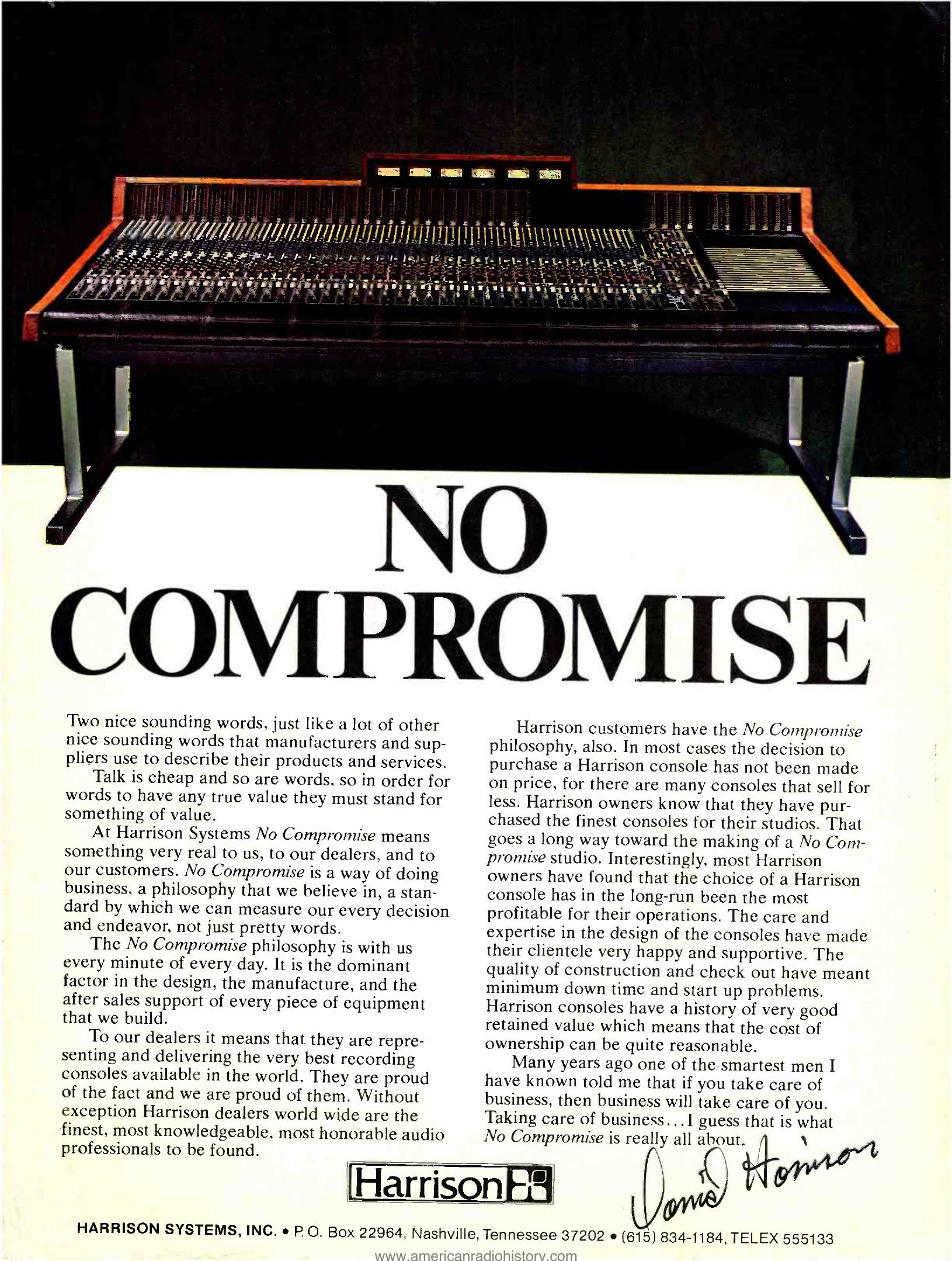
Harrison Audio debuted in 1975 with the 32-Series, centred on the flagship Harrison 3232. By combining the previously separate recording and tape-return monitoring signal paths into each channel strip, it saved space and streamlined multi-track workflows — and after its success, the in-line design became the de facto standard for recording consoles worldwide. The 32-Series and its 32C variant went on to become one of the most-used desks of the late 1970s and 1980s: Deep Purple, Rolling Stones, Led Zeppelin, Kansas, Steely Dan, Iggy Pop, Queen, ABBA, Genesis, Michael Jackson's Thriller (1982, 32C at Westlake), Michael Jackson's Bad (1987, 32C at Westlake), Nirvana's Nevermind, and the Smashing Pumpkins' Gish were all recorded on it.
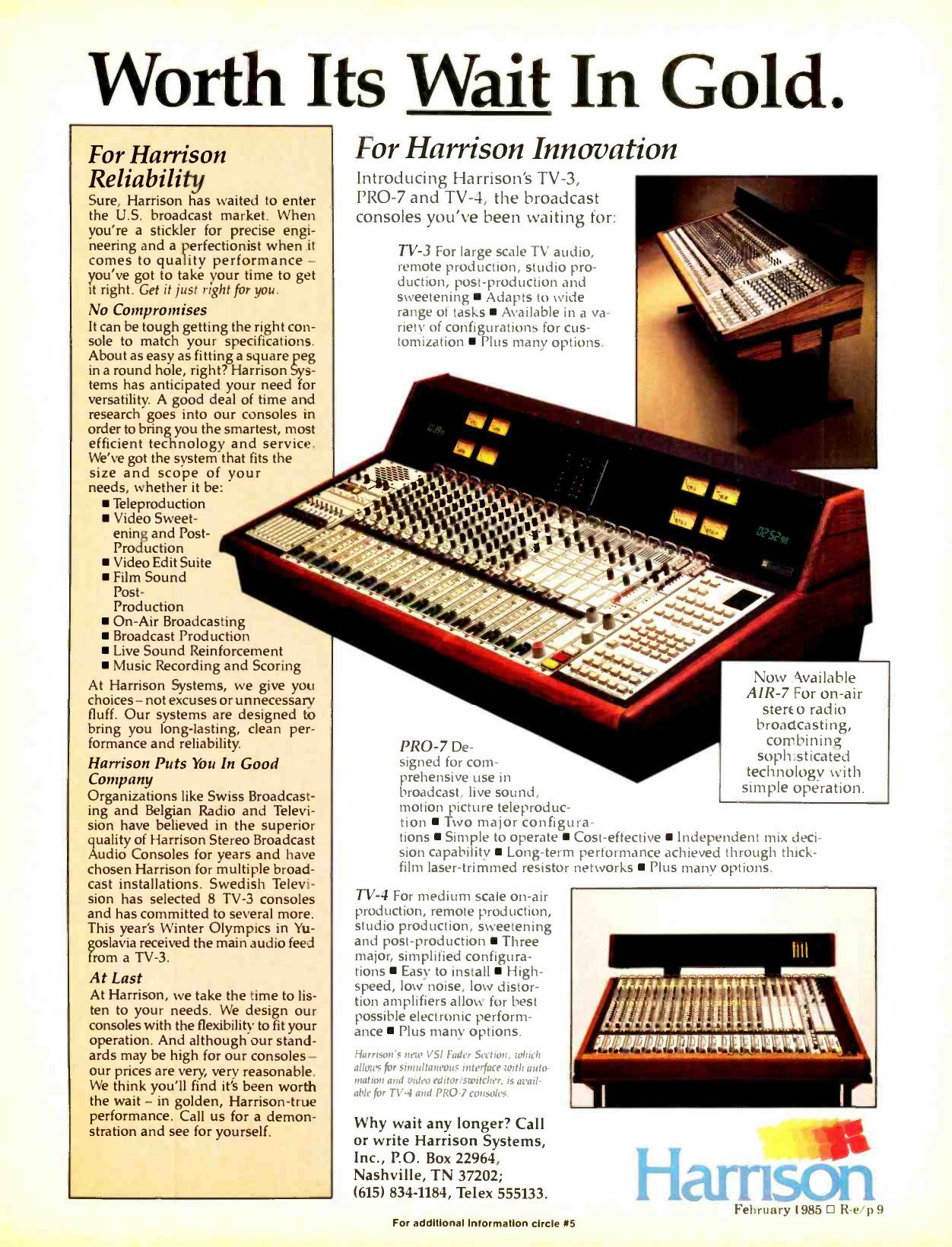
Harrison's involvement in film mixing — PP-1 in 1979 with some of the earliest computer-driven automation, the groundbreaking SeriesTen in 1985 (the world's first fully automated console, using digital encoders in place of analog potentiometers), and the Motion Picture Console in 1992 (built for Sony Pictures, with motorized joysticks for automated surround panning) — gave the company a perspective on audio that most recording console manufacturers never possessed.
In 2009 Harrison launched Mixbus, a DAW built on open-source Ardour with Harrison-style summing and EQ. In 2022, SSL (and the wider Audiotonix Group) formally acquired Harrison. The 32Classic console, a spiritual successor to the original 32-Series, arrived in 2023 — followed by 500 Series modules in 2024.
🎛 Mix on a vintage-inspired analogue desk in VR — explore the Retro Recordings XR experience →
Notable Consoles
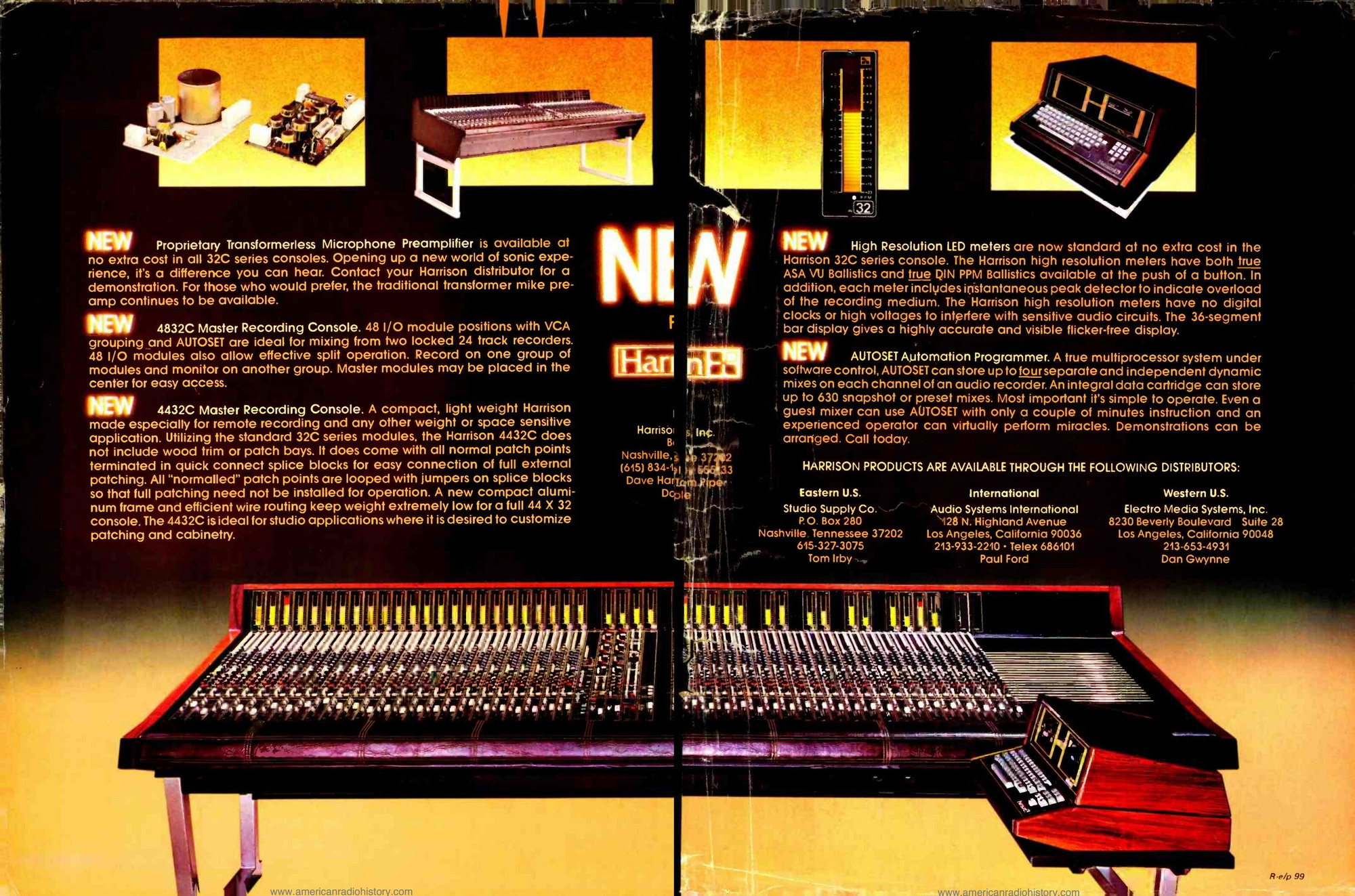
32-Series (3232 / 32C)
1975 – 1990s- Channels
- 24 – 56
- Layout
- In-line
- EQ
- 4-band semi-parametric
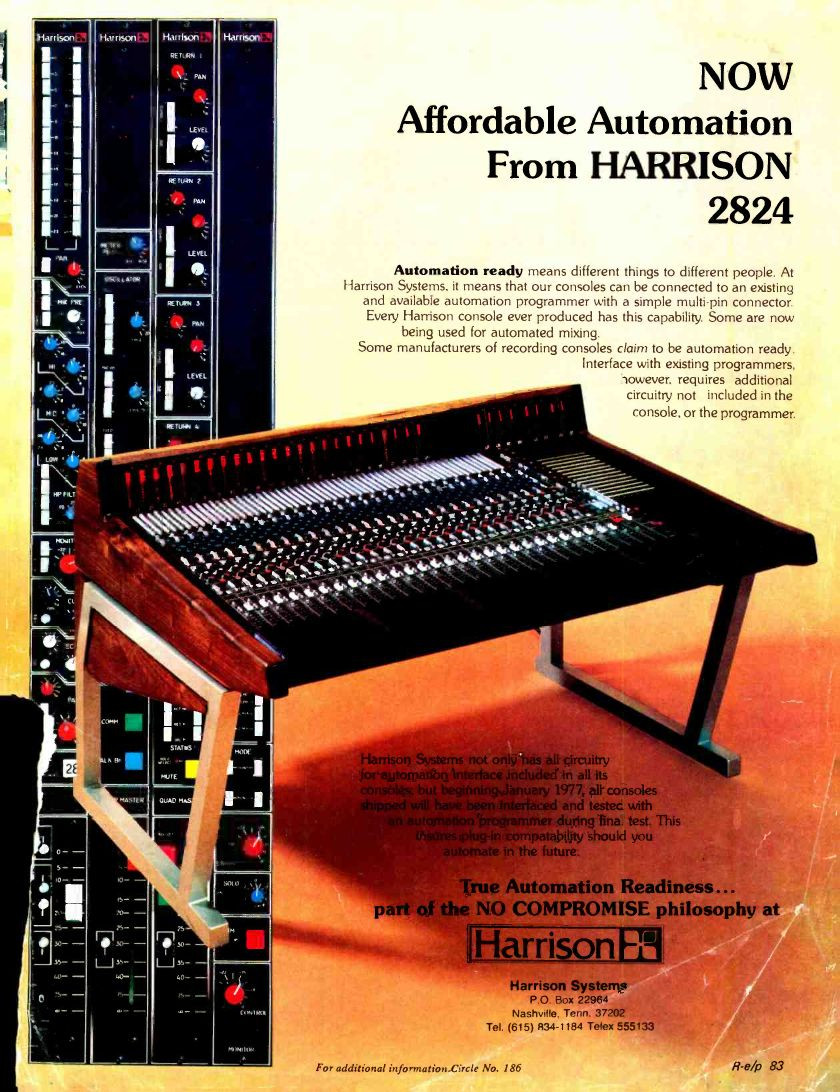
2824
1975 – early 1980s- Channels
- 28
- Layout
- In-line
- EQ
- 4-band semi-parametric
3624
1978 – early 1980s- Channels
- 36
- Layout
- In-line
- EQ
- 3-band reciprocal parametric + parametric HPF
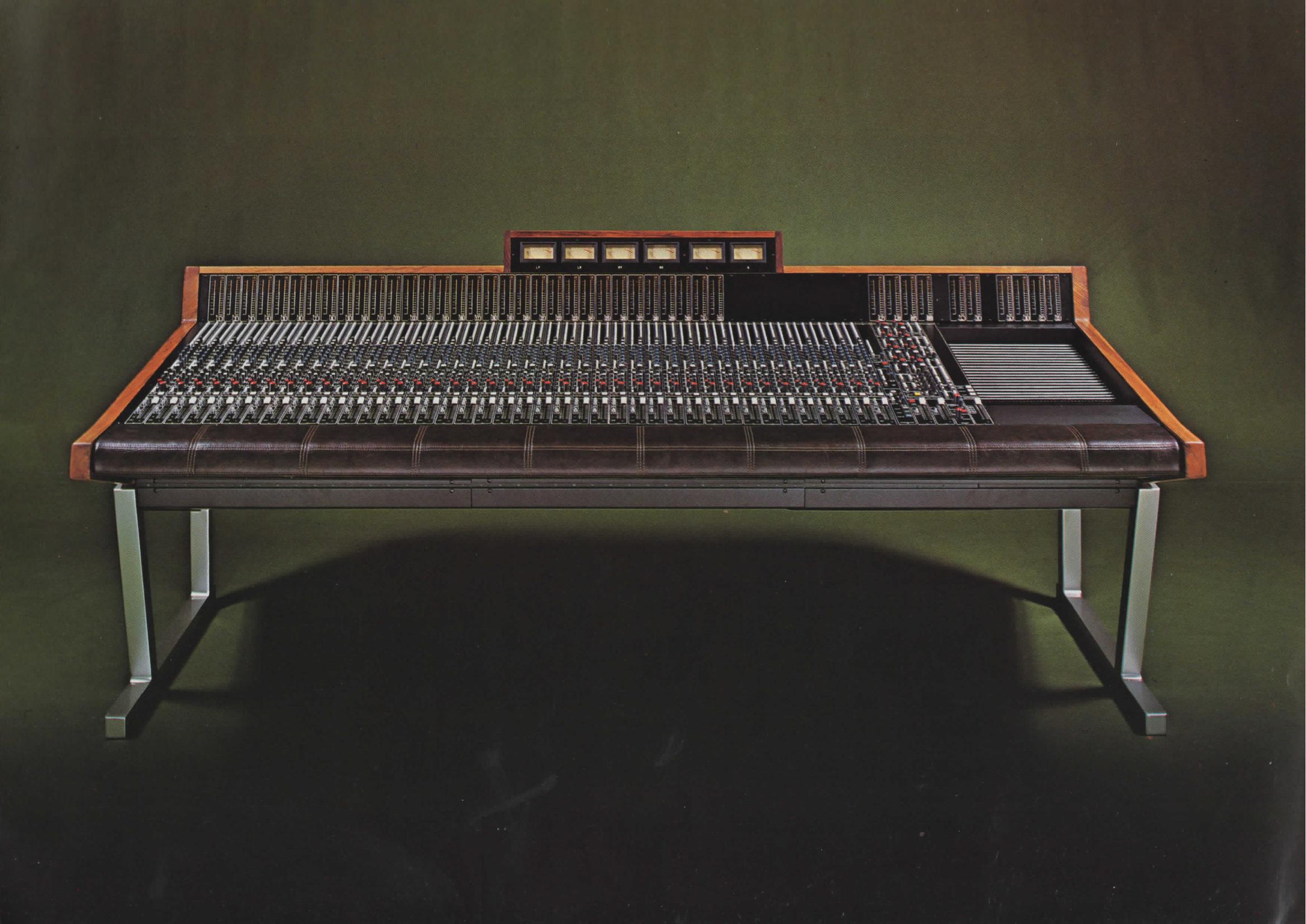
4032C
1978 – 1990s- Channels
- up to 40 mic + 88 line
- Layout
- In-line
- EQ
- 4-band fully parametric reciprocal
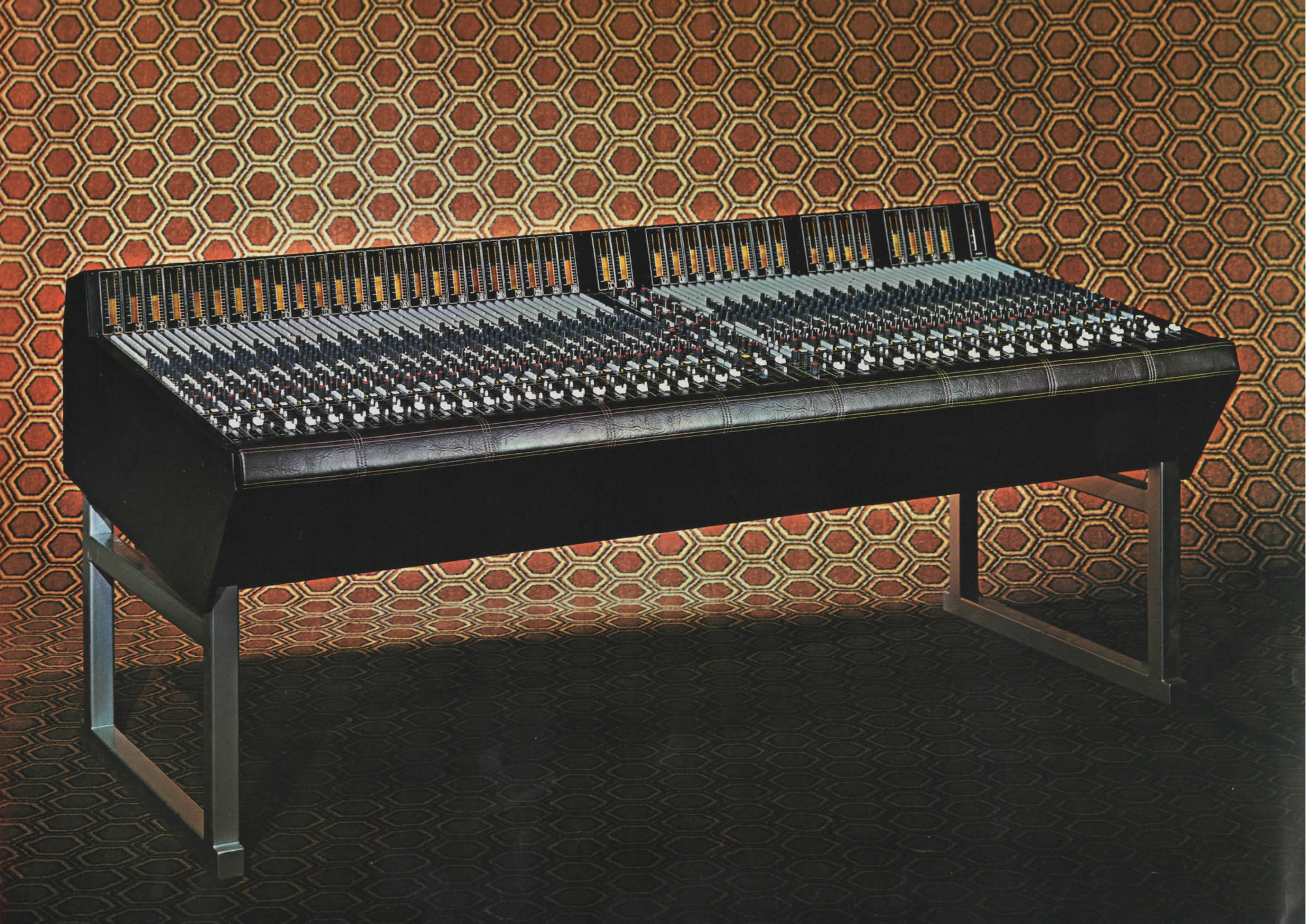
4432C
1979 – late 1980s- Channels
- 44
- Layout
- In-line
- EQ
- 4-band fully parametric reciprocal
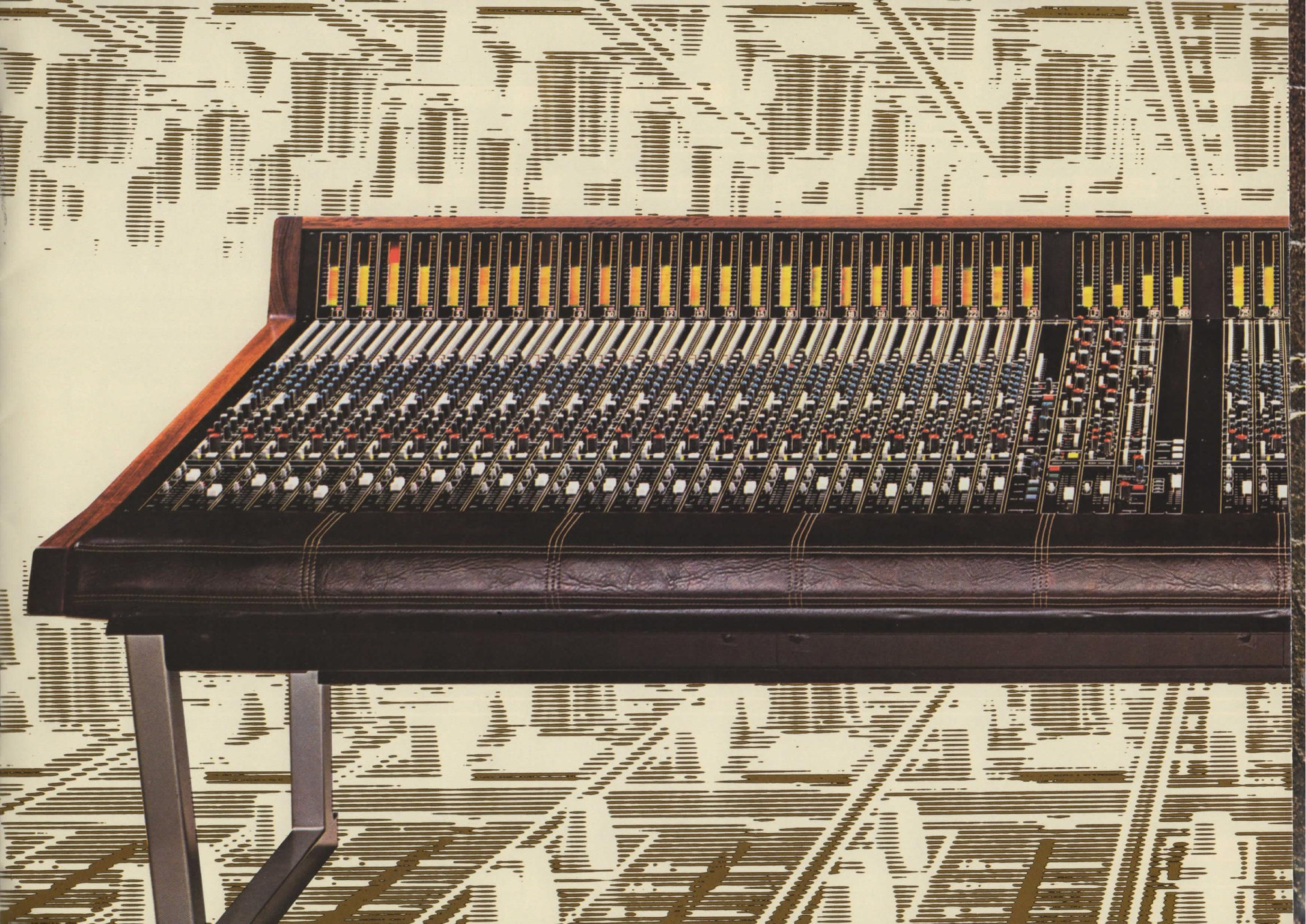
4832C
1980 – early 1990s- Channels
- 48 (+ 102 line in mixdown)
- Layout
- In-line
- EQ
- 4-band fully parametric reciprocal
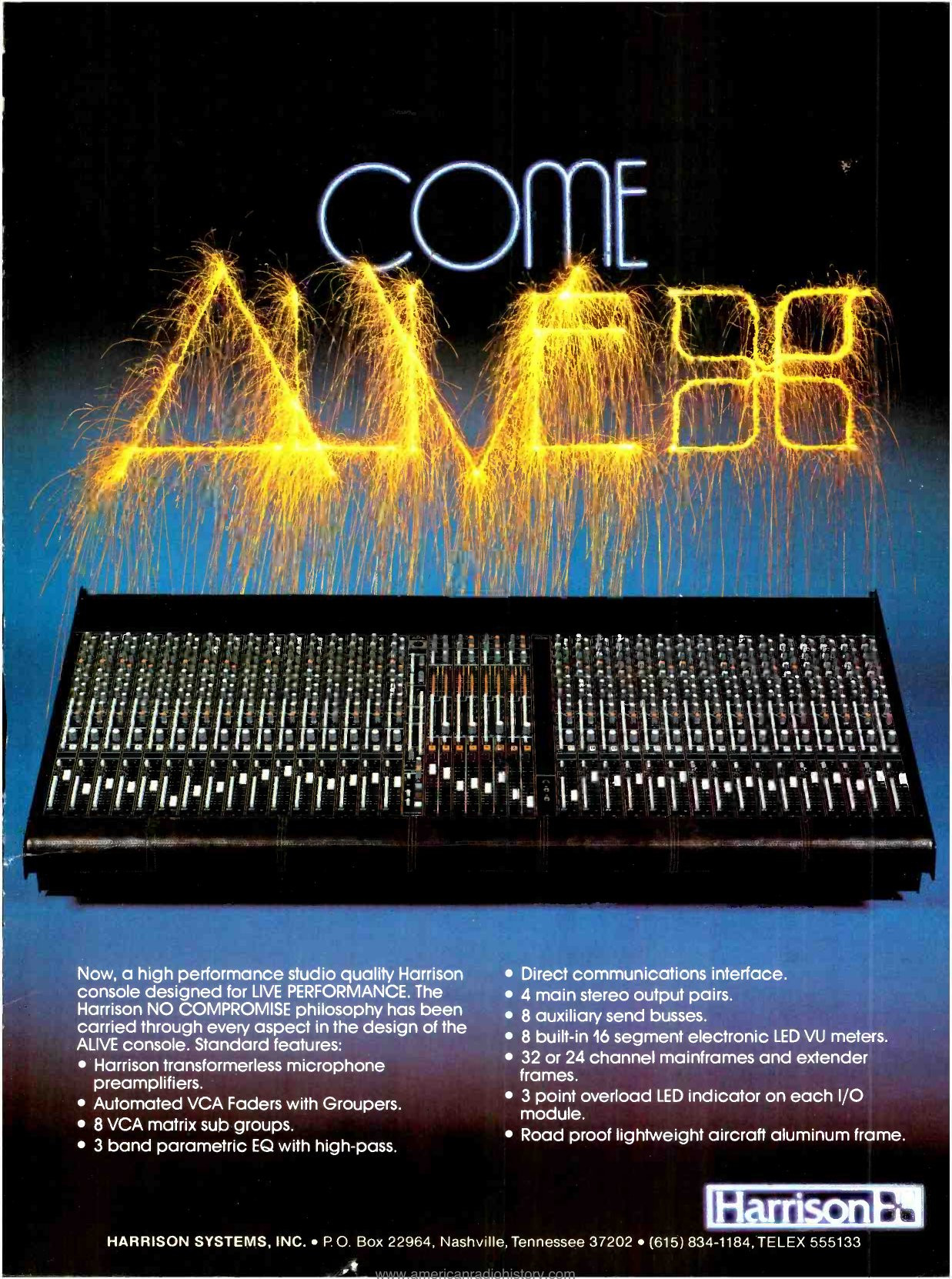
MR Series (MR-2 / MR3 / MR4)
1980 – 1990- Channels
- 24 – 48
- Layout
- In-line
- EQ
- 3-band parametric (MR3 EQ)
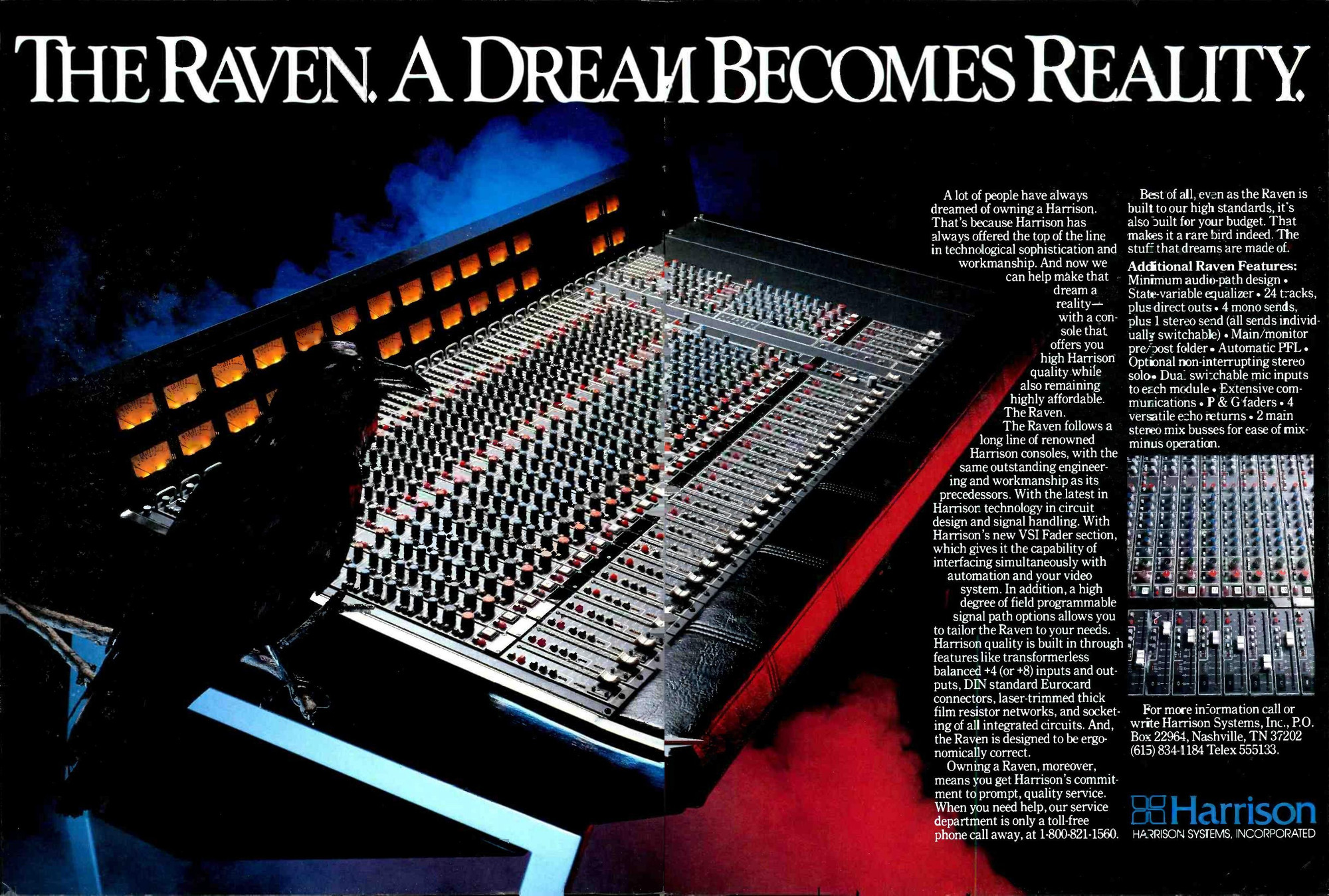
Raven
1982 – late 1980s- Channels
- 24 – 56
- Layout
- In-line
- EQ
- 4-band parametric
PP-1 (Film Console)
1979 – mid 1980s- Channels
- 24 – 64
- Layout
- Split / film
- EQ
- 4-band
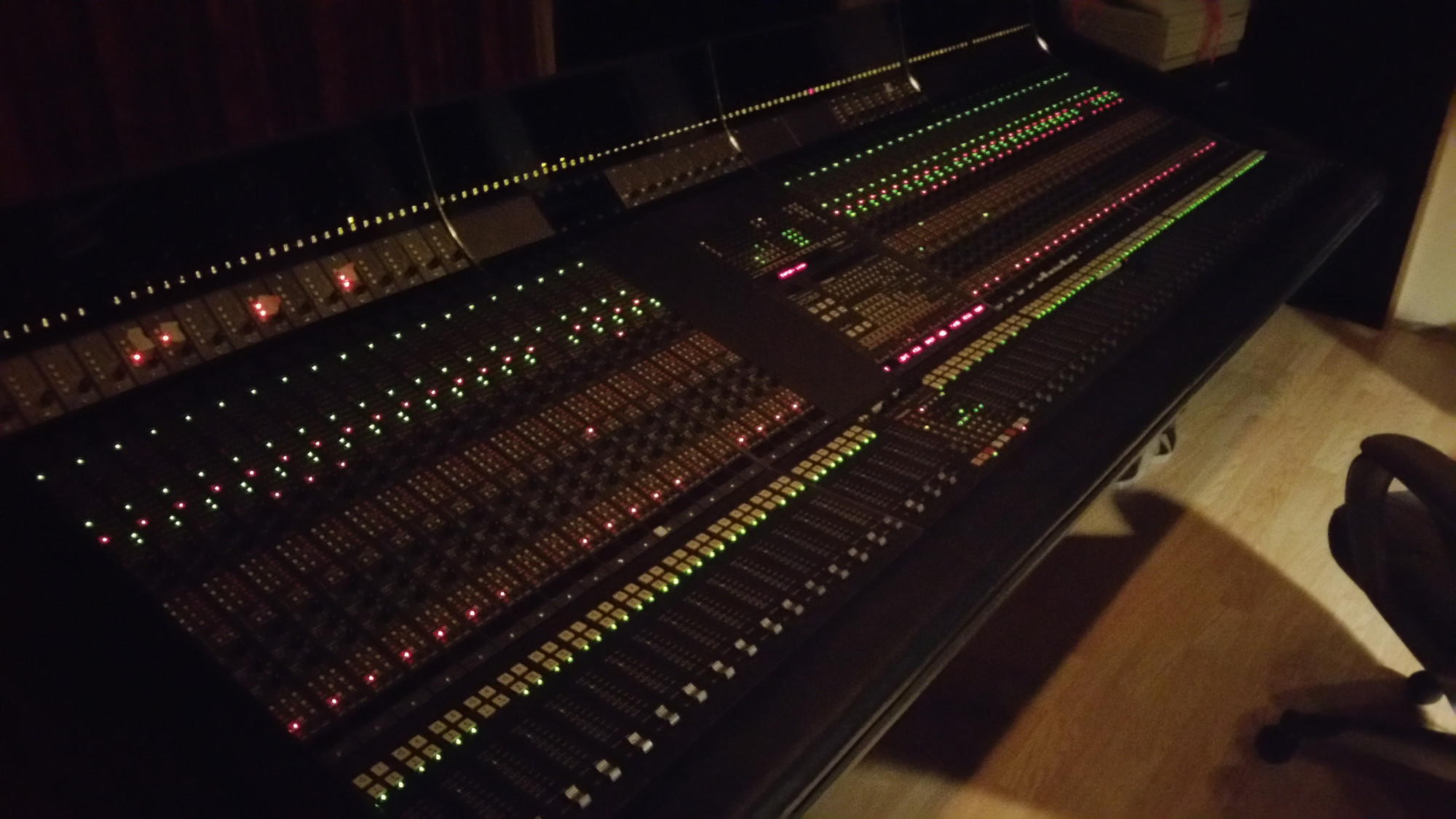
SeriesTen
1985 – 1994- Channels
- 32 – 96
- Layout
- In-line
- EQ
- Fully automated (digital encoders)
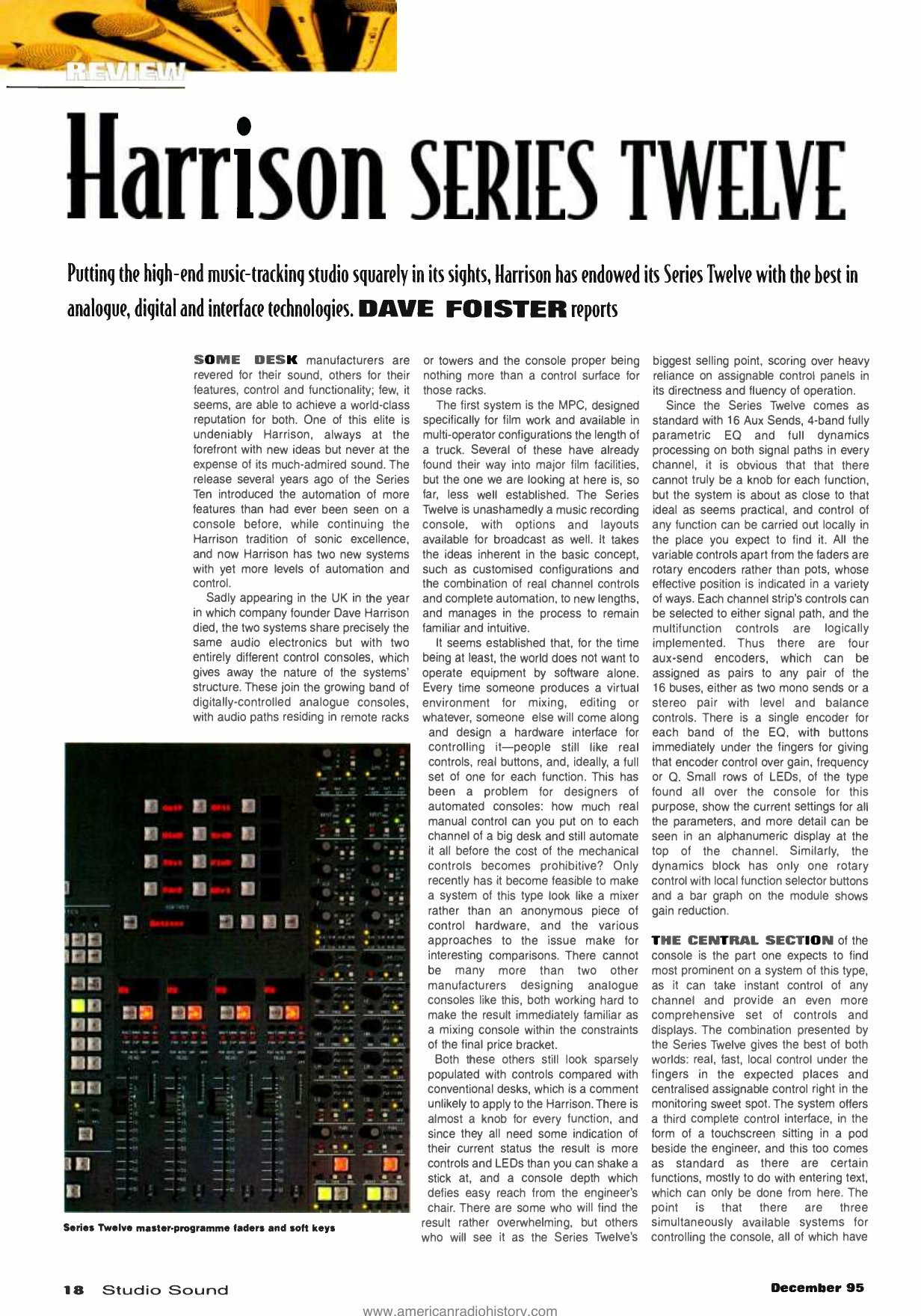
SeriesTwelve
1994 – 2005- Channels
- 48 – 128
- Layout
- Digital surface / analog racks
- EQ
- Fully parametric digital
MPC (Motion Picture Console)
1992 – present- Channels
- 96 – 384
- Layout
- Film dubbing stage
- EQ
- 8-band per channel
32Classic
2023 – present- Channels
- 32 – 64
- Layout
- In-line
- EQ
- 4-band (32-Series topology)
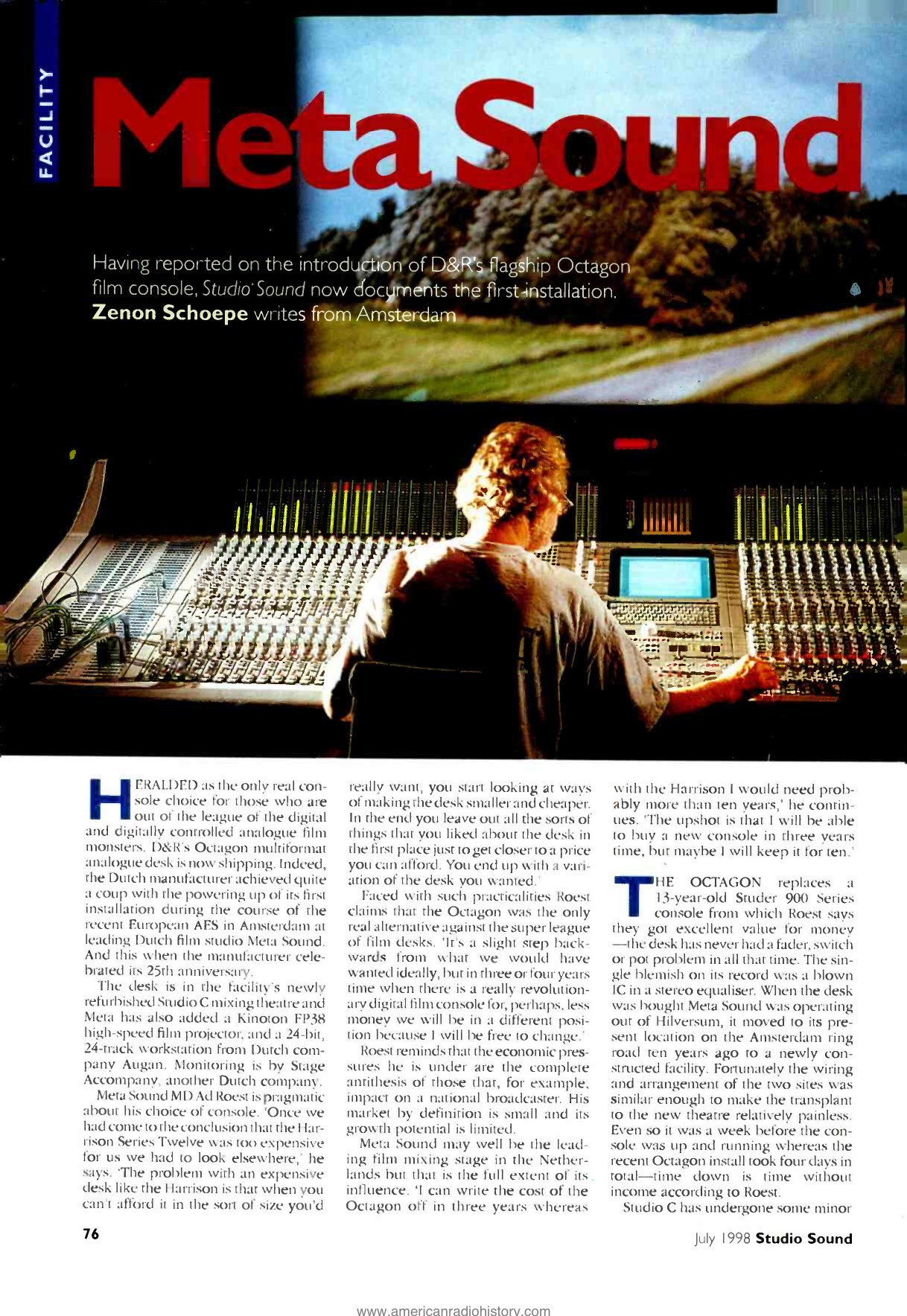
Vintage Advertisements