
Helios
The Hidden Hand Behind British Rock
Dick Swettenham founded Helios Electronics in 1969 in Teddington, Middlesex. His background was exceptional: he had served as technical director at both Olympic Sound Studios in Barnes and at Abbey Road — two of the most demanding recording environments in London — before deciding to build consoles himself. His first client was Island Records, commissioning the inaugural Helios installation for their new Basing Street Studios in West London. Basing Street would become one of the most important rooms of the era: Free, Traffic, early Bob Marley and the Wailers, and dozens of defining British acts worked there in the years that followed.
Other early commissions confirmed what the first had suggested. Apple Studios on Savile Row — where The Beatles were recording their final sessions — received a Helios. Richard Branson chose Helios for both Virgin Records' Manor Studios in Oxfordshire and The Town House in Shepherd's Bush. And the Rolling Stones Mobile Recording Unit — the first major purpose-built mobile recording truck in the world — was built around a Helios console. That mobile desk appeared at Headley Grange in 1970, where it captured Led Zeppelin IV: 'Stairway to Heaven', 'Black Dog', 'Rock and Roll'. It then travelled to a château in the south of France for the Exile on Main St. sessions. The same console, in two locations, at two of the most consequential rock recordings ever made.
The Helios sound was unlike anything else available at the time: open at the top, full in the bottom, with a particular quality in the midrange that made electric guitars and drums feel genuinely alive. Dick Swettenham died in 1985, and Helios closed its first chapter in 1979. Only around forty consoles were ever built. Their rarity means that the very few remaining operational examples command extraordinary prices — but their influence, channelled through those recordings, is immeasurable.
🎛 Mix on a vintage-inspired analogue desk in VR — explore the Retro Recordings XR experience →
Notable Consoles
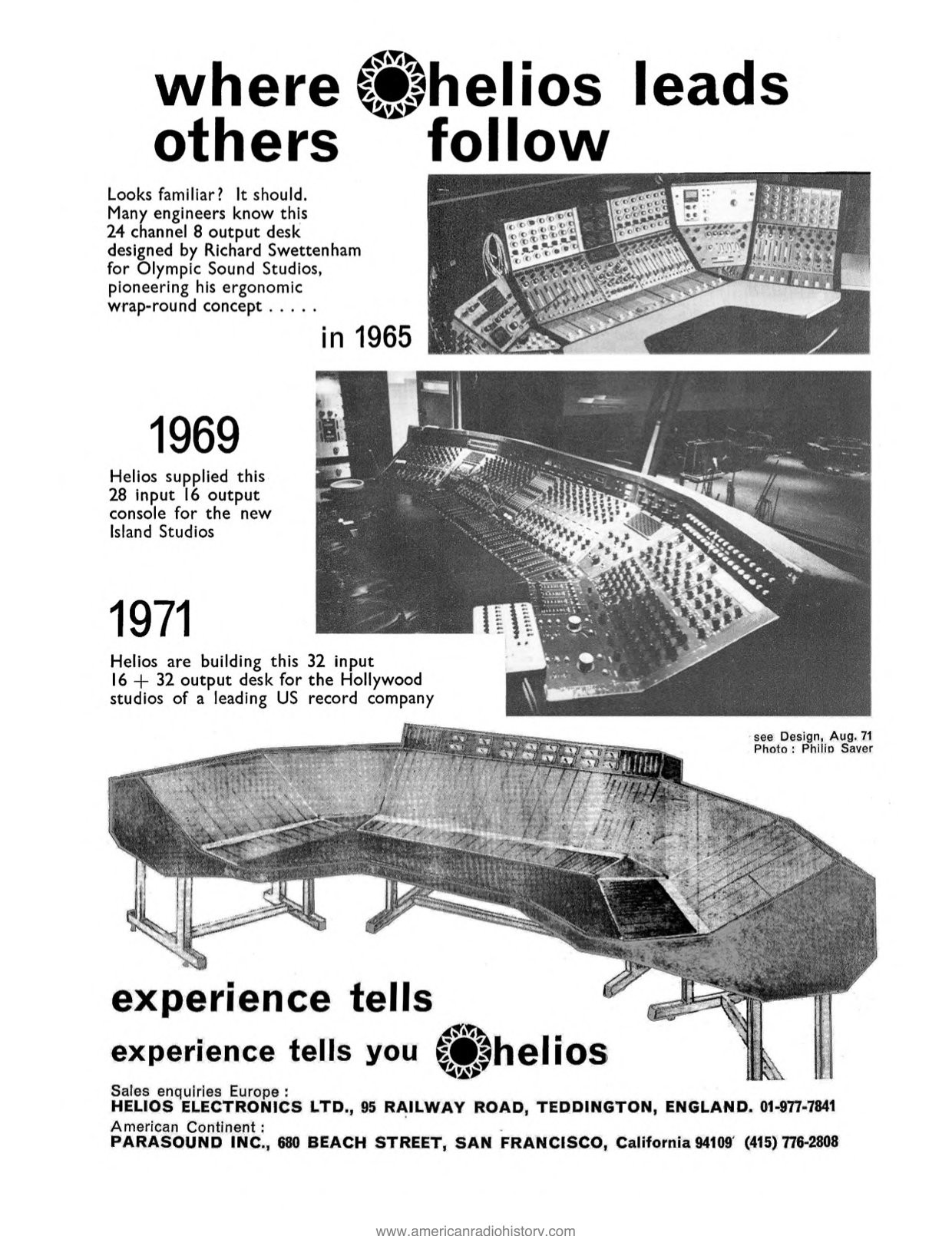
Type 69
1969 – 1973 (original consoles)- Channels
- 12 – 36
- Layout
- Split / wrap-around
- EQ
- 3-band
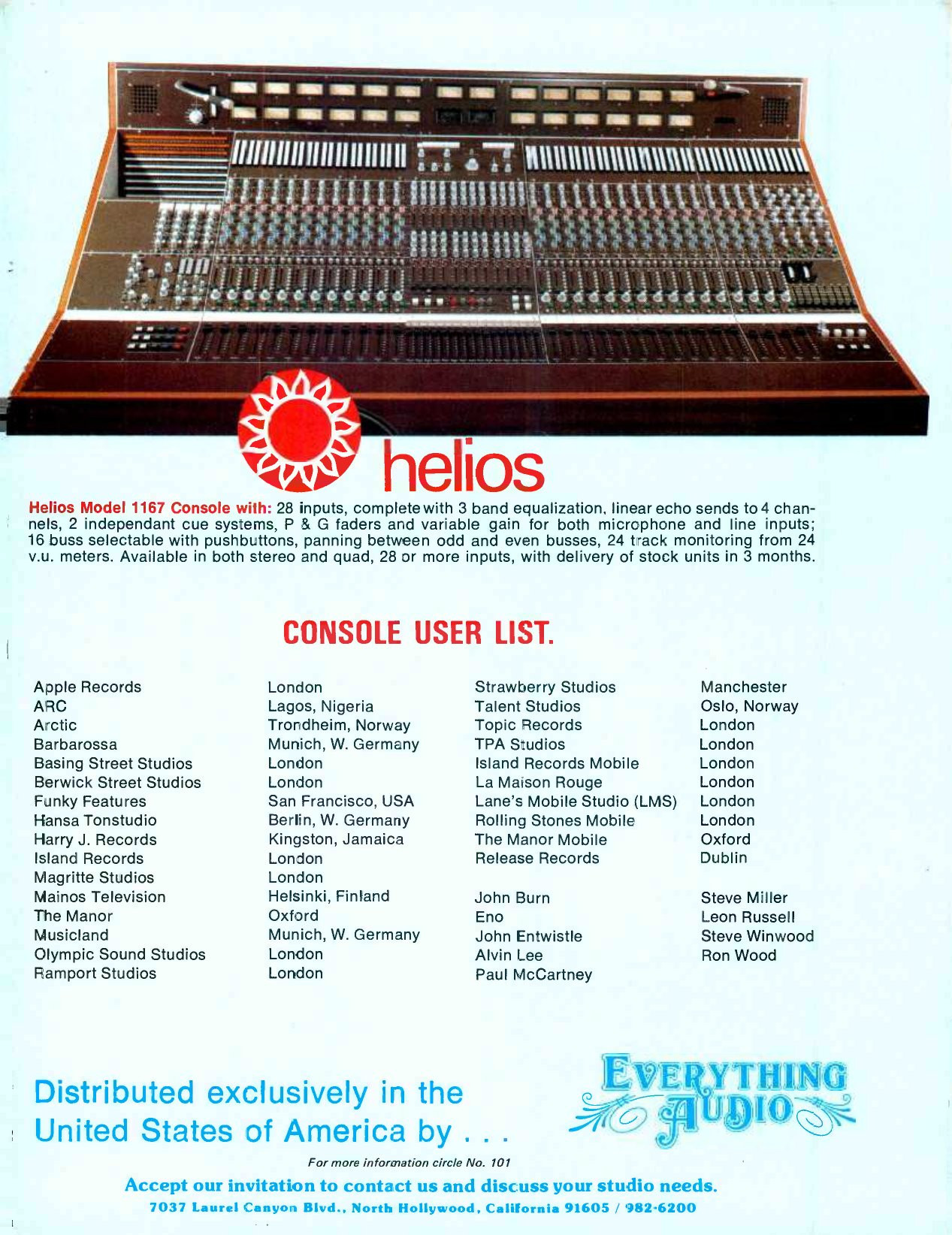
Model 1167
1975 – 1977- Channels
- 28 (or more)
- Layout
- Split (factory stock)
- EQ
- 3-band
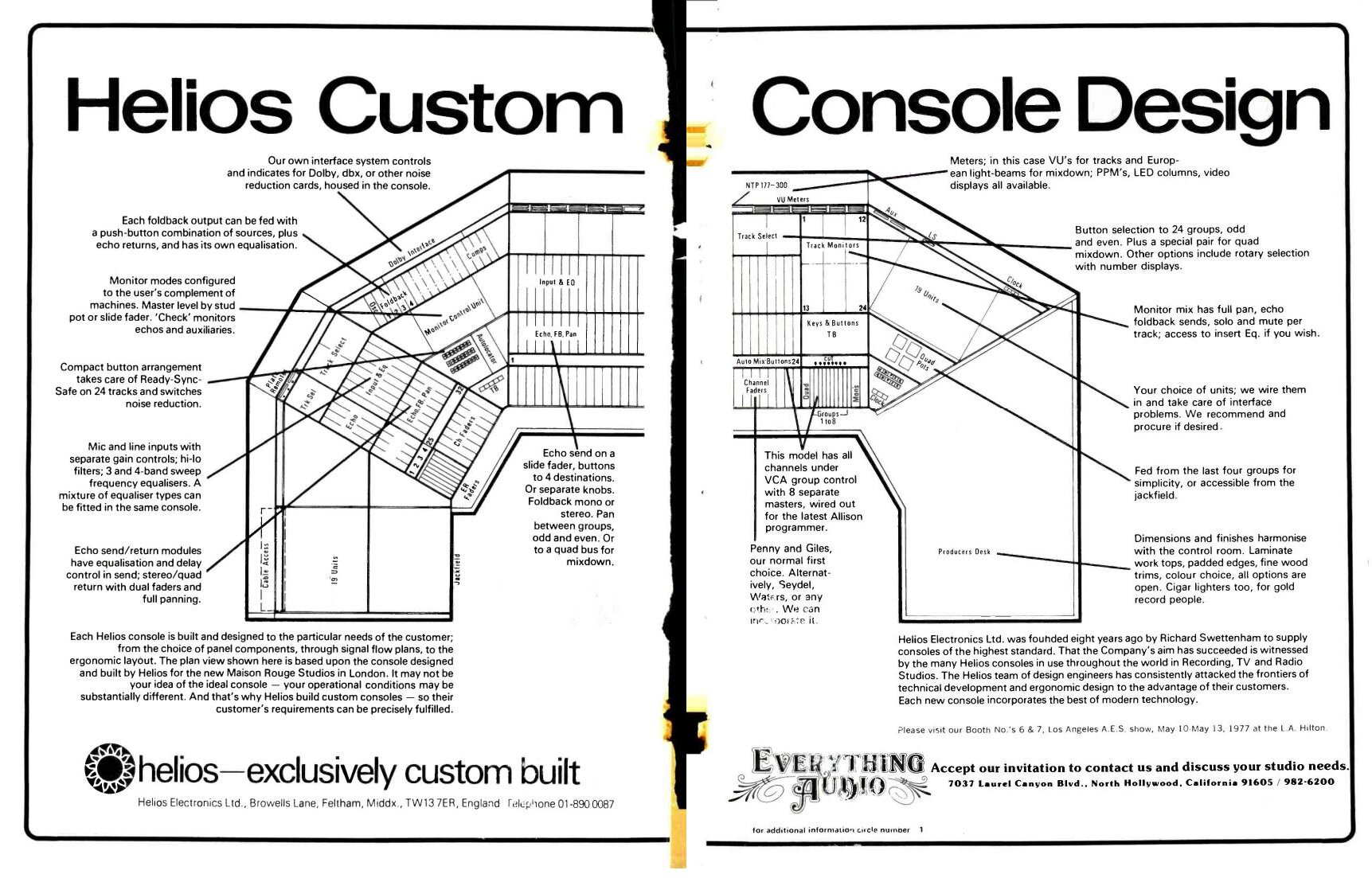
Custom Console
1974 – 1978- Channels
- 32 (typical) — bespoke per install
- Layout
- Wrap-around / split (bespoke)
- EQ
- 3 or 4-band parametric (custom-"Q" mid bands at Dawnbreaker)
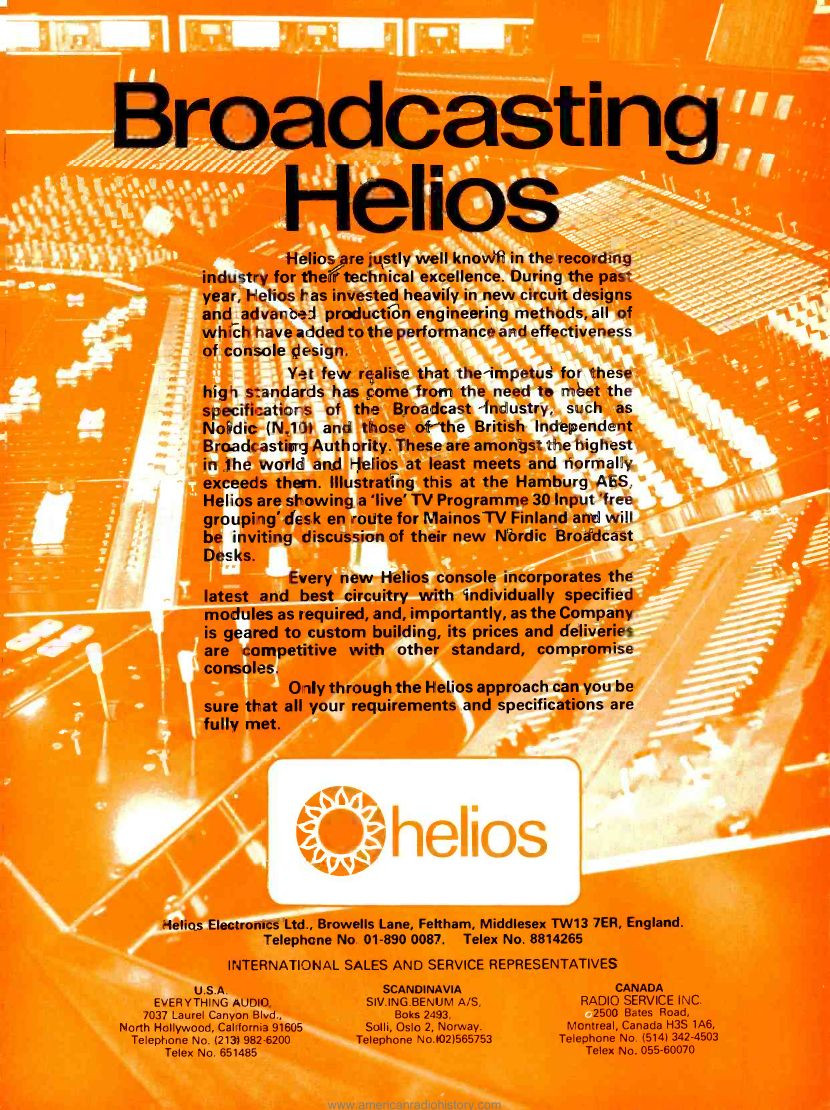
Broadcasting Helios
1977 – 1979- Channels
- 10 – 32 (per install)
- Layout
- Broadcast / on-air
- EQ
- 3 or 4-band parametric