Ramsa
Panasonic Professional Audio
Ramsa was Matsushita Electric's (Panasonic's) professional-audio brand from the late 1970s into the early 2000s, headquartered in Osaka. Built on the same manufacturing infrastructure that produced Technics turntables and Panasonic broadcast cameras, Ramsa benefitted from enormous economies of scale — clean circuit design and build consistency at price points the British and American brands struggled to match.
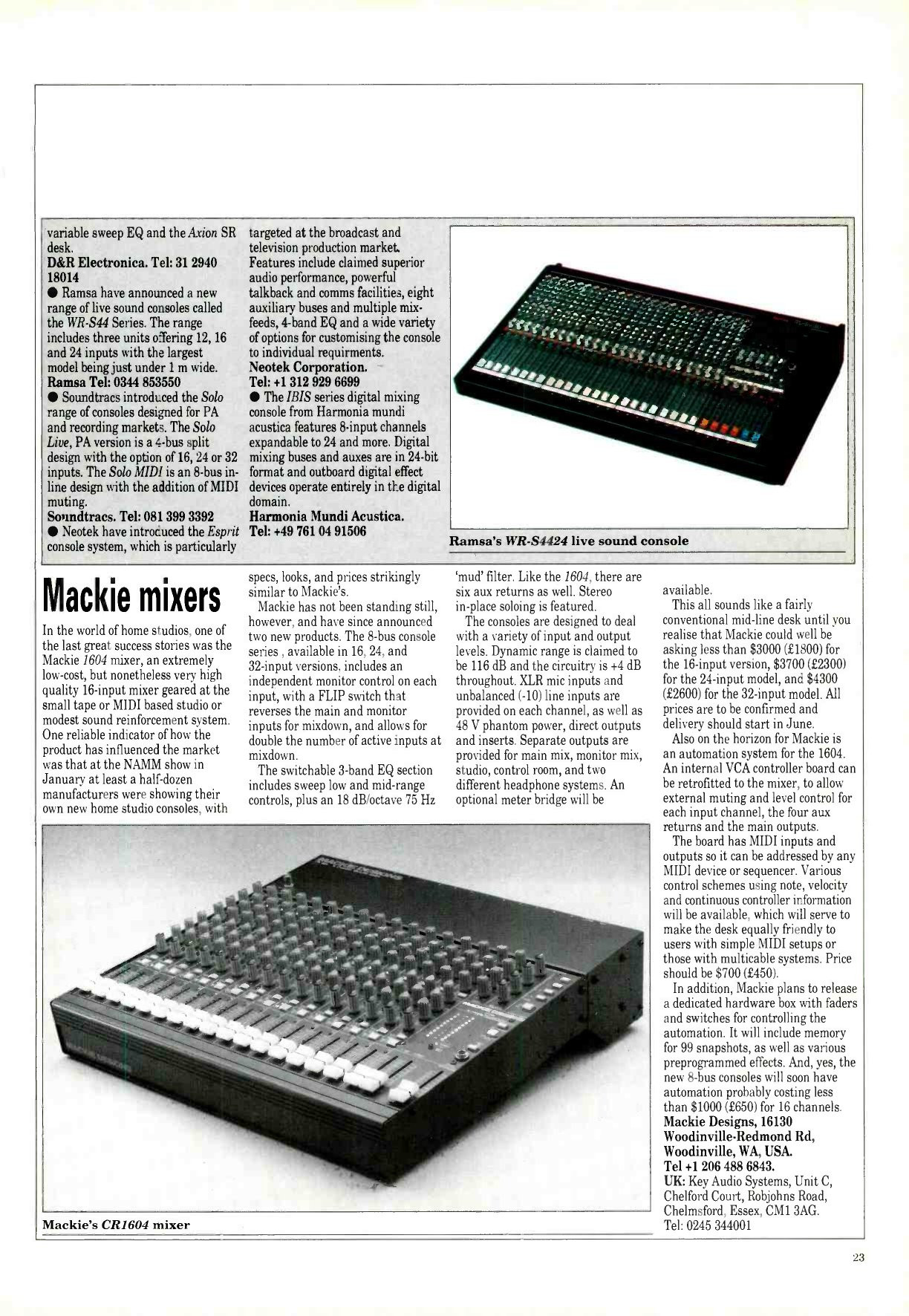
The WR-S series defined the lineup from the mid-1980s onward: modular analog consoles sized from compact 8-bus broadcast desks up to large-format 40-channel recording frames. Ramsa desks were especially common in Japanese, Korean, and Australian studios and broadcast facilities, and appeared throughout European corporate AV and installed-sound work. The 1998 DA7 then became one of the first serious affordable digital consoles, anticipating the mass shift to digital mixing that would follow.
Panasonic retired the Ramsa brand in the early 2000s, folding its remaining products into the broader Panasonic Professional line. For a quarter-century, though, "WR" on a back-of-the-desk label meant Japanese factory discipline applied to pro-audio engineering.
🎛 Mix on a vintage-inspired analogue desk in VR — explore the Retro Recordings XR experience →
Notable Consoles
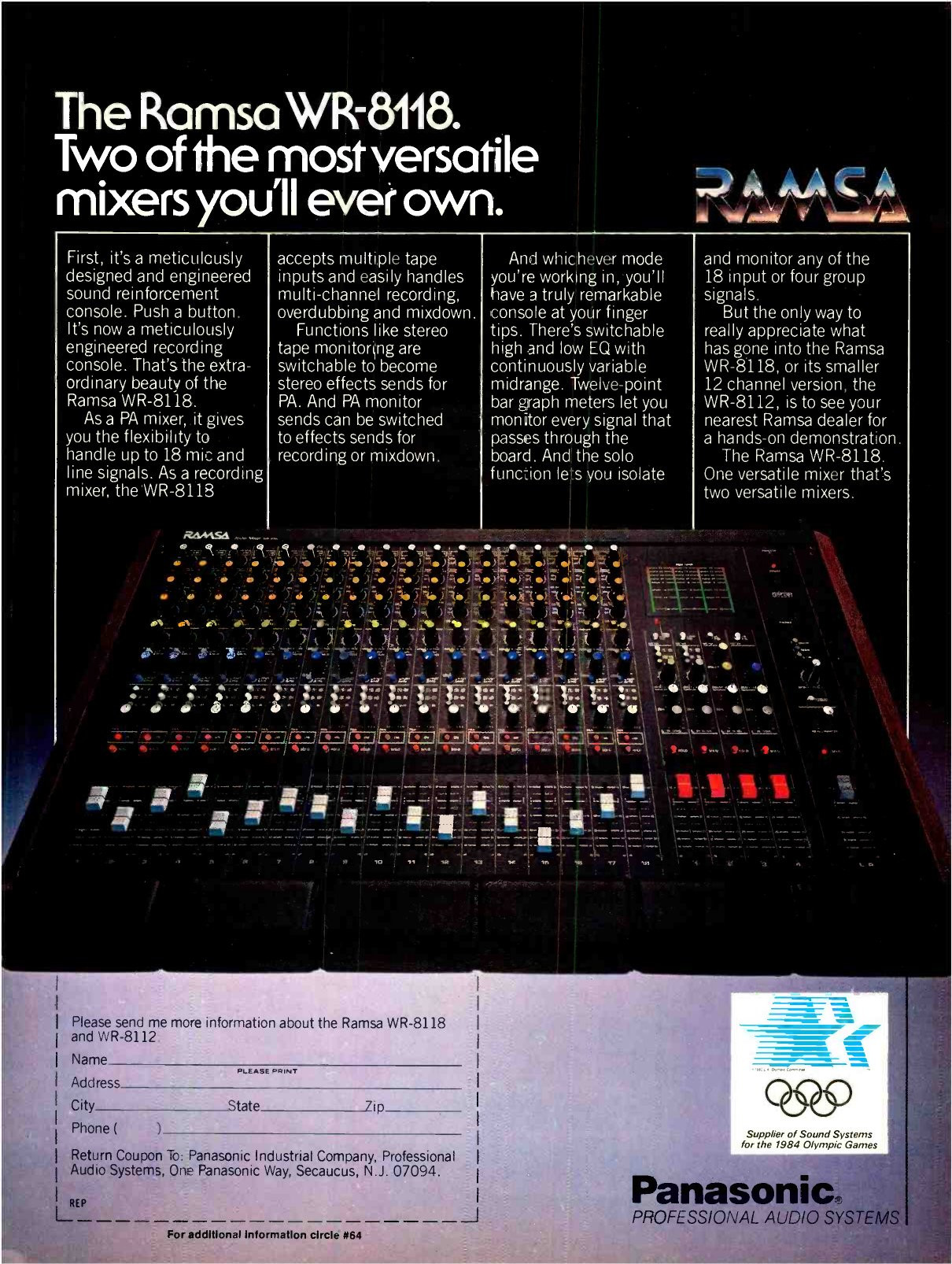
WR-8118
1981 – 1988- Channels
- 18
- Layout
- Recording
- EQ
- 4-band
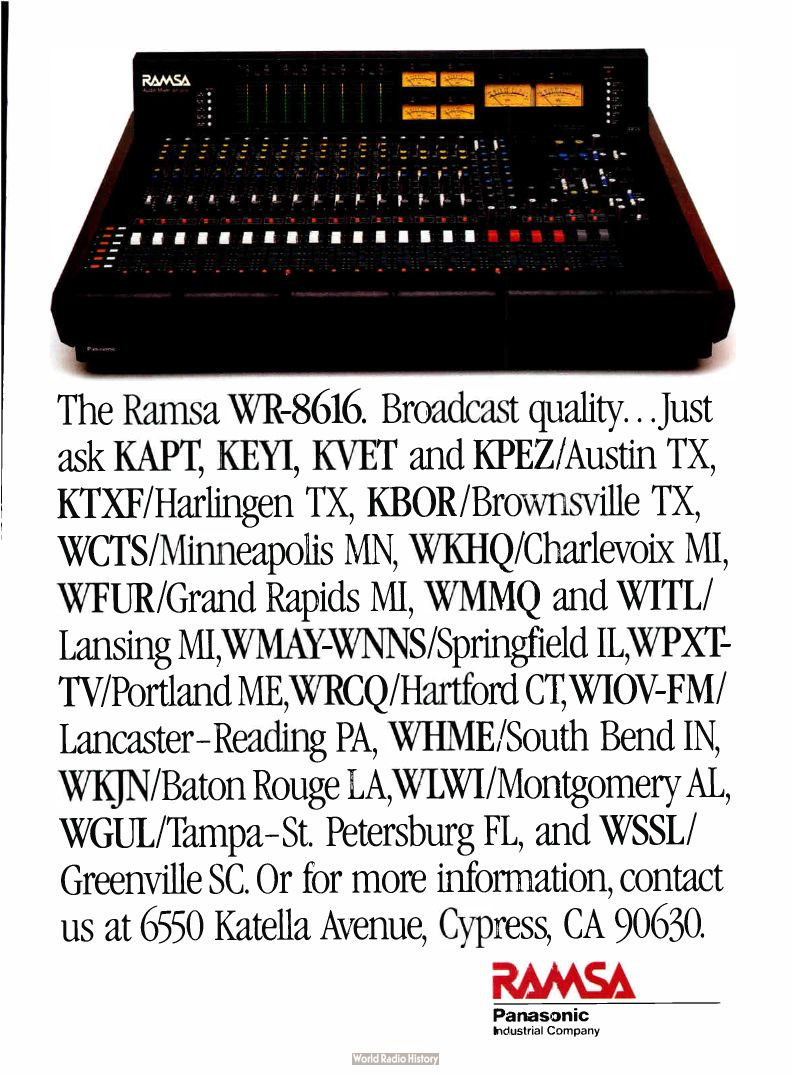
WR-8616
1986 – early 1990s- Channels
- 16
- Layout
- In-line (8-bus)
- EQ
- 4-band
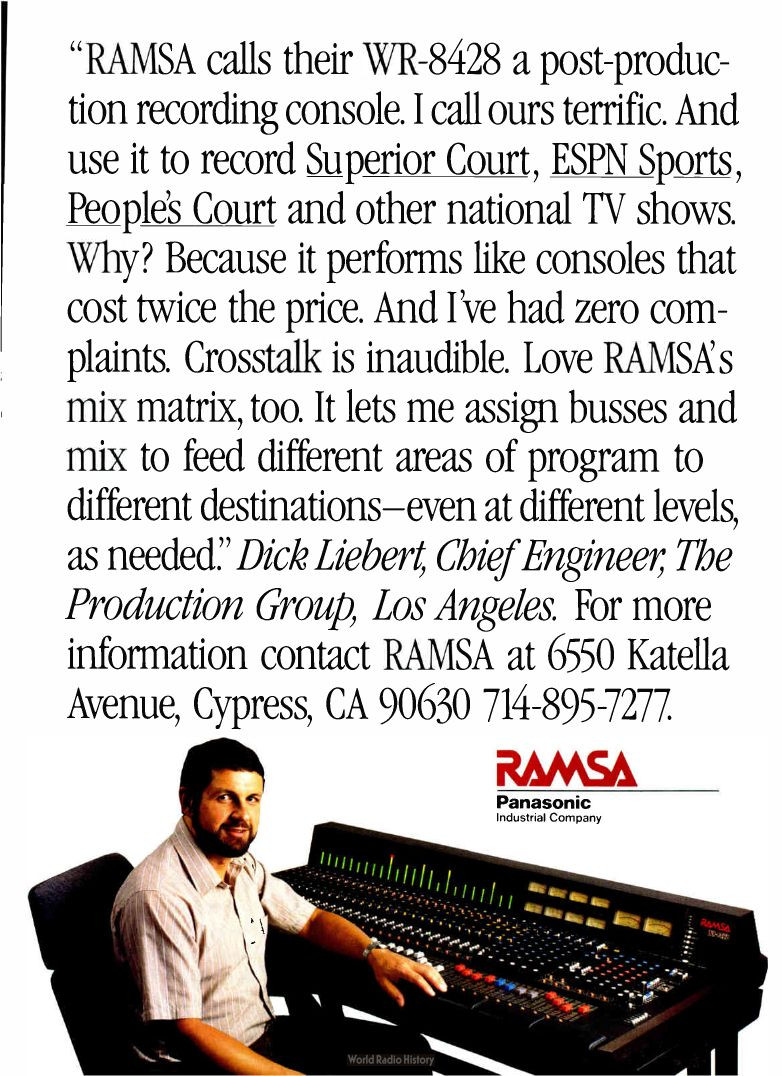
WR-8428
1985 – early 1990s- Channels
- 28
- Layout
- In-line (8-bus)
- EQ
- 4-band
WR-S4416
1984 – 1992- Channels
- 44
- Layout
- In-line (16 bus)
- EQ
- 4-band (swept mids)
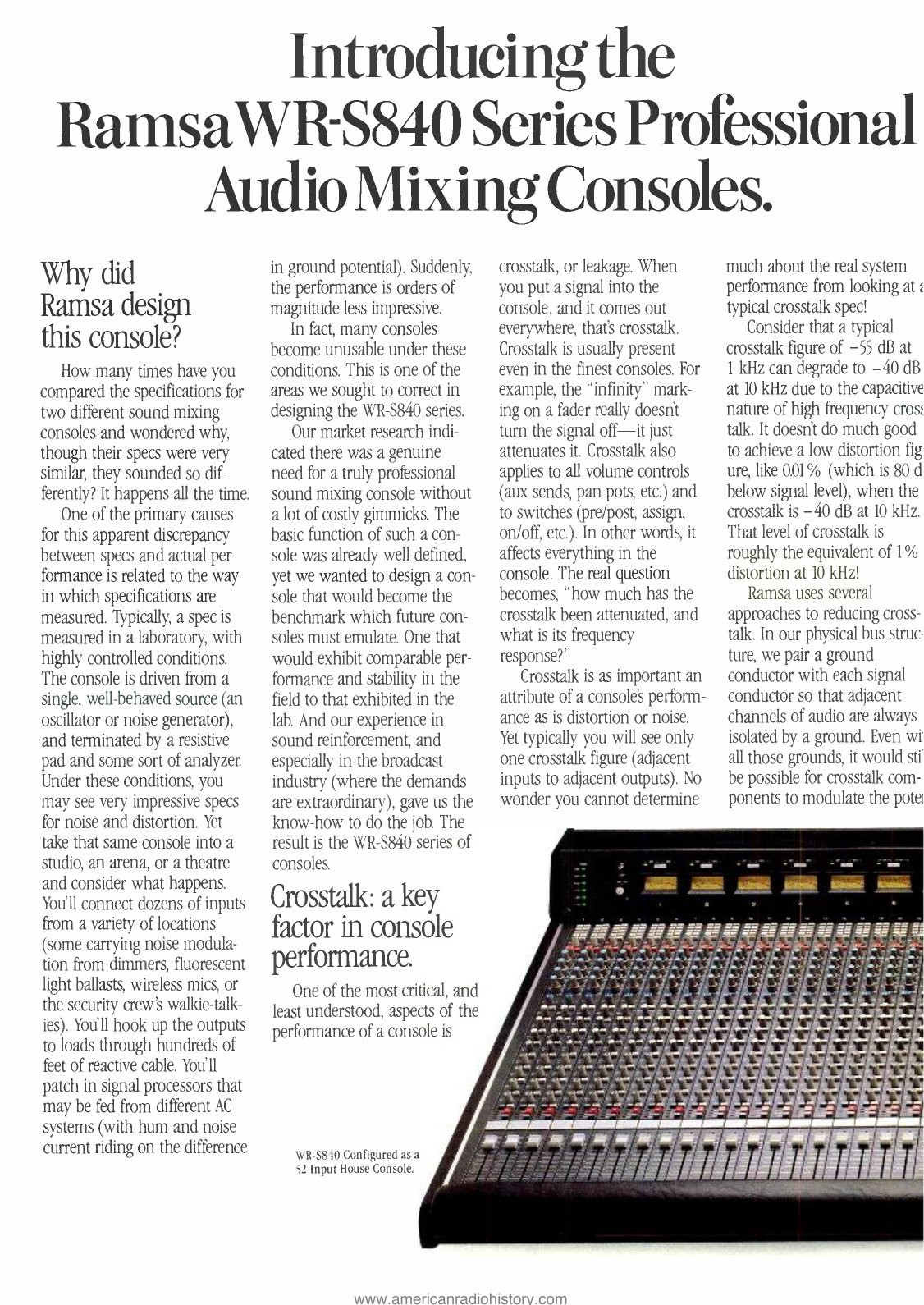
WR-S852
1985 – 1995- Channels
- 16 – 24
- Layout
- Split
- EQ
- 4-band
WR-S440
1988 – 1996- Channels
- 40
- Layout
- Split
- EQ
- 4-band
WR-8820 / WR-8816
1986 – 1998- Channels
- 20 / 16
- Layout
- Broadcast
- EQ
- 3-band
DA7
1998 – 2003- Channels
- 32
- Layout
- Digital (8-bus)
- EQ
- Parametric + dynamics
DA7 mkII
2001 – 2004- Channels
- 32
- Layout
- Digital (8-bus)
- EQ
- Parametric + dynamics
Vintage Advertisements