AMEK
Neve DNA in a New Form
AMEK was founded in Manchester in 1973, and for much of its early history it existed in the long shadow of Neve — also British, also analog, also beloved by engineers who cared deeply about the quality of their equipment. But AMEK found its own voice, and its collaboration with Rupert Neve after his departure from his own company produced some remarkable results.
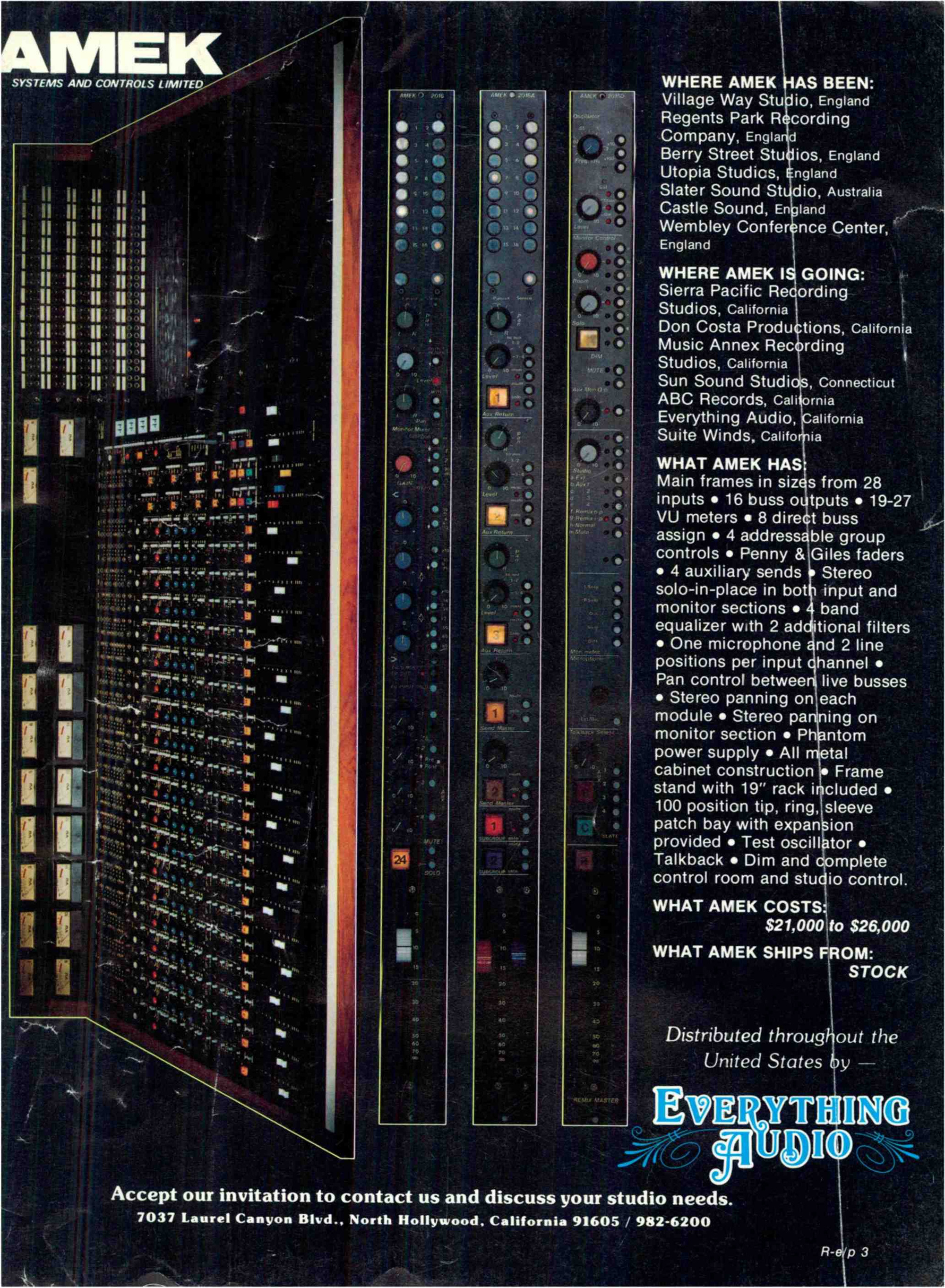
The AMEK Angela (1983) — an in-house design by AMEK co-founder Graham Langley — was the console that established the company: a flexible, road-ready large-format desk that found homes in major studios across Europe and North America. Rupert Neve's own collaboration with AMEK came later, when he worked as a consultant: the Mozart RN modules, the Medici "The Equaliser", and ultimately the 9098 console, which carried the DNA of his greatest work in a contemporary format.
AMEK was eventually acquired by Harman, and later the brand was absorbed entirely. But the Angela and the Neve-designed AMEK 9098 series remain among the most sought-after large-format consoles for engineers who want that classic British character without paying the full premium of an original Neve.
🎛 Mix on a vintage-inspired analogue desk in VR — explore the Retro Recordings XR experience →
Notable Consoles
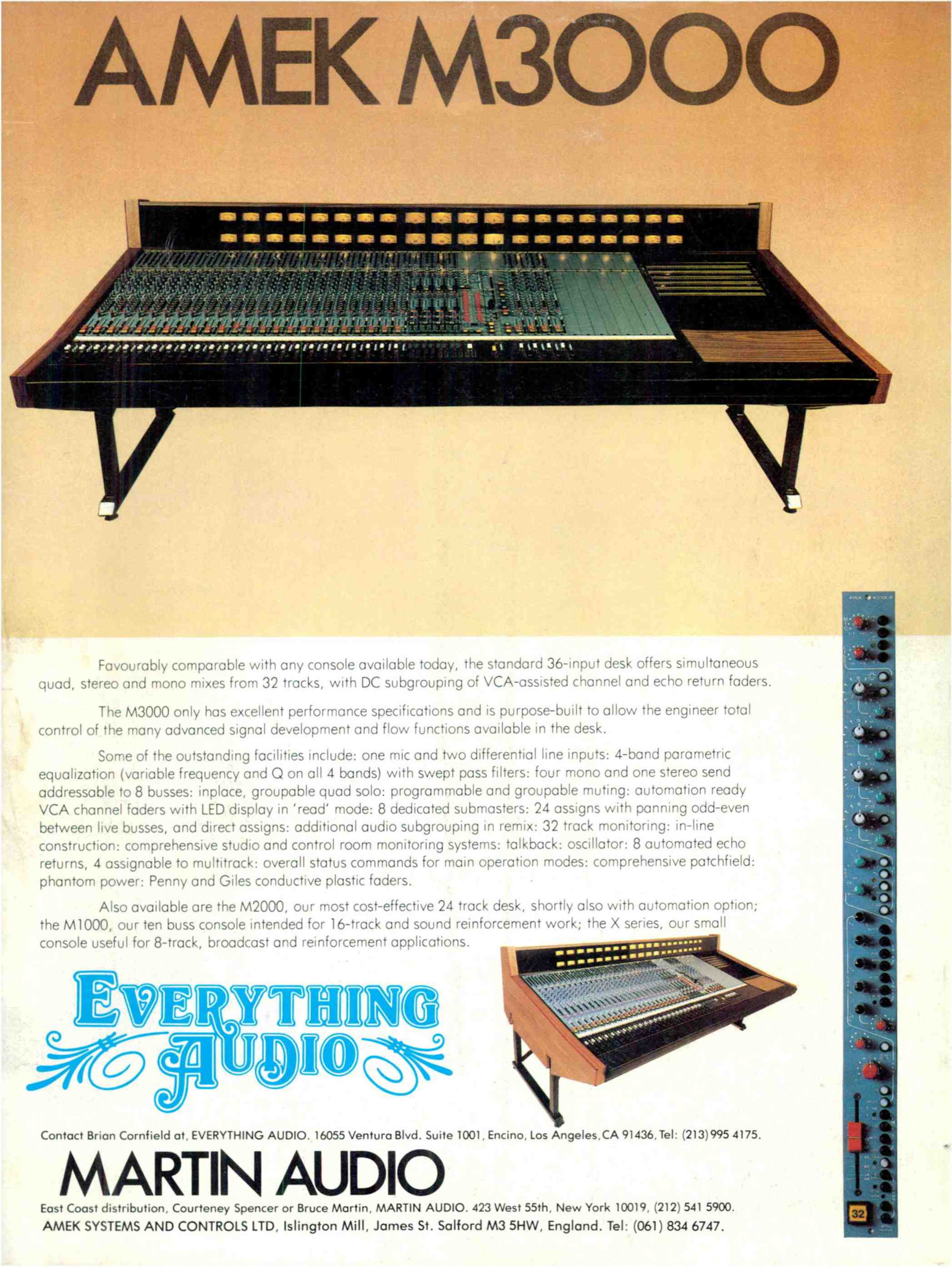
M-3000 (Amek 3000)
1978 – mid 1980s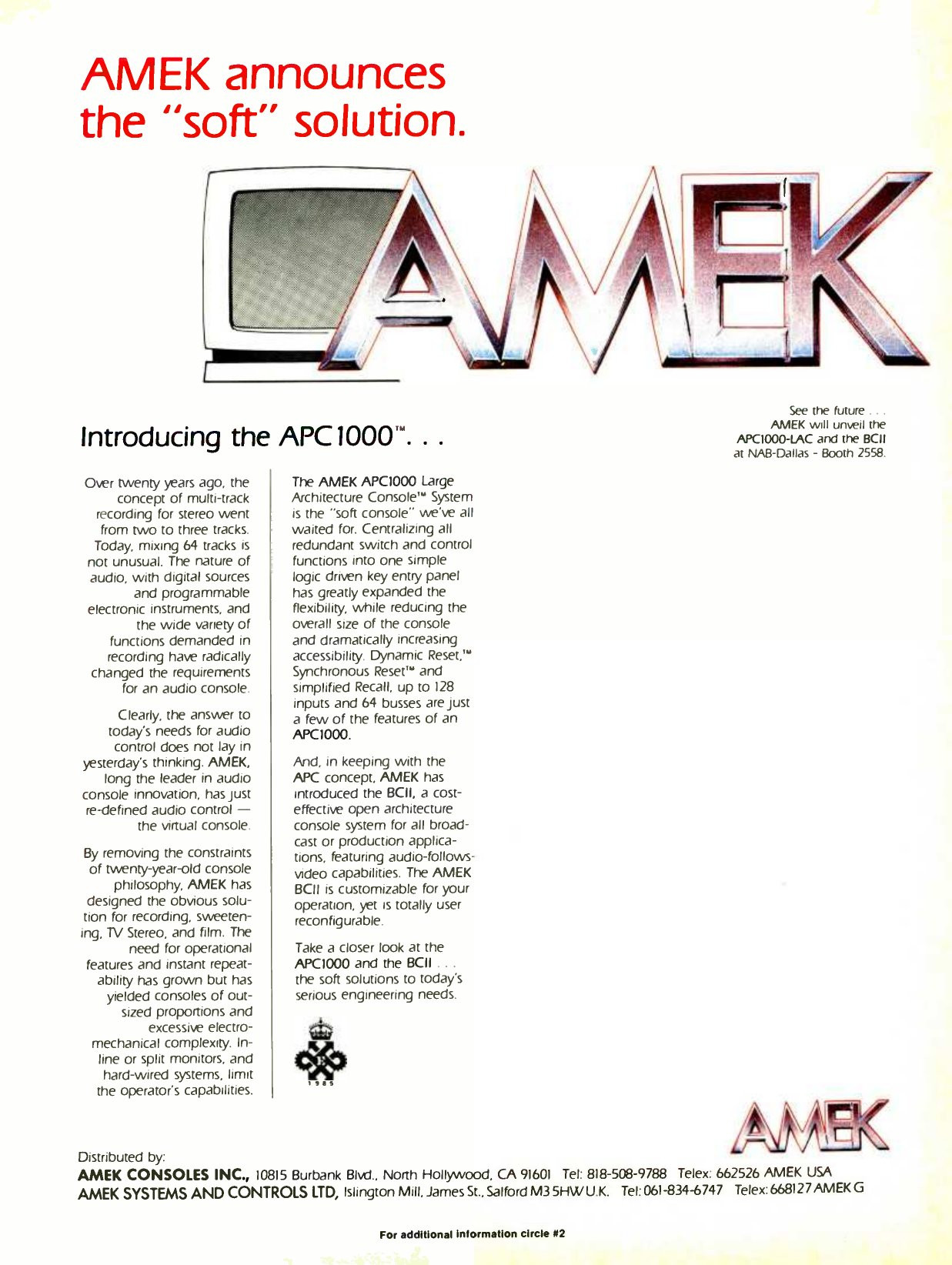
APC-1000
mid-to-late 1980s- Channels
- 32 – 56
- Layout
- In-line
- EQ
- 4-band parametric
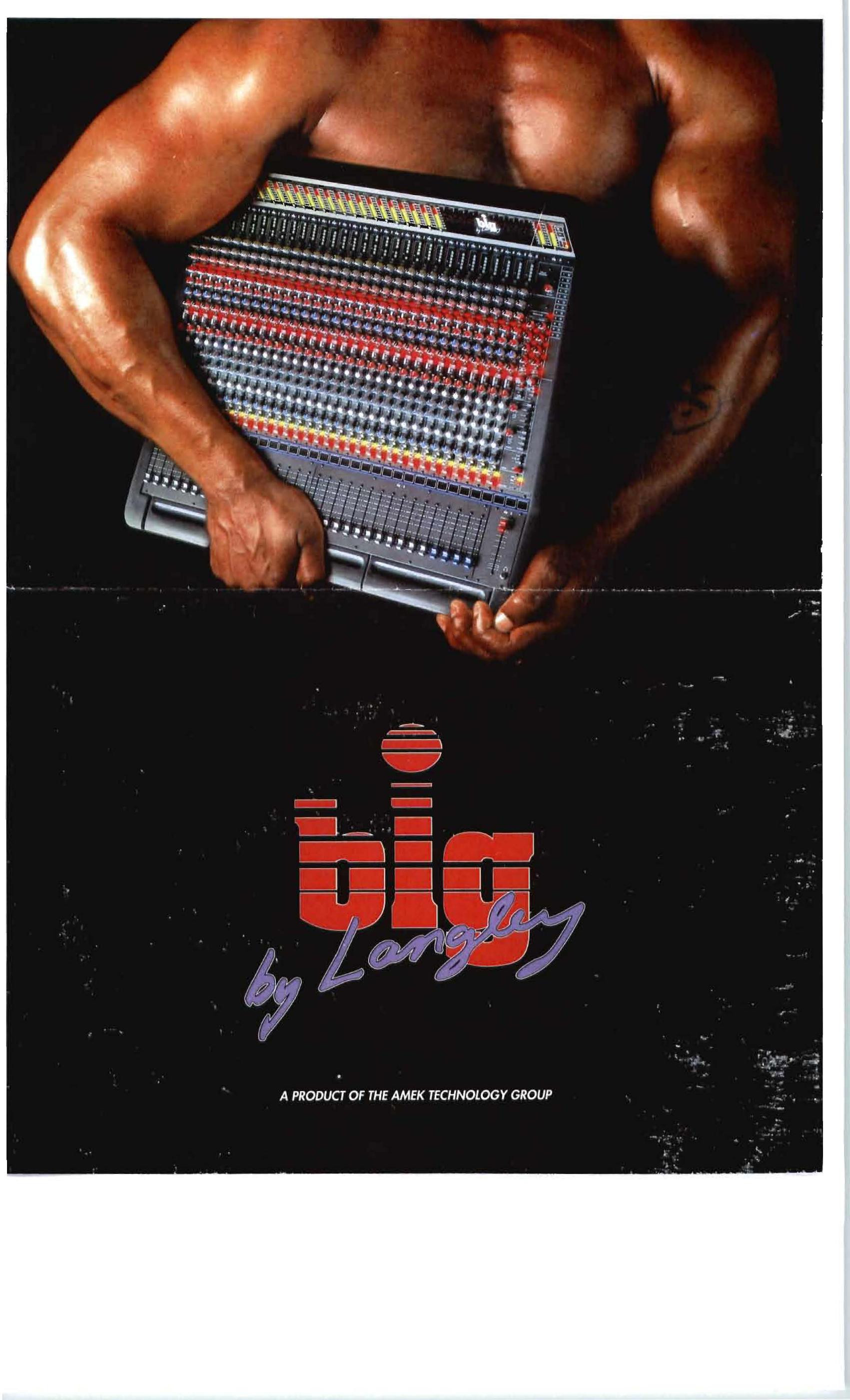
Big
1984 – 1991- Channels
- 24 – 60
- Layout
- In-line
- EQ
- 4-band parametric
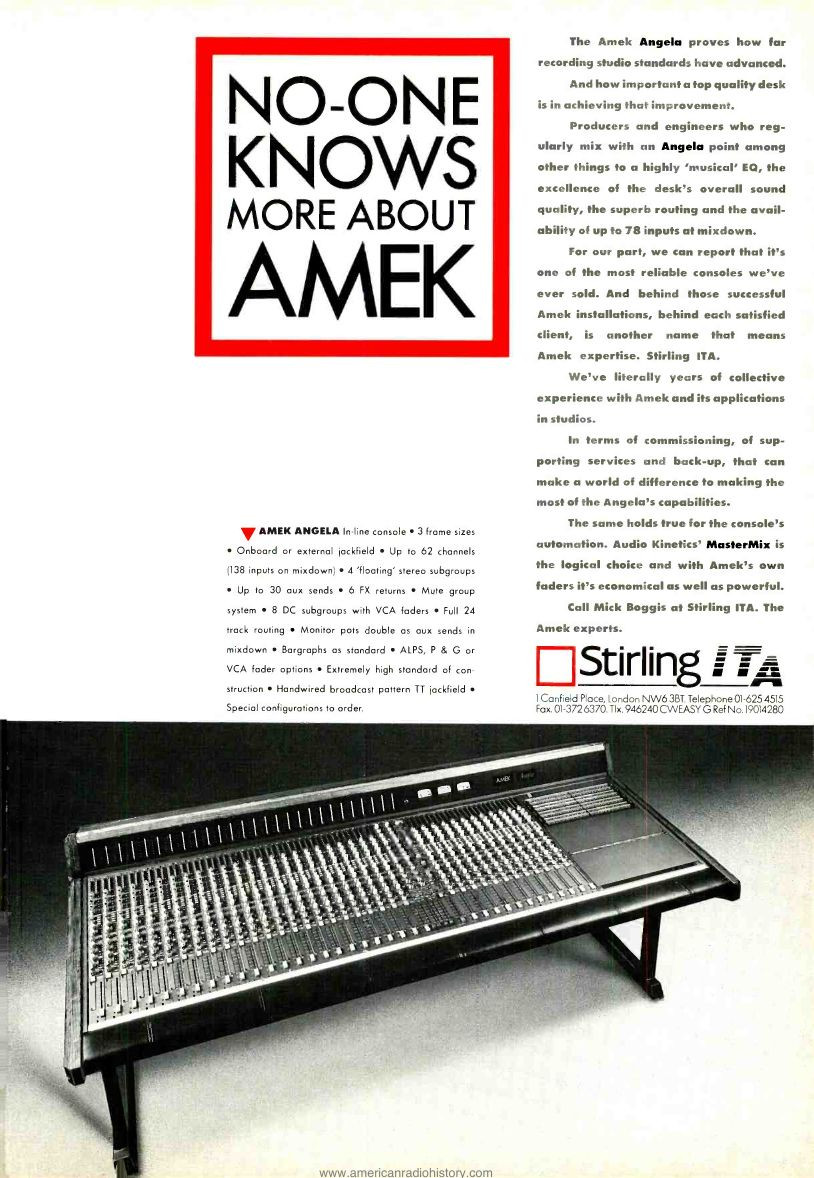
Angela
1985 – 1997- Channels
- 32 – 72
- Layout
- In-line
- EQ
- 4-band
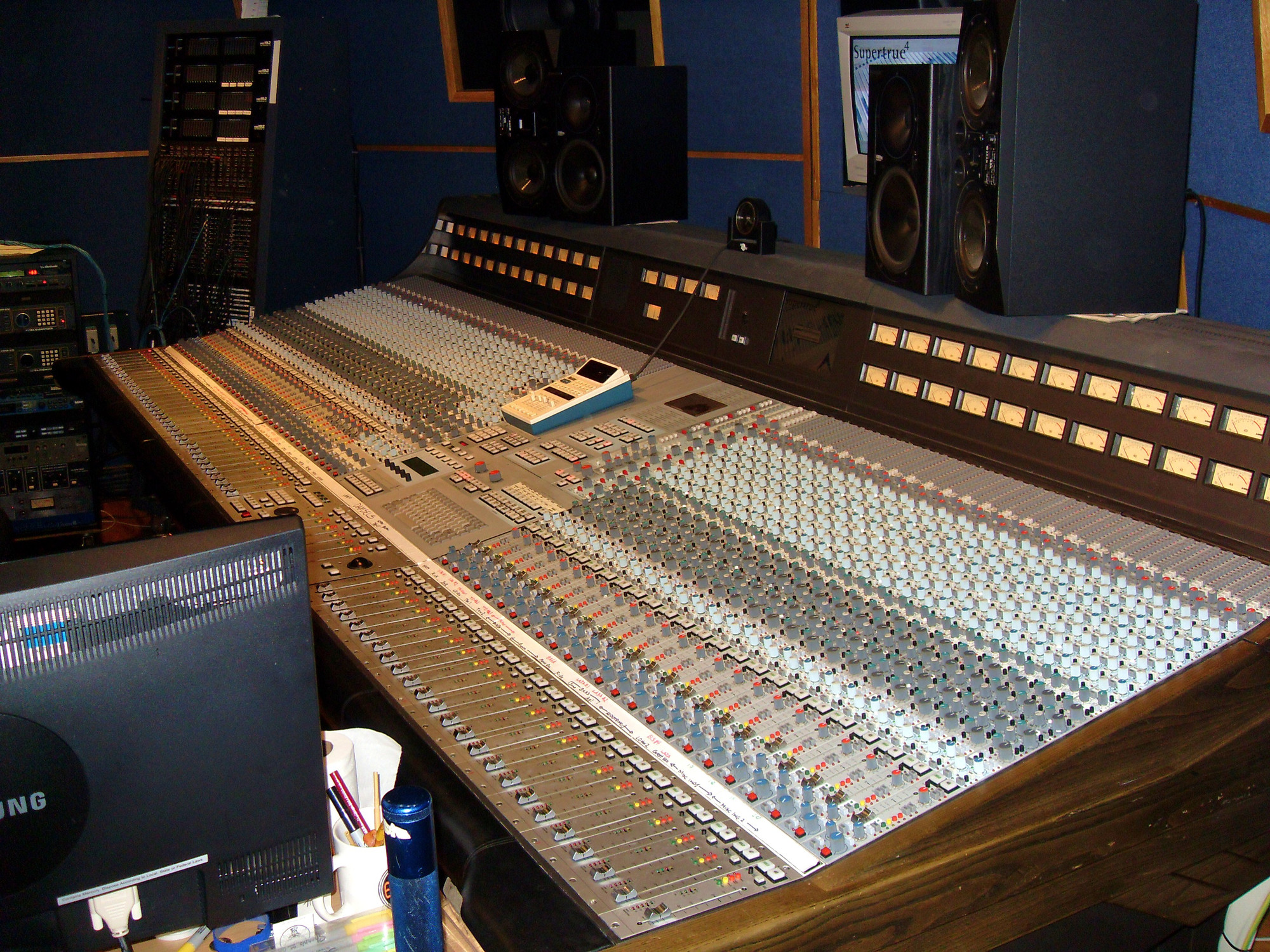
9098i
1993 – 2001- Channels
- 32 – 56
- Layout
- In-line
- EQ
- 4-band parametric
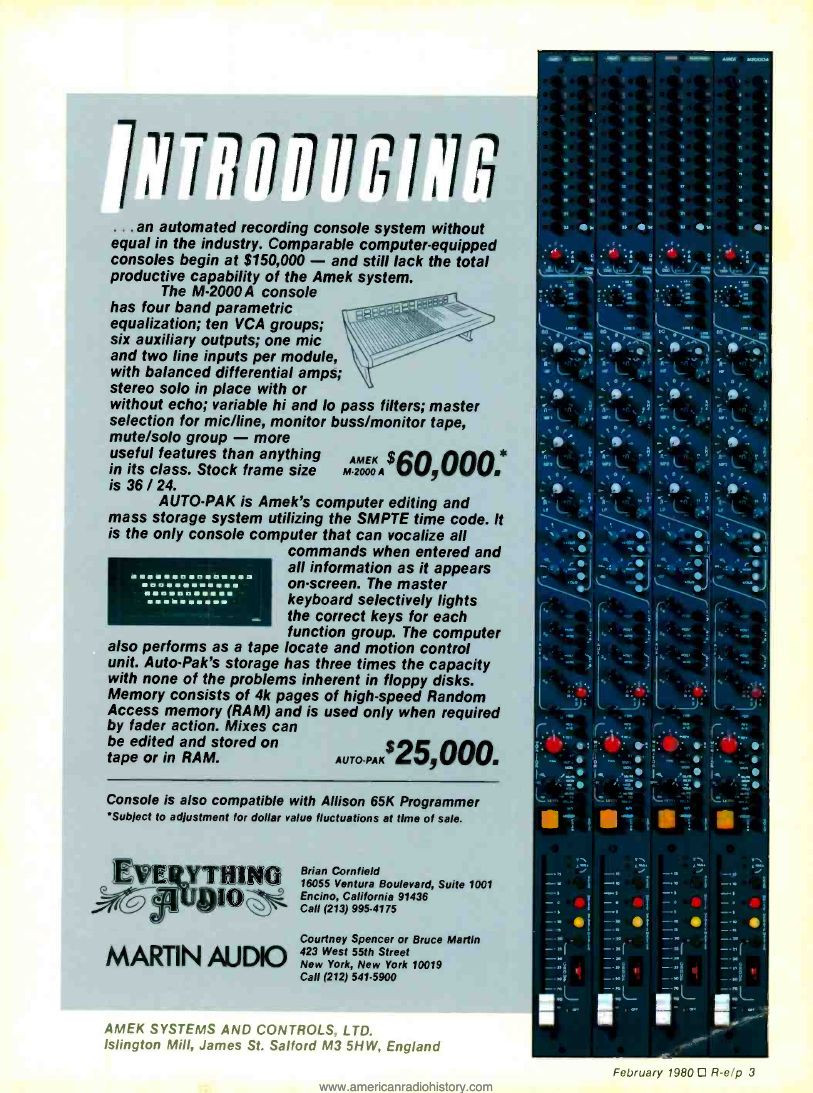
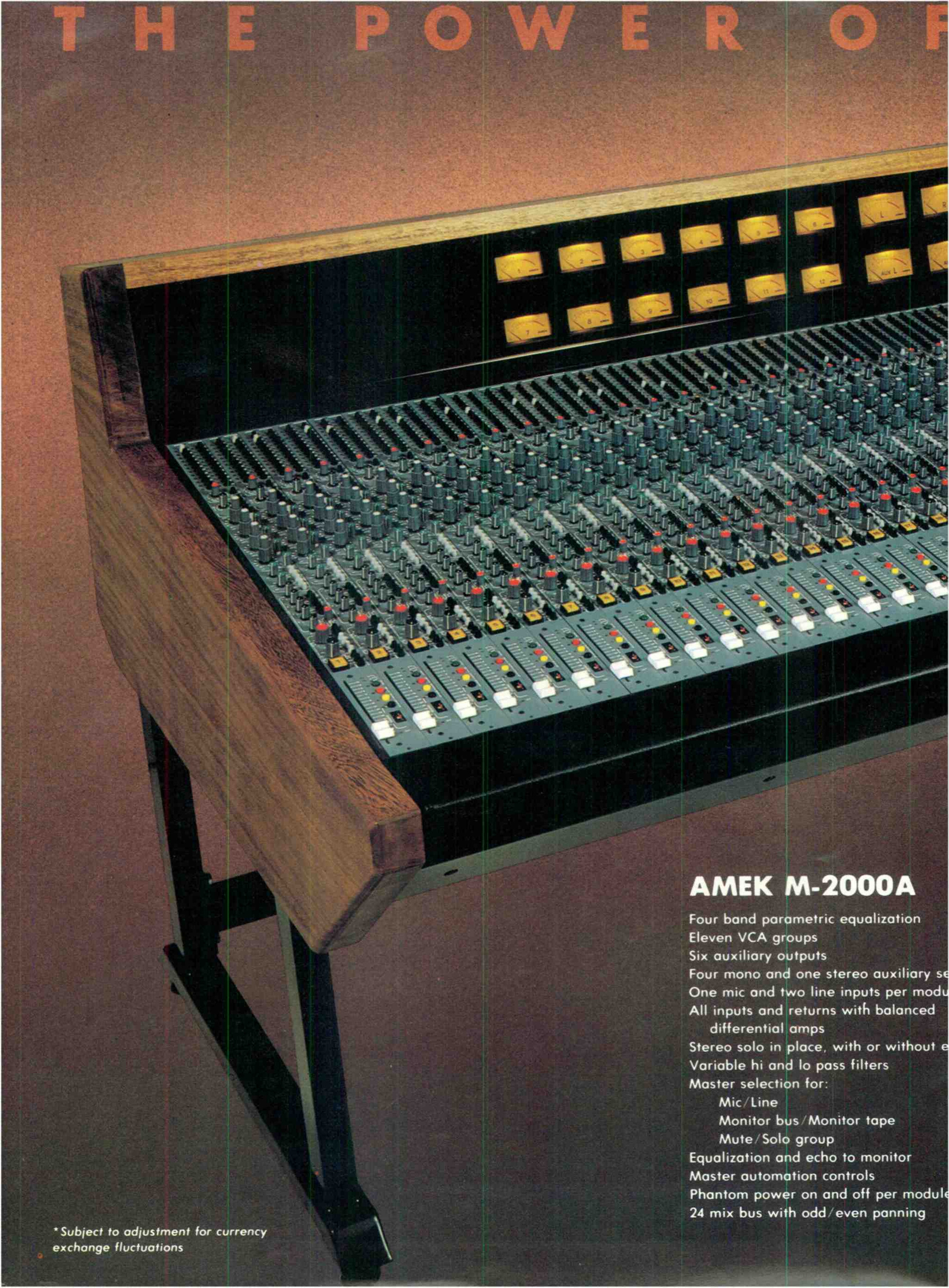
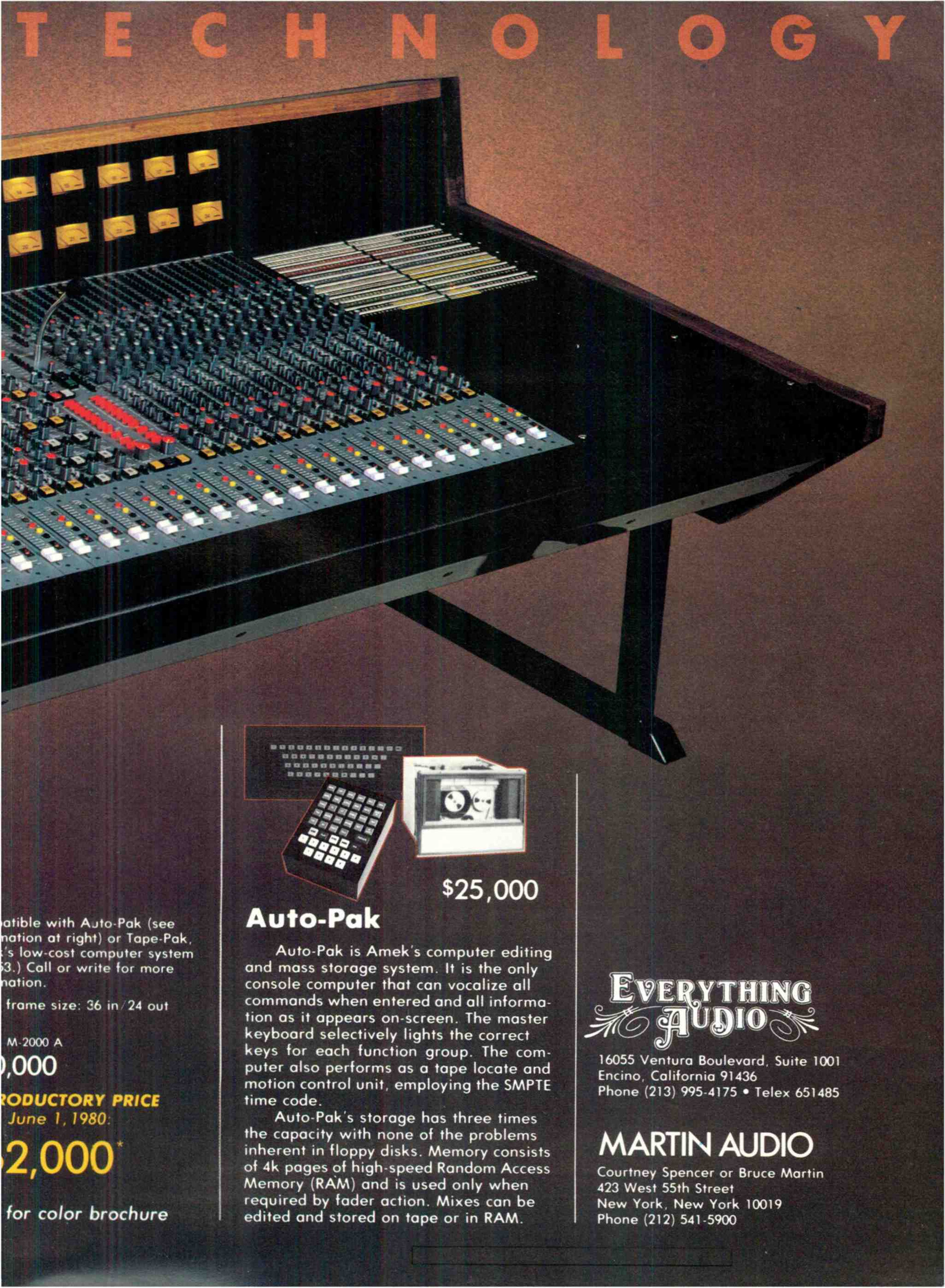
M-2000 A
1980 – mid 1980s- Channels
- 36
- Layout
- Split
- EQ
- 4-band parametric
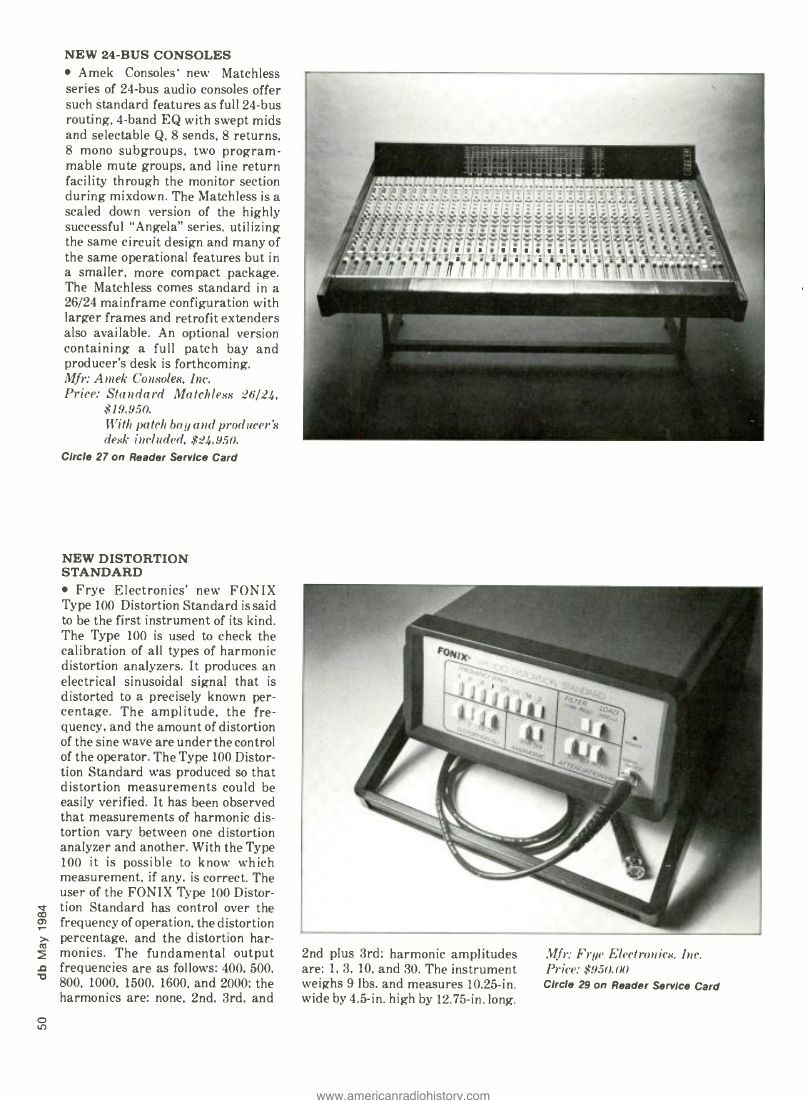
Matchless
1984 – late 1980s- Channels
- 26 standard (larger options)
- Layout
- Split
- EQ
- 4-band swept (Angela circuit)
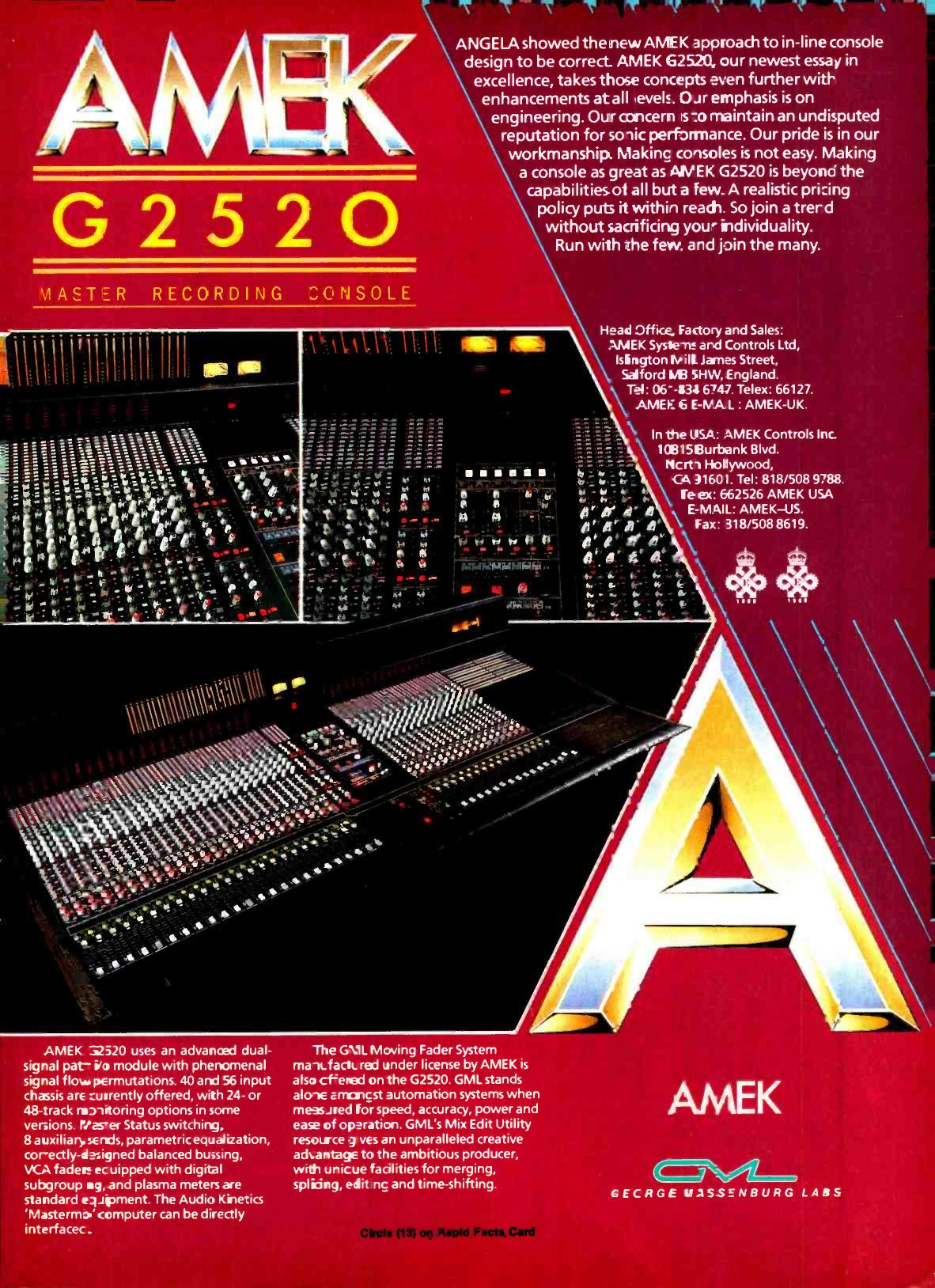
G2520
1987 – early 1990s- Channels
- 32 – 64+
- Layout
- In-line
- EQ
- 4-band
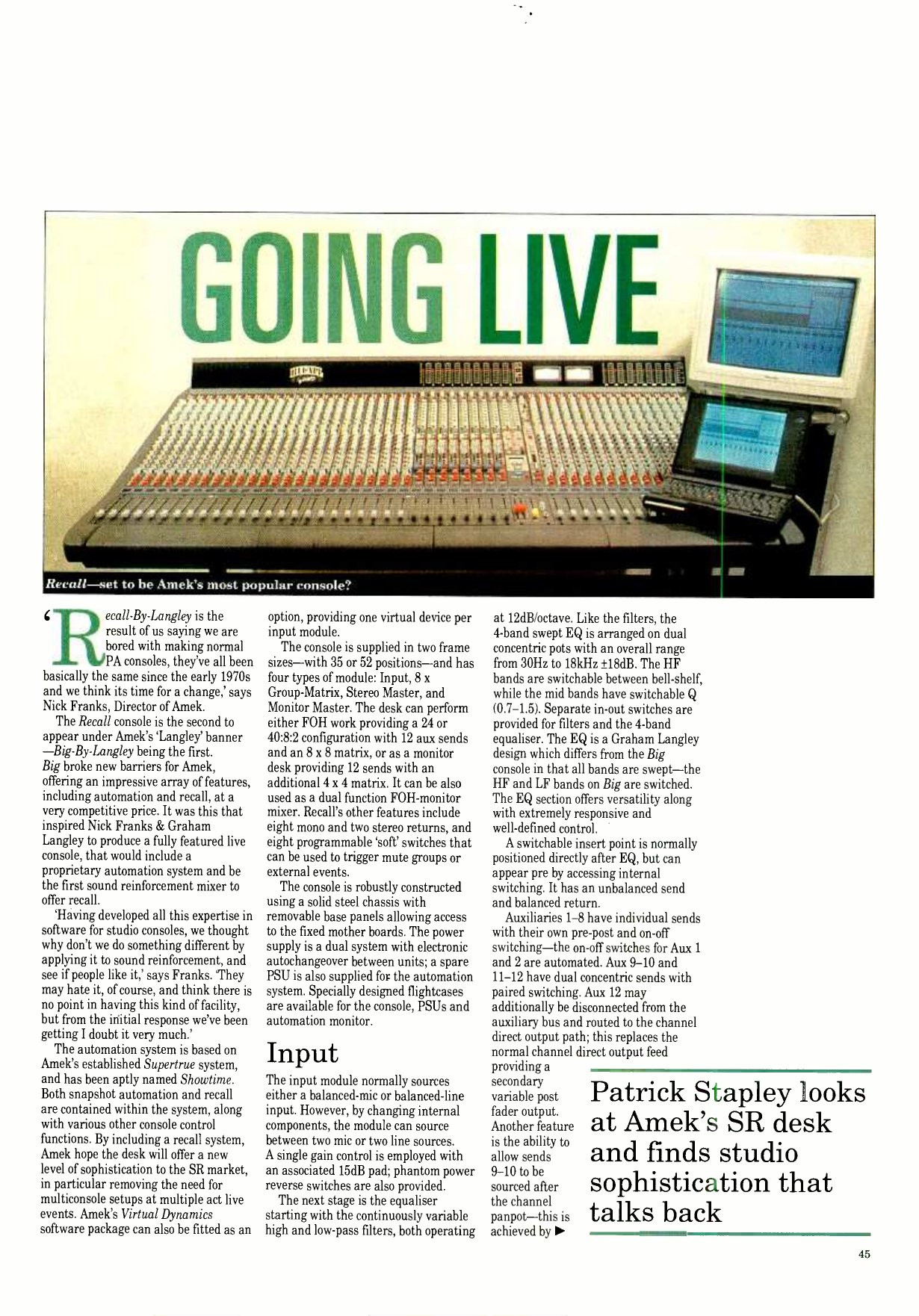
Recall (SR)
1993 – late 1990s- Channels
- 35 or 52 positions
- Layout
- Live / sound-reinforcement
- EQ
- 4-band swept (Langley design, distinct from Big)
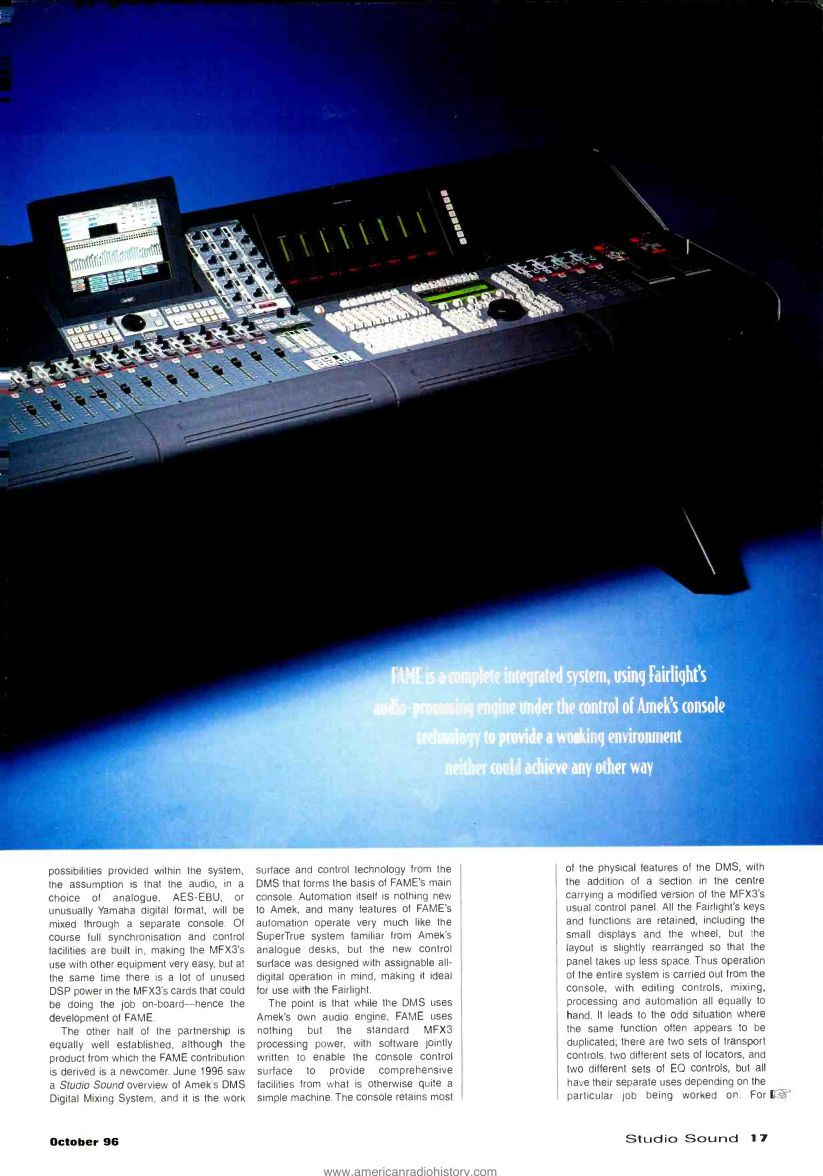
MFX3 / FAME
1996 – late 1990s- Channels
- Variable (Fairlight DSP configuration)
- Layout
- Digital integrated system
- EQ
- Fairlight DSP
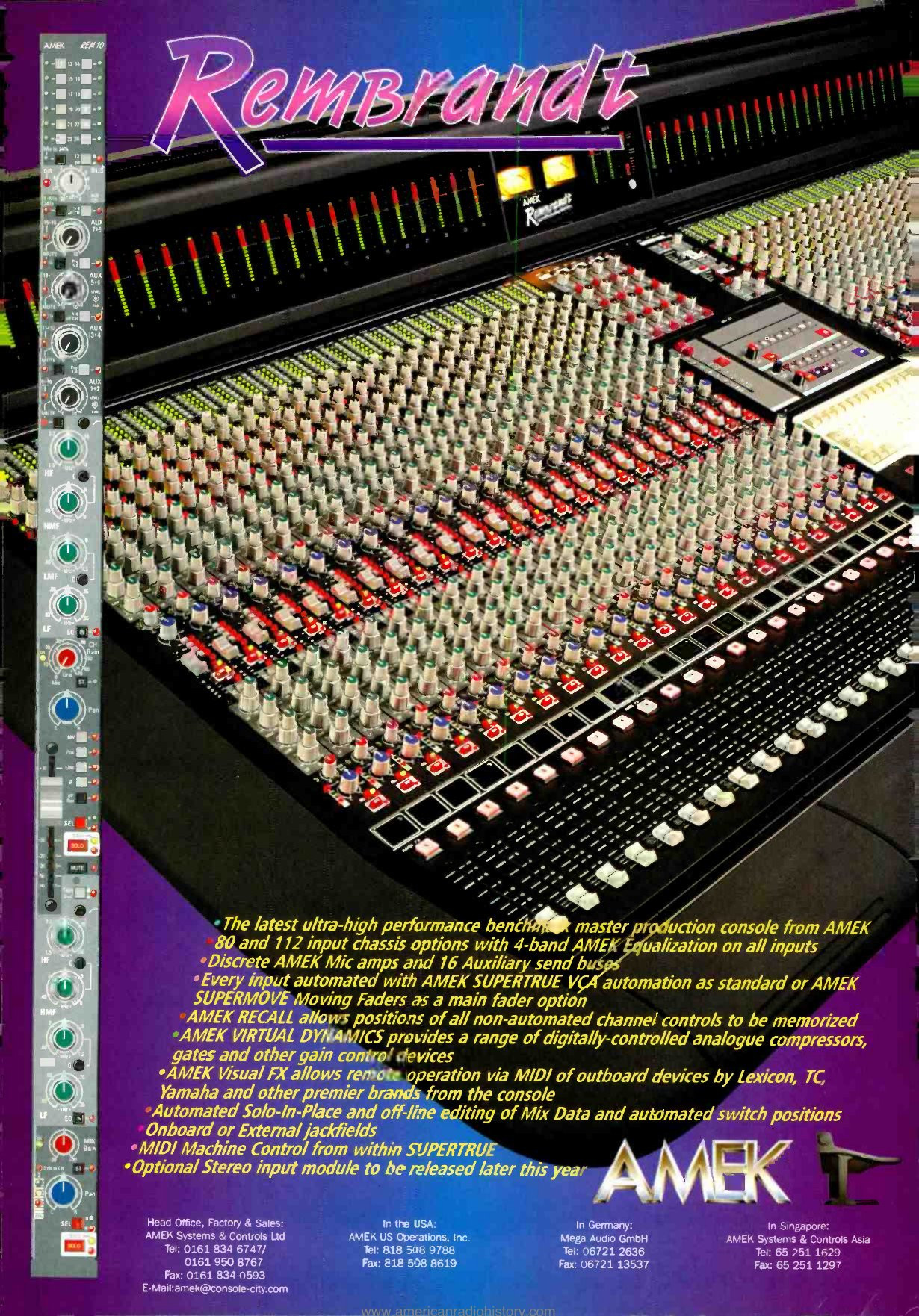
Rembrandt
1996 – early 2000s- Channels
- 56 or 112
- Layout
- Split (master production)
- EQ
- 4-band AMEK EQualisation (every input)
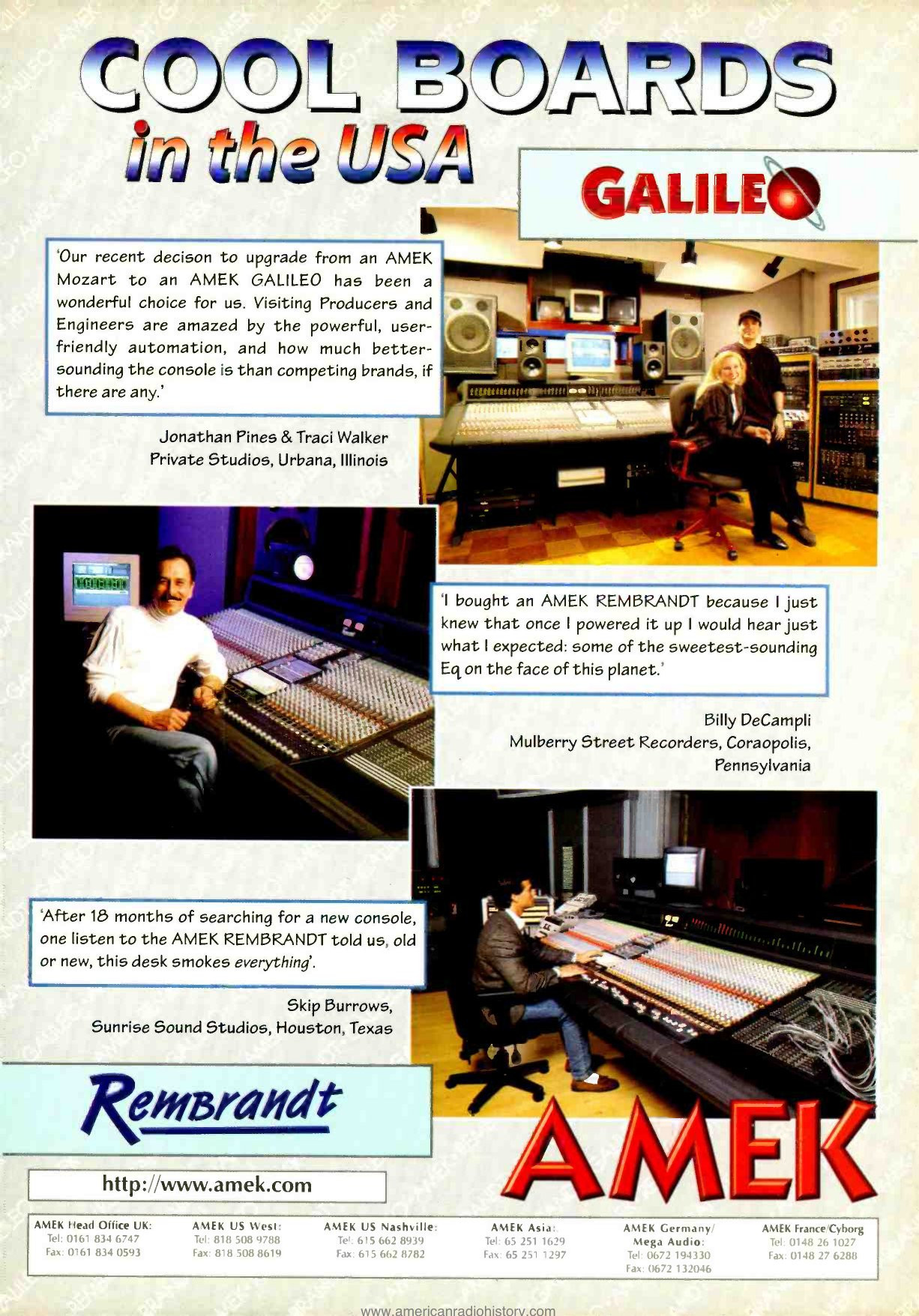
Galileo
1996 – early 2000s- Channels
- 24 – 48 (typical)
- Layout
- Split (mid-tier master)
- EQ
- 4-band
Vintage Advertisements