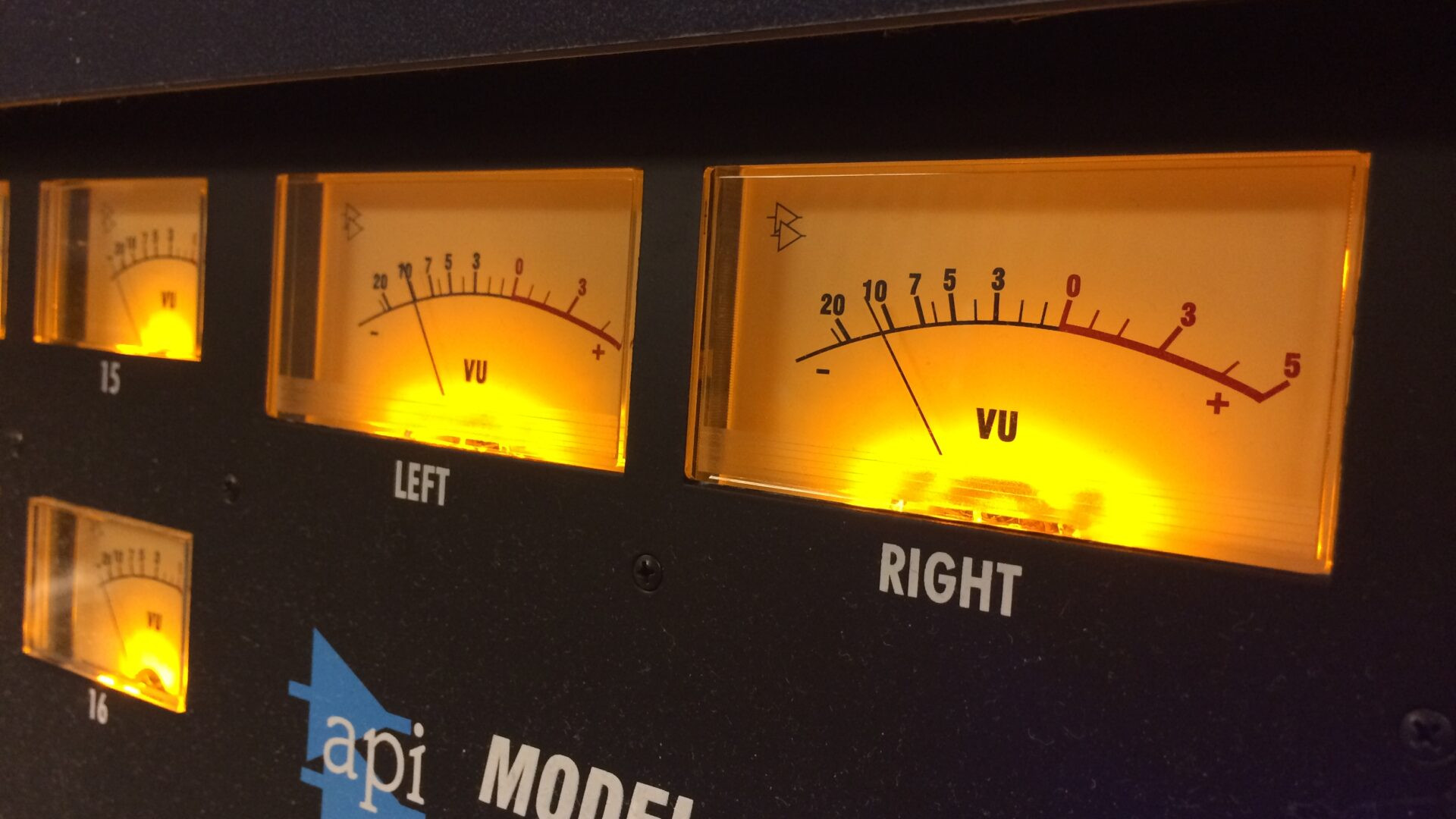
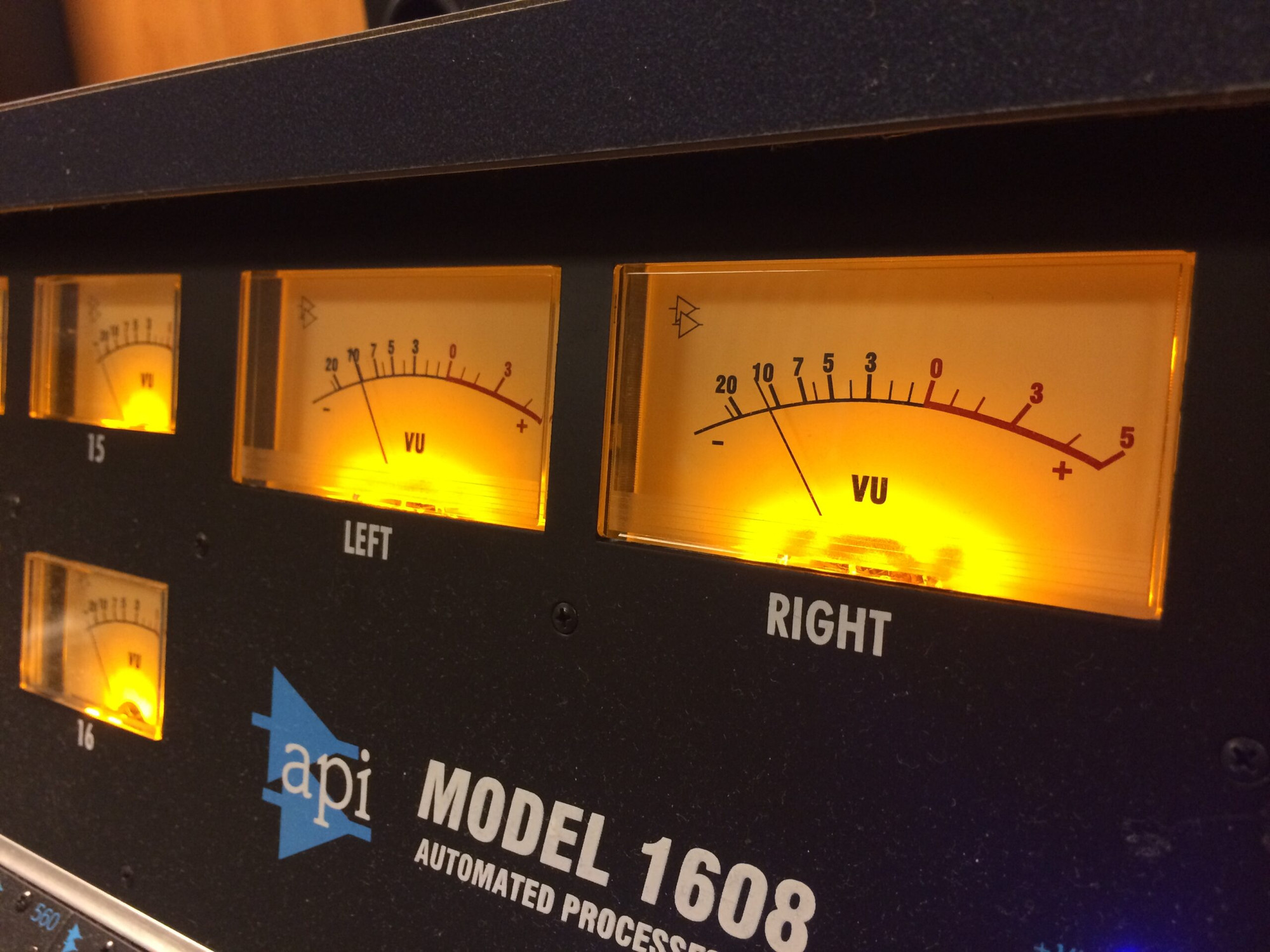
There is a moment every recording engineer knows. The track is building, the room is quiet, and then — the VU meters start to move. Not blinking LEDs, not a scrolling waveform — an actual needle, swinging through an arc, holding its breath at 0 VU before falling back. It is one of the most iconic images in recording history, and it is one of the first things we are building into RetroRecordingsXR.
This week, we documented the calibration standards that will govern every meter in the game — from the SSL 4000 Channel Strip we’re emulating in MetaSound, to every future module in the virtual signal chain. And it turns out that behind that elegant swinging needle is eighty years of engineering argument. Let’s dig in.
A Standard Born in 1942
The VU meter — Volume Unit meter — is older than most of us realize. The ANSI C16.5 standard that defines it dates to 1942, a wartime collaboration between CBS, NBC, and Bell Telephone Laboratories. The goal was a single, standardized way to measure audio levels across the US broadcast network — so that a program recorded in New York would arrive in Los Angeles at the same loudness.
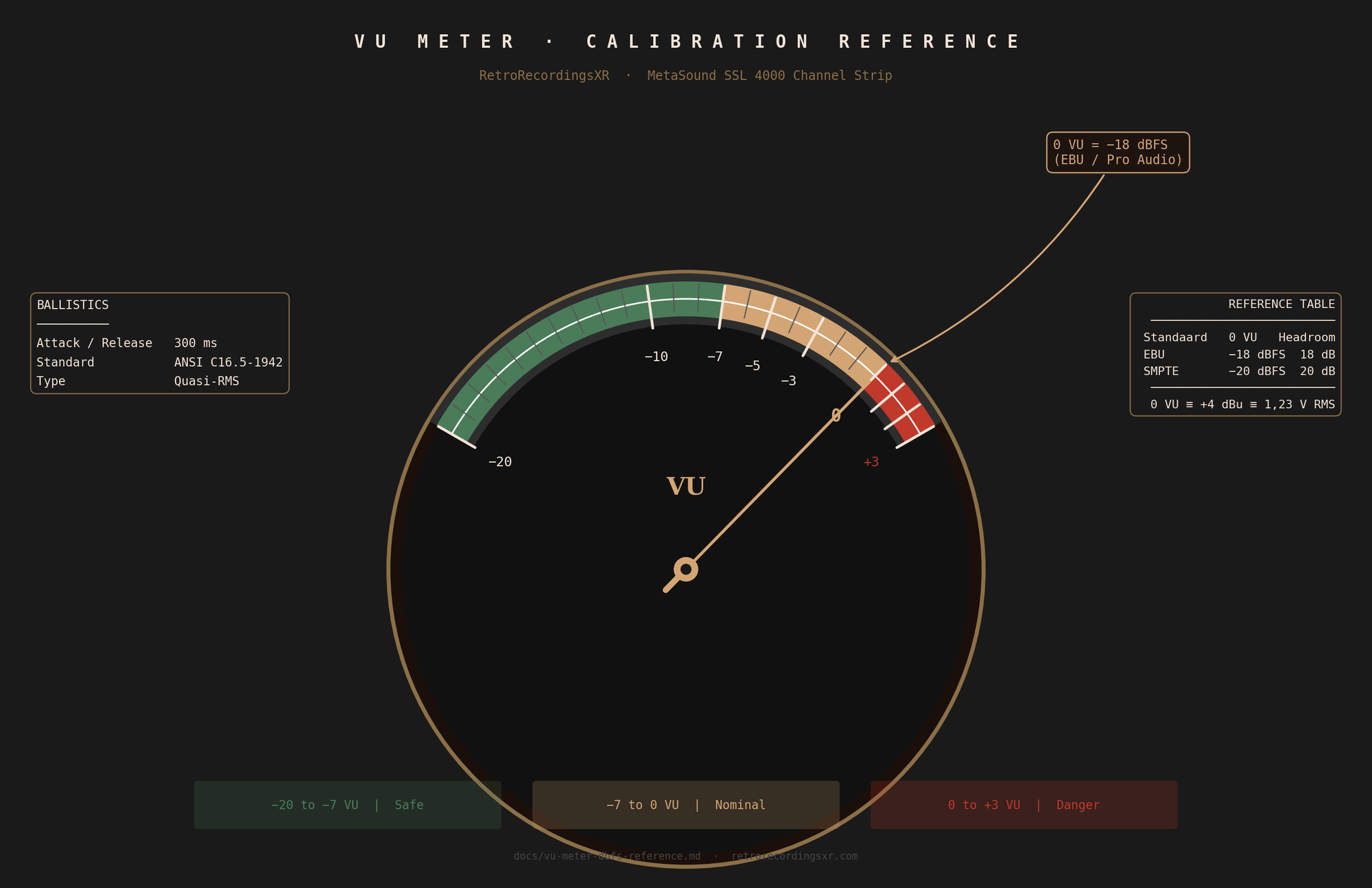
The key insight of the VU meter is its ballistic behaviour: a 300-millisecond integration time for both attack and release, making it respond more like the human ear than a pure peak meter would. It measures quasi-RMS — not the highest transient, but the average energy of the signal over time. That is why a snare drum hit barely registers while a sustained synth pad pins the needle.
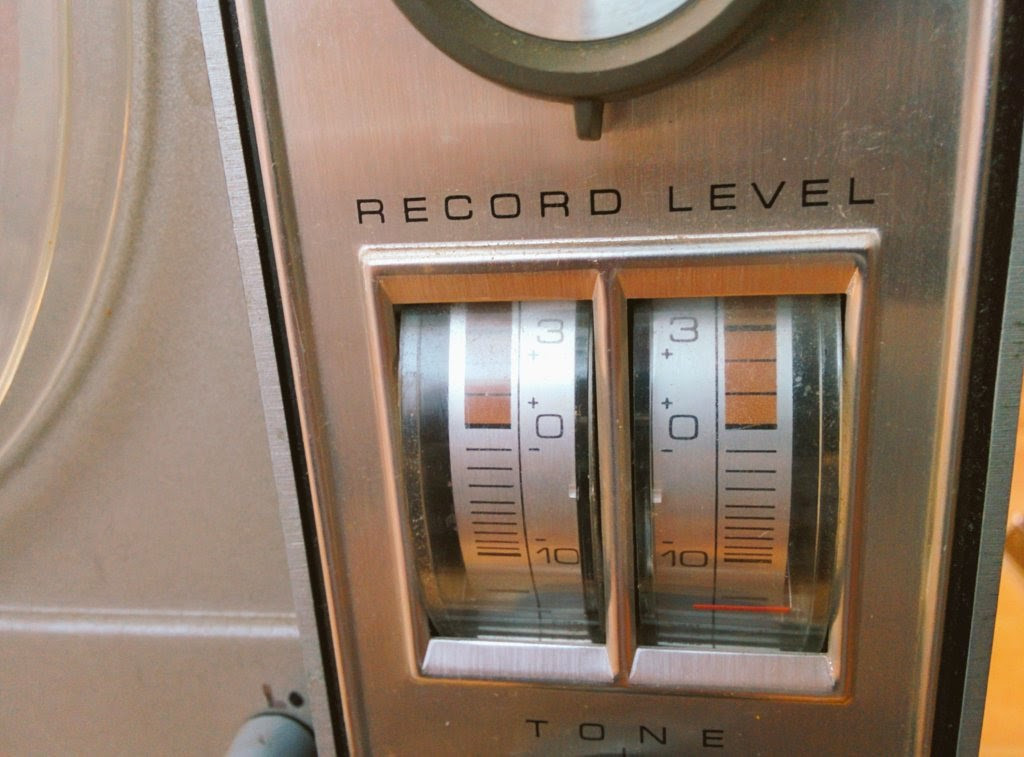
Professional tape machines like the Ampex 800 above carried these meters as their primary level reference. Engineers learned to ride the faders by watching the needle — aiming for an average of 0 VU on program material, with peaks occasionally swinging a few VU above that. The analogue tape itself provided a gentle compression that cushioned those transients.
The Great Calibration Debate: EBU vs. SMPTE
Here is where it gets interesting. When digital audio arrived, engineers needed to map 0 VU — an analogue reference level — to a point on the digital scale. And they could not agree.
0 VU = +4 dBu. Always. That part everyone agrees on.
But where that lands on the digital scale? That is the debate.
Two major standards emerged:
- EBU (European Broadcasting Union) — 0 VU = −18 dBFS. This gives you 18 dB of digital headroom above the nominal level. Used across Europe, the UK, and most professional studios worldwide. This is our default for RetroRecordingsXR.
- SMPTE (US film & broadcast) — 0 VU = −20 dBFS. An extra 2 dB of headroom. Common in US television and cinema post-production.
The difference sounds small — it is 2 dB — but it has caused decades of mix-translation confusion when tracks cross the Atlantic. A mix printed at 0 VU by a US engineer and played back on a European broadcast chain lands 2 dB hotter than intended.
What This Means for RetroRecordingsXR
Inside the game, every audio signal flows through a MetaSound graph that mirrors a real studio signal chain. When you push a fader on the SSL 4000 Channel Strip, you’re adjusting the gain in the digital domain — but the VU meter on that channel should behave exactly as the hardware would: 300 ms ballistics, 0 VU calibrated to −18 dBFS (EBU), with the needle sitting comfortably in the nominal range during a typical mix.
The C++ core of the MetaSound VU node uses a single-pole IIR smoother — the same mathematical kernel as a compressor’s attack/release envelope, but symmetric at 300 ms. Here is the critical line:
const float Coefficient = expf(-1.0f / (SampleRate * 0.300f));That coefficient, computed once on initialization, drives the per-sample smoothing. The result: a meter that breathes with the music, not one that jitters with every transient.
The sweet spot for mixing inside the PCVR studio simulation is −18 to −12 dBFS RMS — giving you that classic “console feel” with enough headroom before the digital ceiling to let transients breathe.
What’s Coming Next
The VU calibration documentation is now part of our internal engineering reference at Docs/vu-meter-dbfs-reference.md. Next in the metering pipeline:
- True Peak detection (ITU-R BS.1770-4 compliant, with inter-sample peak detection)
- LUFS loudness metering for Steam VR / Meta Quest output normalisation
- The SSL 4000 EQ frequency reference — proportional Q, HF shelf character, the works
The needle knows. And soon, the whole virtual SSL will too.
References: ANSI C16.5-1942 (VU meter standard) · IEC 60268-10 (PPM) · ITU-R BS.1770-4 (True Peak / LUFS) · EBU R128 (loudness normalisation)
Images: API 1608 console photo by Q (CC BY-SA 2.0, via Wikimedia Commons) ·
Ampex 800 photo by Sameer Verma, San Francisco (CC BY-SA 2.0, via Wikimedia Commons) ·
VU meter diagram by RetroRecordingsXR.